

30-Day Transformation Calculator
Personalize Your 30-Day Goals
Calculate your realistic transformation based on science-backed metrics from the article.
Your 30-Day Transformation Expectations
This calculator uses science-backed metrics from the article. Remember: transformation requires consistency across all three pillars.
Protein Requirements
You need 112-154g daily. Example foods: 3 eggs, 150g chicken breast, 1 cup lentils.
Fat Loss Potential
Realistic fat loss: 4-8 lbs (1.8-3.6 kg)
Muscle Gain Potential
New lifters: 1-2 lbs (0.5-1 kg)
Endurance Improvement
Expect 20-30% increase in workout capacity.
People ask if they can transform their body in one month because they’ve seen before-and-after photos online. Those images are real-but they’re not the full story. What you don’t see is the 6 months of prep before the photo, the lighting tricks, the dehydration, or the fact that most of those people are already in great shape to begin with. So can you change your body in 30 days? Yes-but not the way you think.
What’s Actually Possible in 30 Days
You can’t turn into a bodybuilder or a fitness model in a month. But you can make real, noticeable progress if you focus on the right things. Most people who see results in 30 days aren’t doing crazy workouts. They’re fixing the basics: eating better, moving more, and sleeping enough.
Here’s what science says is realistic:
- Lost fat: 4-8 pounds (1.8-3.6 kg) for most people
- Gained muscle: 1-2 pounds (0.5-1 kg) if you’re new to lifting
- Improved endurance: 20-30% increase in workout capacity
- Reduced bloating: visible difference in waistline from cutting sugar and salt
That’s not magic. That’s biology. Your body doesn’t rebuild itself overnight. But it responds quickly to consistent pressure.
Why Most People Fail
They think transformation means drastic change. They quit sugar entirely, start 2-hour workouts, and buy supplements that promise miracles. Then, after a week of feeling exhausted and hungry, they give up. Why? Because they didn’t design a plan that fits their life.
Let’s say you work a desk job, have two kids, and usually get home after 7 p.m. Your plan needs to work around that-not the other way around. A 45-minute home workout three times a week, paired with swapping soda for sparkling water and eating one more serving of vegetables daily? That’s sustainable. That’s what leads to results.
Another common mistake? Focusing only on the scale. The number doesn’t tell you if you lost fat or muscle. You could be getting stronger and leaner without the scale moving much. That’s why taking measurements and progress photos matters more than daily weigh-ins.
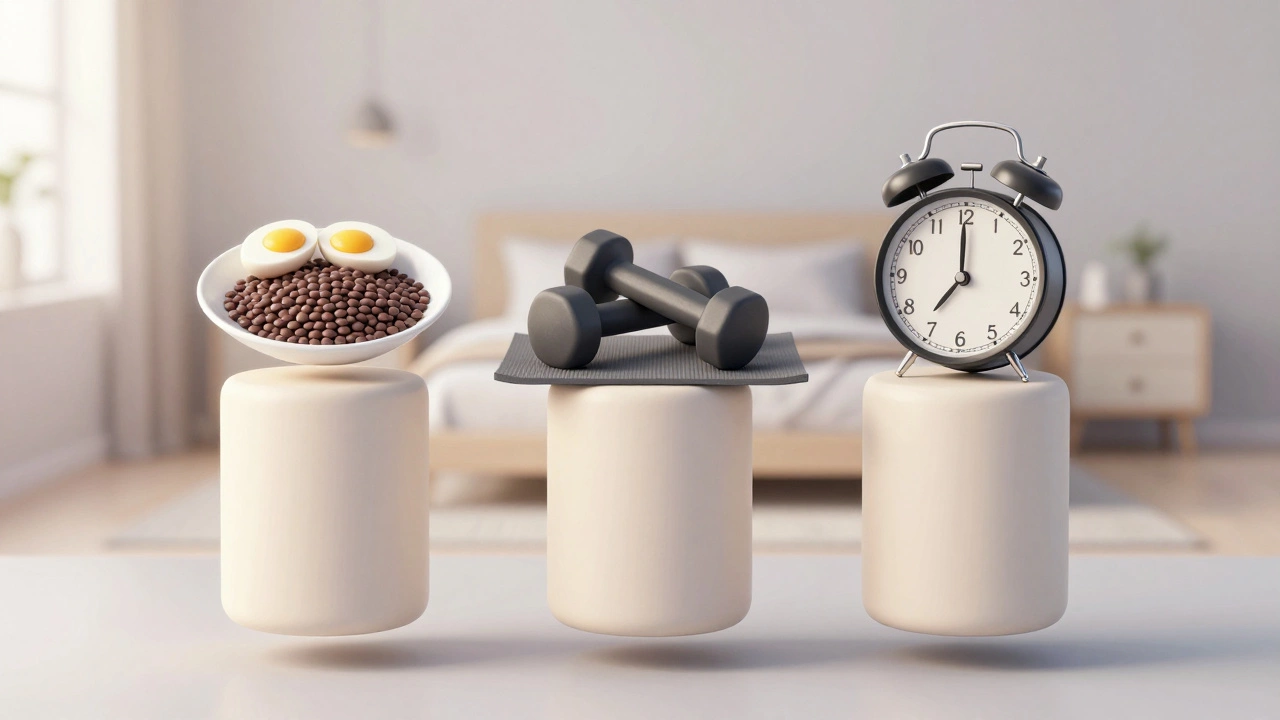
The 3 Pillars of a Real 30-Day Transformation
There’s no secret formula. Just three simple rules:
1. Eat Like You Mean It
You can’t out-exercise a bad diet. Period. But you also don’t need to eat chicken breast and broccoli every meal. Here’s what actually works:
- Get 1.6-2.2 grams of protein per kilogram of body weight. For a 70 kg person, that’s 112-154 grams daily. Eggs, chicken, tofu, Greek yogurt, lentils-all count.
- Cut out liquid sugar. Soda, juice, sweet coffee drinks. These are empty calories that spike insulin and make fat storage easier.
- Don’t skip meals. Eat every 3-4 hours. It keeps your energy steady and your cravings under control.
- Drink at least 2.5 liters of water daily. Dehydration makes you feel sluggish and hungrier than you really are.
Example: A 35-year-old woman in Calgary, weighing 78 kg, swapped her afternoon soda for sparkling water with lemon, added a hard-boiled egg to her lunch, and started eating dinner at 7 p.m. instead of 9 p.m. In 30 days, she lost 5.5 pounds and noticed her jeans felt looser-even though she didn’t change her workout routine.
2. Move Strategically, Not Obsessively
You don’t need to run marathons or do CrossFit five days a week. What you need is consistency and intensity.
- Do strength training 3 times a week. Focus on compound moves: squats, push-ups, rows, deadlifts. These work multiple muscles at once and burn more calories.
- Add 10 minutes of walking after dinner. That’s 70 extra minutes a week. It improves digestion, lowers stress, and keeps your metabolism ticking.
- Try one high-intensity interval session (HIIT) per week. 20 minutes total. Example: 30 seconds of burpees, 30 seconds rest, repeat 5 times. That’s it.
Why this works: Muscle burns more calories at rest than fat. Even if you lose only a pound of fat and gain a pound of muscle, your body looks leaner and your resting metabolism increases.
3. Sleep Like Your Life Depends on It
If you’re sleeping less than 6 hours a night, you’re sabotaging your progress. Lack of sleep raises cortisol, the stress hormone that tells your body to store fat-especially around your belly. It also messes with hunger hormones. You’ll crave carbs. You’ll feel too tired to move. You’ll quit.
Fix this by:
- Turning off screens 60 minutes before bed
- Keeping your bedroom cool (around 18°C)
- Going to bed and waking up at the same time every day-even on weekends
One man in his 40s from Edmonton started sleeping 7.5 hours a night instead of 5.5. In three weeks, his energy shot up. He stopped snacking after dinner. He lost 4 pounds without changing his diet. Sleep wasn’t the main focus-but it was the missing piece.

What Doesn’t Work
Here’s what you should avoid if you want real results:
- Detox teas: They make you lose water weight, not fat. You’ll gain it back the moment you drink coffee again.
- Extreme calorie cutting: Eating under 1,200 calories a day slows your metabolism. Your body thinks it’s starving. It holds onto fat.
- Supplements that promise quick results: No pill, powder, or capsule can replace food, movement, and sleep. They’re marketing, not science.
- Doing the same workout every day: Your body adapts. If you do the same routine for 30 days, you’ll plateau by day 10.
A Realistic 30-Day Plan
Here’s a simple, doable plan you can start tomorrow:
- Week 1: Focus on protein and water. Add one strength workout. Walk 10 minutes after dinner.
- Week 2: Add a second strength session. Cut out all sugary drinks. Try one 20-minute HIIT workout.
- Week 3: Add a third strength session. Track your sleep. Aim for 7+ hours.
- Week 4: Keep it all going. Take a full-body photo and measure your waist, hips, and arms. Compare to Week 1.
You don’t need a gym membership. You don’t need fancy equipment. A pair of dumbbells, a chair, and your body weight are enough. You can do this in a living room, a basement, or even a hotel room.
What to Expect After 30 Days
If you stick to this:
- Your clothes will fit differently-especially around the waist
- You’ll feel stronger lifting groceries, climbing stairs, or playing with your kids
- You’ll sleep better and feel less stressed
- You’ll start believing you can do hard things
That last one matters more than you think. Transformation isn’t just about looks. It’s about reclaiming control. When you show up for yourself for 30 days straight, you build a habit that lasts far longer than a month.
What Comes Next
After 30 days, don’t stop. Don’t go back to old habits because you "got results." You’ve started something. Now build on it.
Try this: Add one new healthy habit every 30 days. Maybe it’s cooking at home twice a week. Or doing yoga on Sundays. Or tracking your steps. Progress isn’t linear. But consistency? That’s the real game-changer.
One month won’t turn you into someone else. But it can turn you into someone who knows they’re capable of more. And that’s where real change begins.
You might like