Which Sport Does Not Require Any Equipment? A Guide to Gear-Free Fitness

Gear-Free Fitness Finder
Not sure which zero-equipment sport fits you? Answer these three questions to get a personalized recommendation.
You want to get moving, but you don't want to spend money on a new racket, a pair of skates, or a set of dumbbells. Maybe you're traveling light, maybe you're on a tight budget, or maybe you just hate the hassle of lugging gear around. The good news is that some of the most effective physical activities require absolutely nothing but your own body and a bit of open space.
When people ask which sport does not require any equipment, they are usually looking for something accessible. They want to know if they can start today without buying anything. The answer is yes, but it’s more nuanced than just "running." True equipment-free sports rely on gravity, ground reaction forces, and your own biomechanics. Let’s break down what actually counts as a sport in this category, why it works, and how to do it safely.
The Core Concept: Bodyweight Mechanics
To understand which sports fit this bill, we need to define what we mean by "equipment." In strict terms, equipment includes external objects used to enhance performance, protect the body, or define the playing field. If you strip away shoes (arguably essential for safety), clothes, and specialized surfaces, what remains?
Activities like Calisthenics is a form of strength training that uses your own body weight for resistance rather than external weights or machines. It is often mistaken for just "working out," but at a competitive level, it is a recognized discipline governed by bodies like the World Calisthenics Organization. Competitors perform complex moves like planches, levers, and human flags. These movements require zero props. You are the prop.
This distinction matters because many people confuse "low equipment" with "no equipment." Yoga requires a mat (though you can use grass). Swimming requires water and often goggles. Running requires shoes for most modern practitioners to prevent injury. But pure calisthenics, sprinting on soft ground, or certain forms of dance-based fitness truly demand nothing from you but effort.
Top Sports That Need Zero Gear
If you are ready to start right now, here are the primary disciplines that fit the "no equipment" criteria. Each offers different benefits, so choose based on your goals.
Running and Sprinting
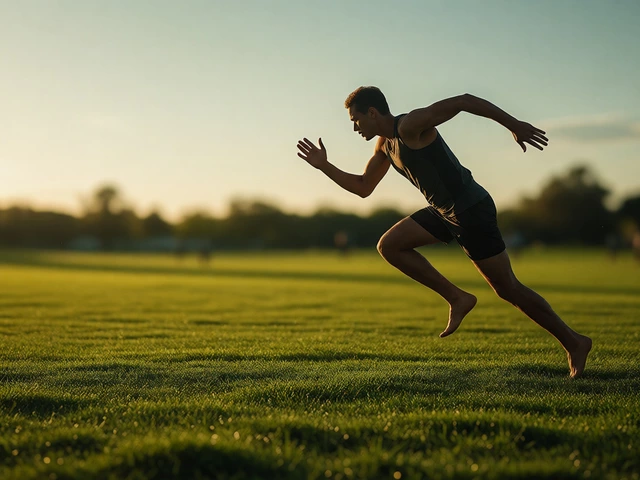
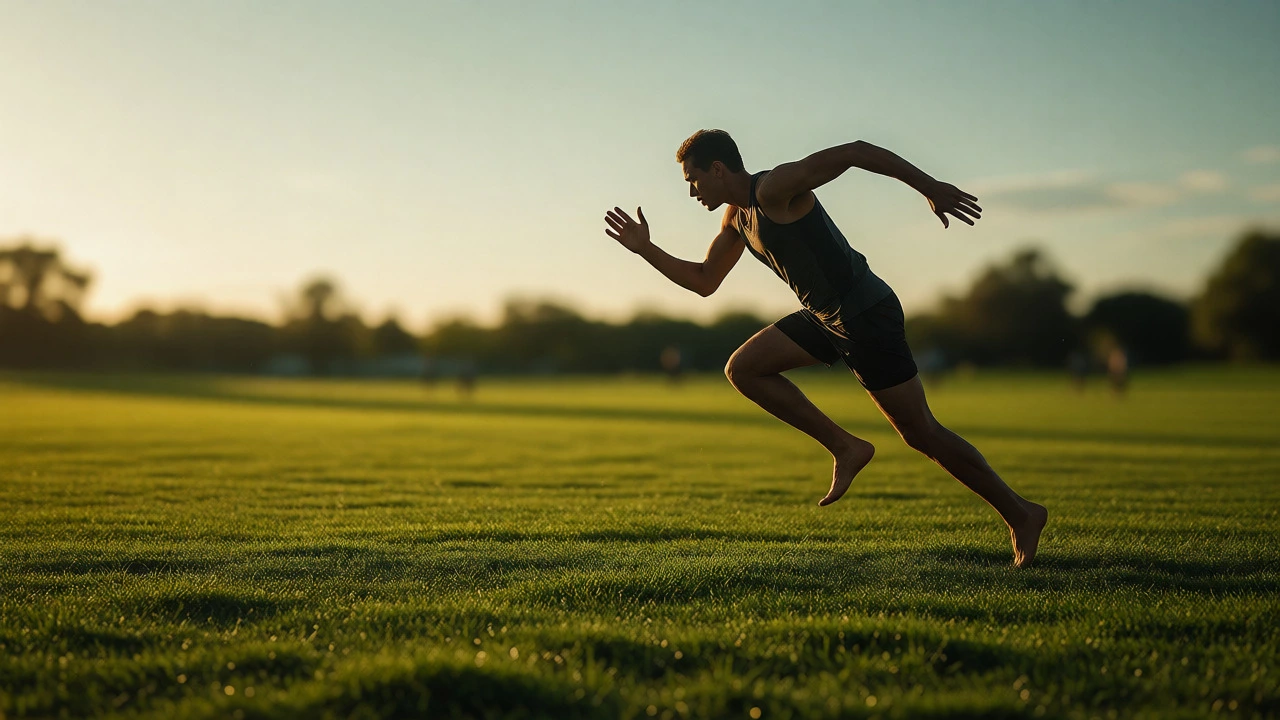
Technically, humans evolved to run barefoot. While modern runners wear shoes, the act itself needs no tools. Sprinting, specifically, is one of the most explosive natural movements. You don’t need a track; you need a straight line. Whether it’s a beach, a park path, or an empty parking lot, you can train speed. The key difference between jogging and sprinting as a "sport" is intensity. Sprinting builds fast-twitch muscle fibers and improves cardiovascular health rapidly. Just be mindful of surface hardness-concrete is tough on joints compared to dirt or grass.
Calisthenics and Gymnastics
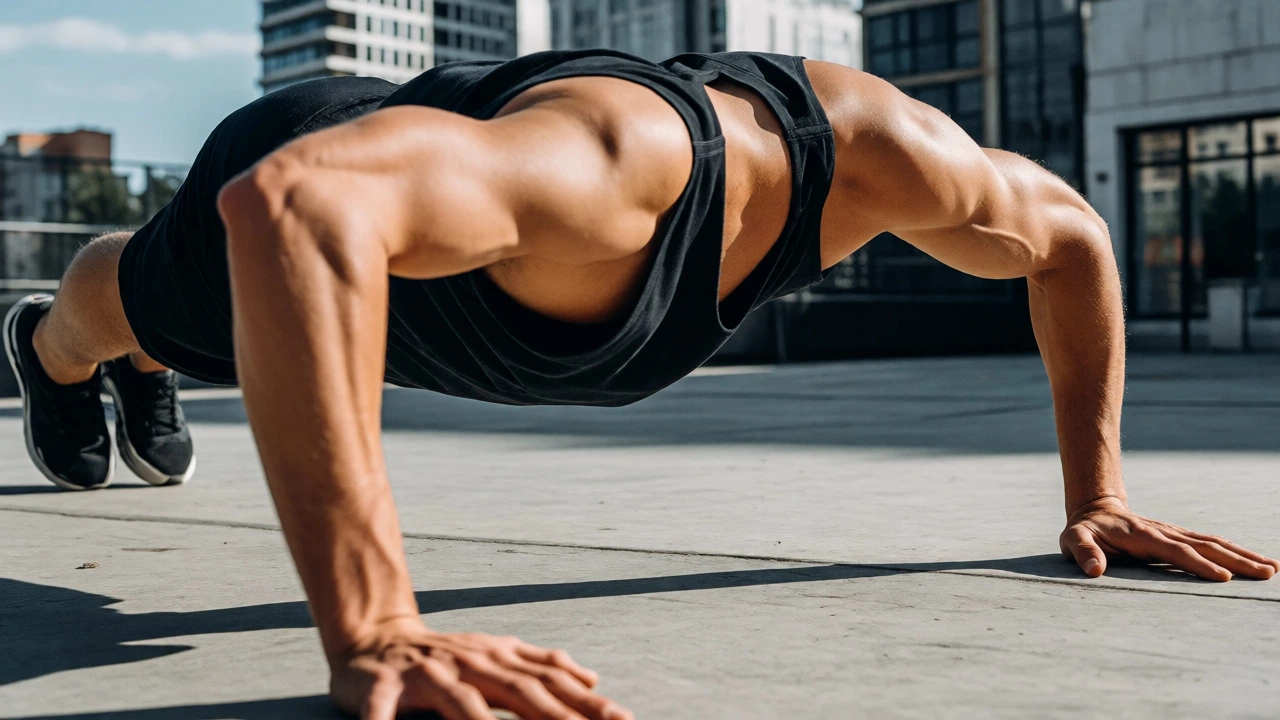
Gymnastics might seem to require bars and beams, but foundational gymnastics is purely bodyweight. Think about push-ups, pull-ups (if you have a branch), dips, squats, and handstands. Competitive calisthenics takes this further. Athletes compete in freestyle routines where they demonstrate control over their center of gravity. This builds immense core strength and joint stability. Unlike weightlifting, where you add load externally, calisthenics progresses by changing leverage. Making a push-up harder doesn't require adding plates; it requires elevating your feet or shifting your weight forward.
Parkour and Freerunning
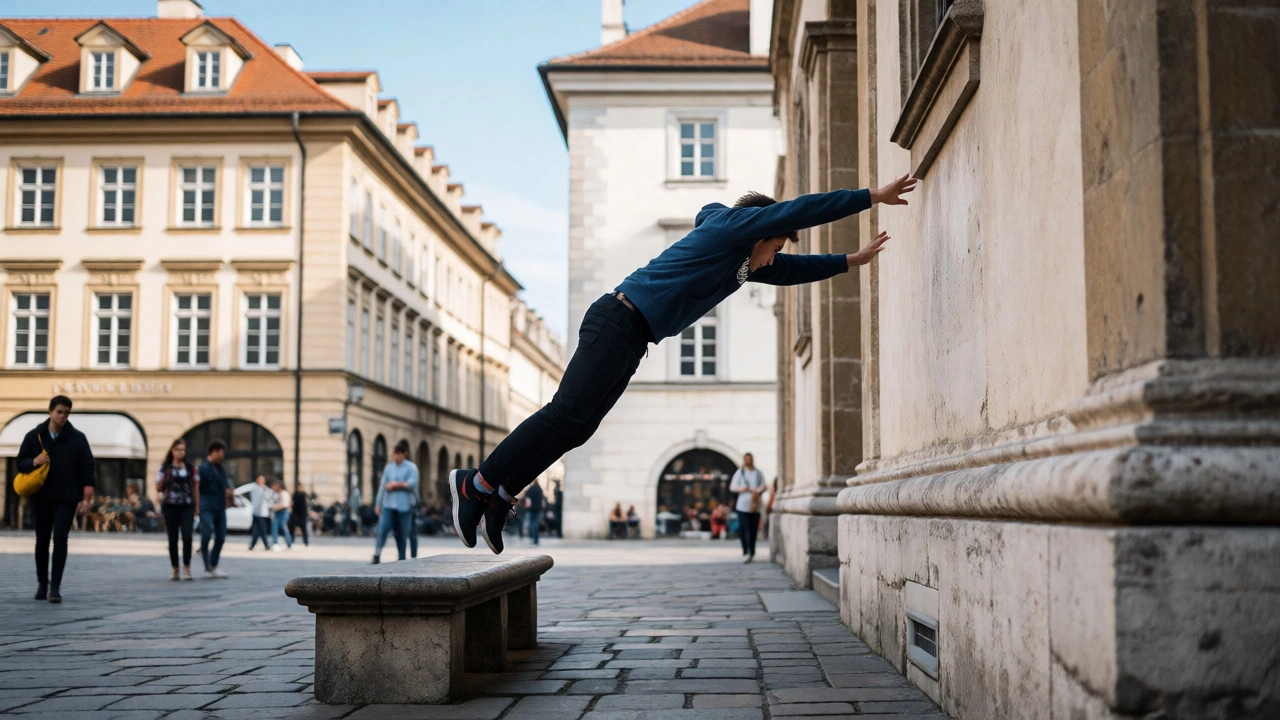
Parkour is a training discipline using movement that developed from military obstacle course training, focusing on efficient traversal of environments. While professional traceurs might buy specific shoes, the sport itself defines itself by interacting with the environment-walls, rails, benches-not by holding an object. You jump, climb, roll, and balance. It turns the city into a playground. The mental aspect is huge here; you must assess risk instantly. It’s not just physical; it’s cognitive problem-solving under pressure.
Dance-Based Cardio
Styles like Zumba, hip-hop, or even traditional folk dancing are legitimate athletic pursuits. They require rhythm and coordination but no props. Competitive breaking (breakdancing) is now an Olympic sport. It demands incredible flexibility, strength, and endurance. You can practice footwork drills anywhere. The lack of equipment makes it highly scalable-you can do a full workout in a tiny apartment or a large studio.
Why Go Equipment-Free? The Hidden Benefits
Beyond saving money, training without gear changes how your body adapts. When you lift a barbell, the machine stabilizes part of the load. When you do a pistol squat (one-legged squat), your body must stabilize itself entirely. This recruits smaller stabilizer muscles that often get ignored in gym settings.
- Injury Prevention: Bodyweight exercises generally allow for more natural movement patterns, reducing strain on joints compared to heavy loaded lifts with poor form.
- Accessibility: You can train anywhere. No waiting for machines at the gym. No commuting to a court.
- Mental Toughness: There are no distractions. You face your own limits directly. This builds resilience that transfers to other areas of life.
However, there is a pitfall. Without external feedback (like a weight stack showing progress), beginners often plateau. How do you know you’re getting stronger? You measure reps, time held, or range of motion. Tracking these metrics becomes crucial.
Comparison: Equipment-Free vs. Traditional Sports
It helps to see how these options stack up against traditional sports that require gear. This table highlights the trade-offs.
| Feature | Equipment-Free (e.g., Calisthenics) | Equipment-Dependent (e.g., Tennis) |
|---|---|---|
| Startup Cost | $0 (assuming basic clothing/shoes) | $100-$500+ (racket, balls, court fees) |
| Location Flexibility | High (park, home, travel) | Low (requires court/specific facility) |
| Skill Ceiling | Very High (complex leverage mastery) | Very High (technique + power) |
| Injury Risk Profile | Overuse/Joint strain from poor form | Impact injuries/Twists from external forces |
| Social Aspect | Often solitary or small groups | Naturally social (partners/opponents) |
How to Start Safely Without Gear
Just because you don’t need equipment doesn’t mean you don’t need preparation. Going cold can lead to strains. Here is a simple framework to begin.
- Warm Up Properly: Spend 5-10 minutes doing dynamic stretches. Arm circles, leg swings, and torso twists prepare your joints. Never start sprinting or jumping cold.
- Master Form Before Intensity: Do ten perfect push-ups instead of fifty sloppy ones. Bad form under fatigue leads to injury. Use mirrors or record yourself on your phone to check alignment.
- Progressive Overload: Since you can’t add weight, increase difficulty by slowing down the tempo, increasing range of motion, or reducing rest times. For example, try a three-second descent on a squat.
- Listen to Your Body: Distinguish between muscle burn (good) and sharp joint pain (bad). Stop immediately if you feel sharp pain.
For those in Calgary, like myself, winter adds a layer of complexity. Snow and ice make outdoor calisthenics slippery and cold. Indoor space becomes premium. However, living rooms are surprisingly adequate for bodyweight circuits. You don’t need a gym membership to stay fit during the -20°C days.
Common Myths About No-Equipment Training
Let’s clear up some confusion. Many people think bodyweight training isn’t enough for building significant muscle mass. Research suggests otherwise. A study published in the Journal of Strength and Conditioning Research found that high-intensity bodyweight training can induce hypertrophy comparable to moderate-weight resistance training, provided the volume and intensity are sufficient.
Another myth is that you need special surfaces. You don’t. Grass, sand, and even carpet work fine. Sand actually increases difficulty due to instability, making it a great natural tool for strengthening ankles and knees.
Finally, some believe these sports aren’t "real" sports because they lack competition structures. This is outdated. CrossFit incorporates bodyweight movements in competitions. Parkour has global championships. Dance has Olympic status. The legitimacy is established.
Is running considered a sport if I don't wear shoes?
Yes, barefoot running is a recognized variant of the sport. However, for most beginners, shoes are recommended to protect against cuts, extreme temperatures, and excessive impact stress. The sport itself-the act of running-does not inherently require footwear, though practicality often dictates its use.
Can I build muscle without any equipment?
Absolutely. Exercises like push-ups, pull-ups, dips, and squats create sufficient mechanical tension to stimulate muscle growth. The key is progressive overload, achieved by increasing repetitions, decreasing rest time, or advancing to harder variations (like archer push-ups) rather than adding external weight.
What is the best no-equipment sport for weight loss?
High-intensity interval training (HIIT) using bodyweight movements like burpees, mountain climbers, and jump squats is highly effective for calorie burning. Parkour also burns significant calories due to the constant engagement of large muscle groups and the cognitive demand of navigating obstacles.
Do I need a mat for yoga or pilates?
While not strictly required, a mat provides cushioning for joints and prevents slipping. If you are practicing on carpet or grass, you can skip it. On hard floors like concrete or tile, a towel or makeshift padding is advisable to protect wrists and knees.
Is parkour dangerous without protective gear?
Parkour carries inherent risks, primarily falls. Beginners should focus on low-height jumps and proper rolling techniques to dissipate impact. Protective gear like knee pads can help initially, but advanced traceurs often train without them to improve proprioception and movement efficiency. Always start with fundamental skills before attempting complex maneuvers.
You might like