Squat Volume & Recovery Planner
Pick a goal, adjust the sliders, and instantly see how many squats you should do each week, how to spread them across your training days, and when it is time to deload.
Reduce to 2 sets of 10 at 60% of your usual load for one full week.
Walking into a gym or scrolling through fitness apps, you’ll often see conflicting advice. One influencer says 100 squats a day will build your glutes. Another coach warns that more than 20 is overkill. So, what is the actual number? There is no single magic figure like "50" that works for everyone. Instead, the right amount of squats depends on your goal, your current fitness level, and how much other training you are doing.
This guide breaks down the optimal ranges based on scientific principles of exercise physiology. We will look at how to structure your daily volume for different goals, from general health to maximum muscle growth, and how to avoid the common mistake of under-recovering.
Key Takeaways
- General Health: Aim for 10-20 bodyweight squats per day as part of a broader activity routine.
- Muscle Growth (Hypertrophy): Target 3-4 sets of 8-12 reps per workout session, 3-4 times a week.
- Strength Building: Focus on 3-5 sets of 1-5 reps with heavy loads, allowing 48-72 hours rest between sessions.
- Daily Frequency: You can do light squats daily, but high-intensity heavy squats should not be done every day due to recovery needs.
- Form First: Quality matters more than quantity; poor form leads to injury regardless of the rep count.
Why Volume Matters More Than Frequency
In resistance training, "volume" refers to the total amount of work performed. It is calculated by multiplying sets by reps by weight. For example, if you do 3 sets of 10 squats with 100 lbs, your volume is 3,000 lbs. This metric is far more important than simply counting how many squats you did in a day because it accounts for intensity.
Research from the American College of Sports Medicine suggests that moderate-to-high volume (6-10+ sets per muscle group per week) is most effective for hypertrophy. However, this volume should be spread across multiple sessions rather than crammed into one day. If you try to do 100 heavy squats in one go, you will likely hit muscular failure early, causing your form to break down. This increases the risk of knee and lower back injuries while diminishing the stimulus for muscle growth.
Think of it like eating. You can eat all your calories for the day in one meal, but your body handles nutrient absorption and energy distribution better when food is spaced out. Similarly, your muscles repair and grow during rest periods. Spreading your squat volume across the week allows for consistent tension without excessive fatigue.
Optimal Squat Ranges by Goal
Your target number changes drastically depending on what you want to achieve. Here is a breakdown of recommended weekly and daily volumes for three primary goals.
| Goal | Weekly Sets | Reps Per Set | Rest Between Sets | Frequency |
|---|---|---|---|---|
| General Health & Mobility | 2-3 | 10-15 | 30-60 seconds | Daily or 3x/week |
| Muscle Hypertrophy | 6-10 | 8-12 | 60-90 seconds | 2-3x/week |
| Maximal Strength | 4-6 | 1-5 | 3-5 minutes | 2x/week |
For General Health
If you are not training for competition or significant aesthetic changes, consistency beats intensity. Doing 10-15 bodyweight squats every day helps maintain joint lubrication, improves blood flow to the lower body, and strengthens the stabilizer muscles around the knees and hips. This low-volume approach has minimal systemic fatigue, meaning you can do it even on days when you have a busy schedule or a long shift at work.
For Muscle Growth
To build size, you need mechanical tension and metabolic stress. The sweet spot is typically 8-12 repetitions. This range allows you to use a weight that is challenging but manageable for good form. Aim for a total of 6-10 working sets per week. If you train legs twice a week, that might look like 3-5 sets per session. For example, on Monday you might do 4 sets of 10 goblet squats, and on Thursday you might do 4 sets of 12 barbell squats. This totals 8 sets for the week, hitting the hypertrophy window effectively.
For Strength
Strength requires heavier loads and fewer reps. You are looking at 1-5 reps per set with weights that are 85-95% of your one-rep max. Because the nervous system takes longer to recover from heavy loads, you generally only need two dedicated heavy squat sessions per week. On these days, you might perform 5 sets of 3 reps. The remaining days should focus on lighter accessory work or complete rest for the lower body.

The Role of Recovery and Deloads
A common mistake is ignoring the recovery phase. Muscles do not grow while you are lifting; they grow while you are resting. When you perform squats, you create micro-tears in the muscle fibers. Your body repairs these tears using protein and nutrients, making the muscle thicker and stronger. If you squat heavily every day without adequate rest, you enter a state of chronic fatigue. This leads to diminished performance, increased injury risk, and stalled progress.
Listen to your body. If your knees feel achy, your lower back feels tight, or your motivation drops significantly, it may be time to reduce volume. A "deload week" involves reducing your squat volume by 40-60% for one week every 4-8 weeks. For instance, if you usually do 5 sets of 5 heavy squats, a deload week might involve 3 sets of 5 at 60% of your usual weight. This allows your tendons and joints to catch up with your muscle strength.
Form Over Numbers: Avoiding Injury
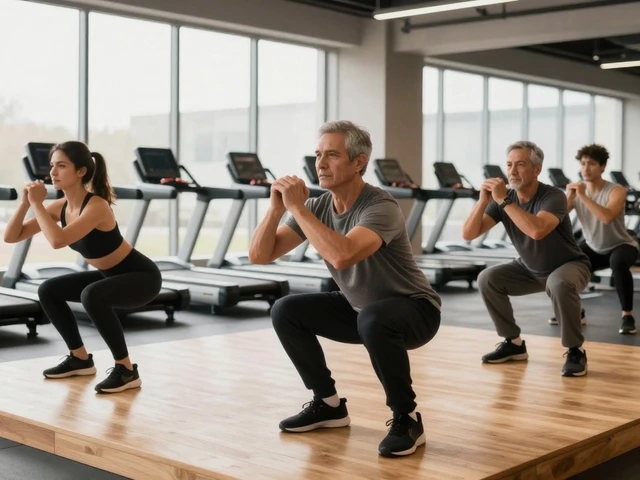
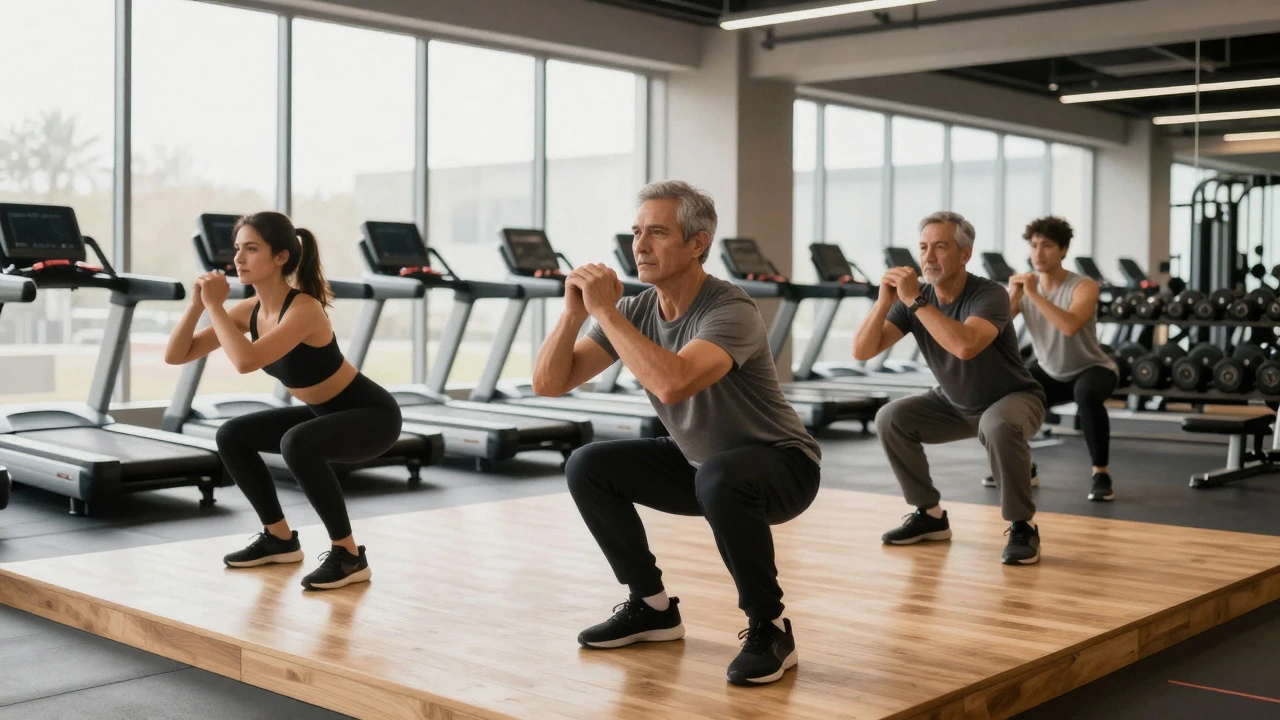
Before worrying about whether you should do 20 or 50 squats, ensure your technique is solid. Poor form is the leading cause of squat-related injuries, particularly in the knees and lumbar spine. Here are the key checkpoints for a safe squat:
- Stance Width: Feet should be shoulder-width apart or slightly wider, with toes pointing out at 15-30 degrees. This aligns with your hip anatomy.
- Knee Tracking: Knees should move in line with your toes. They should not cave inward (valgus), which places stress on the medial collateral ligament.
- Spine Position: Maintain a neutral spine. Avoid rounding your lower back (flexion) or hyperextending your upper back. Brace your core as if preparing for a punch.
- Depth: Aim to get your hips below your knees (parallel). However, depth should be limited by mobility. If you cannot reach parallel without losing spinal alignment, stop at a comfortable depth.
If you are new to squats, start with bodyweight or goblet squats. These variations encourage an upright torso and make it easier to monitor your form in a mirror. Once you master the movement pattern, you can progress to barbell back squats or front squats.

Practical Daily Routine Examples
Here are two sample routines based on different experience levels. You can adapt these to fit your home or gym environment.
Beginner: Daily Maintenance Routine
This routine is designed to be done in less than 5 minutes. It focuses on mobility and basic activation.
- 10 Bodyweight Squats (slow tempo: 3 seconds down, 1 second up)
- 10 Glute Bridges (to activate the posterior chain)
- 30 Seconds Standing Calf Raises
Intermediate: Hypertrophy Split
This routine assumes you are training legs twice a week. On non-leg days, you can skip squats or do very light bodyweight sets.
- Day 1 (Heavy): Barbell Back Squat: 4 sets x 6 reps (RPE 8). Rest 2-3 minutes between sets.
- Day 2 (Volume): Goblet Squat: 3 sets x 12 reps. Leg Press: 3 sets x 15 reps. Lunge Walks: 2 sets x 10 steps per leg.
Frequently Asked Questions
Can I do squats every day?
Yes, but only if the volume is low and the intensity is light. High-intensity heavy squats require 48-72 hours of recovery. Light bodyweight squats (10-15 reps) can be performed daily to maintain mobility and blood flow without causing significant fatigue.
How many squats should a beginner do?
Beginners should start with 2-3 sets of 10-12 bodyweight or goblet squats, 2-3 times per week. Focus on perfect form rather than increasing the number of reps. As strength improves, gradually add weight or increase the number of sets.
Is 100 squats a day too much?
For most people, 100 squats in one day is excessive if they are weighted. It can lead to overuse injuries and central nervous system fatigue. If doing bodyweight squats, 100 reps is a high volume that may cause muscle soreness (DOMS) but is generally safe for healthy individuals. However, splitting them into smaller sets throughout the day is better than doing them all at once.
Do squats burn fat?
Squats are a compound movement that engages large muscle groups, which increases calorie expenditure compared to isolation exercises. While they are not a direct fat burner like cardio, building muscle mass through squats increases your basal metabolic rate, helping you burn more calories at rest over time.
What if my knees hurt when I squat?
Knee pain can result from poor tracking, weak hips, or existing conditions. Ensure your knees track over your toes and brace your core. If pain persists, consult a physiotherapist. Reducing depth until pain-free and focusing on strengthening the surrounding muscles (glutes and quads) can help alleviate discomfort.
You might like