Running Shoe Lifespan Calculator
Estimate when your shoes need replacing based on usage and conditions.
You lace up your trusty pair of trainers for a morning jog, but halfway through, your knees feel a dull ache that wasn’t there last week. It’s easy to blame aging joints or bad form, but the culprit might just be the foam under your feet. Running shoes are not lifetime investments; they are consumable gear with a strict expiration date. Ignoring this timeline doesn't just ruin your comfort-it significantly increases your risk of stress fractures and plantar fasciitis.
The general rule of thumb among podiatrists and elite coaches is simple: replace your shoes every 300 to 500 miles. But life isn't always measured in mileage. If you run irregularly, walk heavily, or have a specific foot structure, that number changes. Let's break down exactly how to tell when your shoes have done their job and need to retire, so you can keep running pain-free.
The 300-to-500 Mile Benchmark
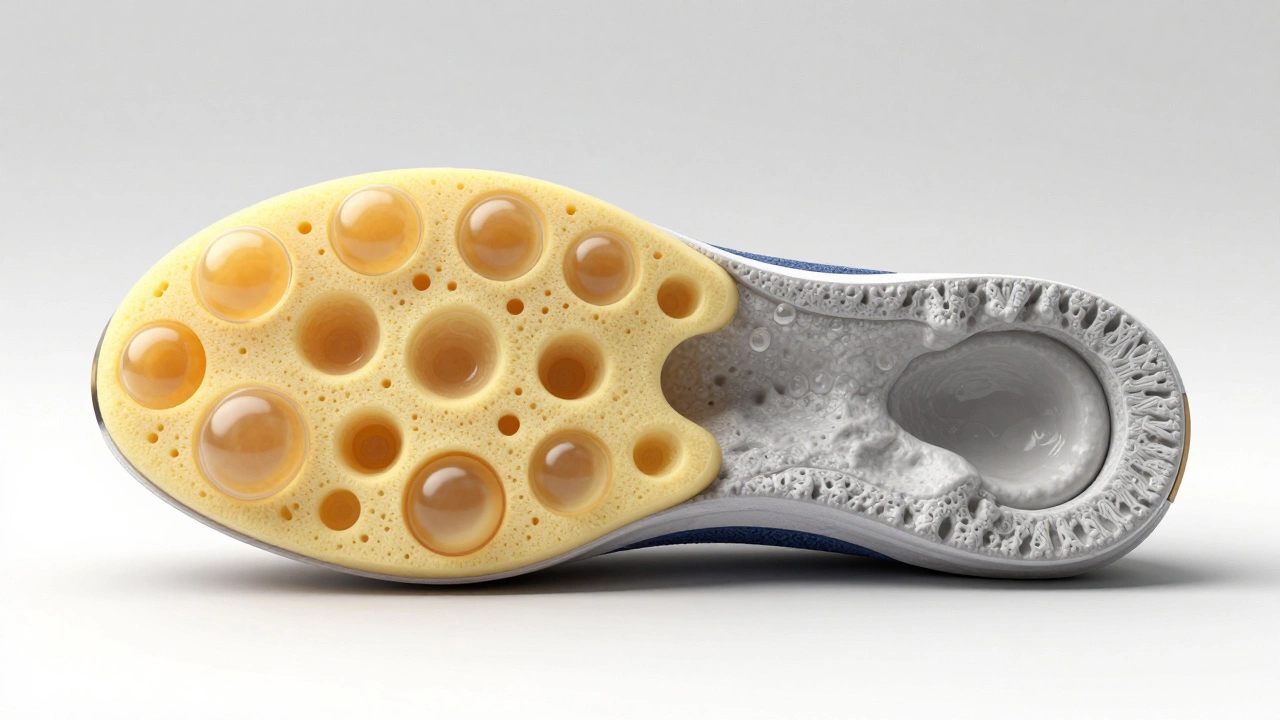
Why do experts cite 300 to 500 miles as the magic window? It comes down to material science. The core of any modern running shoe is the midsole, which is typically made from EVA (ethylene-vinyl acetate) foam or newer compounds like polyurethane. This foam works by compressing to absorb impact energy and then rebounding to return some of that energy to your stride. Over time, the air bubbles within the foam collapse permanently. This process is called "compression set."
When the midsole loses its resilience, it stops cushioning your joints effectively. Instead of absorbing shock, the force travels straight up your legs into your shins, knees, and hips. While the outer rubber sole might look perfectly fine, the internal support system has already failed. For most neutral runners using standard EVA foam, 400 miles is the sweet spot where performance drops noticeably.
- Lightweight runners (<130 lbs): Your shoes may last closer to 500 miles because you exert less force on the midsole with each step.
- Heavier runners (>180 lbs): You will likely hit the limit at 300 miles due to higher impact forces compressing the foam faster.
- Soft foam models: Highly cushioned "super shoes" often sacrifice durability for plushness, sometimes wearing out in as few as 250 miles.
Visual and Physical Signs of Wear
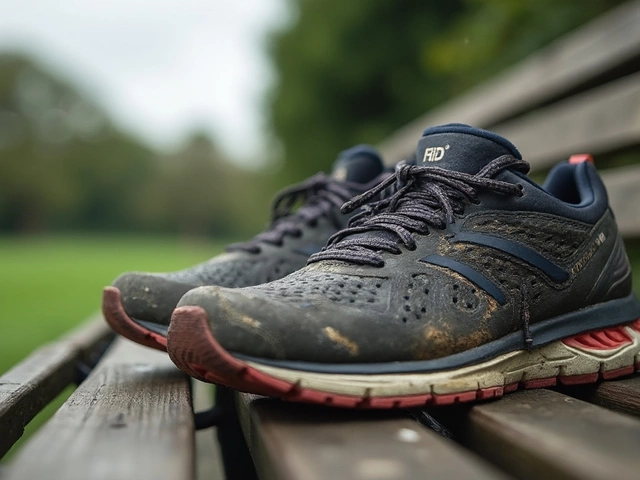
If you don't track your mileage digitally, you need to learn to read the physical signs of decay. Most people wait until the tread is gone, but that’s too late. By the time the bottom looks bald, the structural integrity of the upper and midsole is usually compromised.
Start by looking at the outsole pattern. If you see large patches of smooth rubber where the lugs used to be, especially near the heel or the ball of the foot, traction is slipping. More importantly, check the alignment. Place your shoe on a flat surface. Does it lean noticeably to one side? A tilted midsole indicates uneven wear, which can alter your gait and lead to overuse injuries like IT band syndrome.
Next, inspect the upper mesh. If the fabric is sagging, tearing, or no longer holds its shape around your arch, the shoe has lost its containment. A loose upper means your foot slides inside the shoe, creating friction blisters and reducing stability. Finally, perform the "twist test." Hold the toe and heel of the shoe and try to twist it like a wet towel. New shoes resist twisting; worn-out shoes flex easily in the middle. If it twists effortlessly, the torsional rigidity is gone, and the shoe can no longer protect your arches.
Does Time Matter?
Here is a tricky question: If I buy a pair of shoes and only run in them once a month for five years, are they still good? The answer is no. Even if you never put a mile on them, the materials degrade. Oxidation breaks down the chemical bonds in the foam, causing it to harden and crack. This is known as hydrolysis, particularly common in polyurethane foams.
Most manufacturers recommend replacing shoes every two to three years, regardless of mileage. If you store your shoes in a hot garage or a damp basement, this timeline shrinks. Heat accelerates the breakdown of adhesives and foam. If you pull an old pair out of storage and the midsole feels rock-hard or crumbles slightly when pressed, toss them. They offer zero protection and could cause injury on your first use.
How Your Running Style Changes the Clock
Your biomechanics play a huge role in shoe longevity. Runners who strike heavily on their heels tend to wear out the rear of the shoe much faster than those with a forefoot or midfoot strike. Heel strikers should pay extra attention to the rear midsole density. If it feels mushy compared to the front, it’s time for new gear.
Surface matters too. Running on concrete is far more abrasive than running on dirt trails or a rubberized track. Concrete eats away at the outsole rubber quickly, exposing the softer midsole underneath. Trail runners often face different issues; sharp rocks can puncture the upper or tear the protective plates, while mud can accelerate the breakdown of stitching and glue. If you mix road and trail running, consider keeping two separate pairs to double the lifespan of each.
The Two-Shoe Rotation Strategy
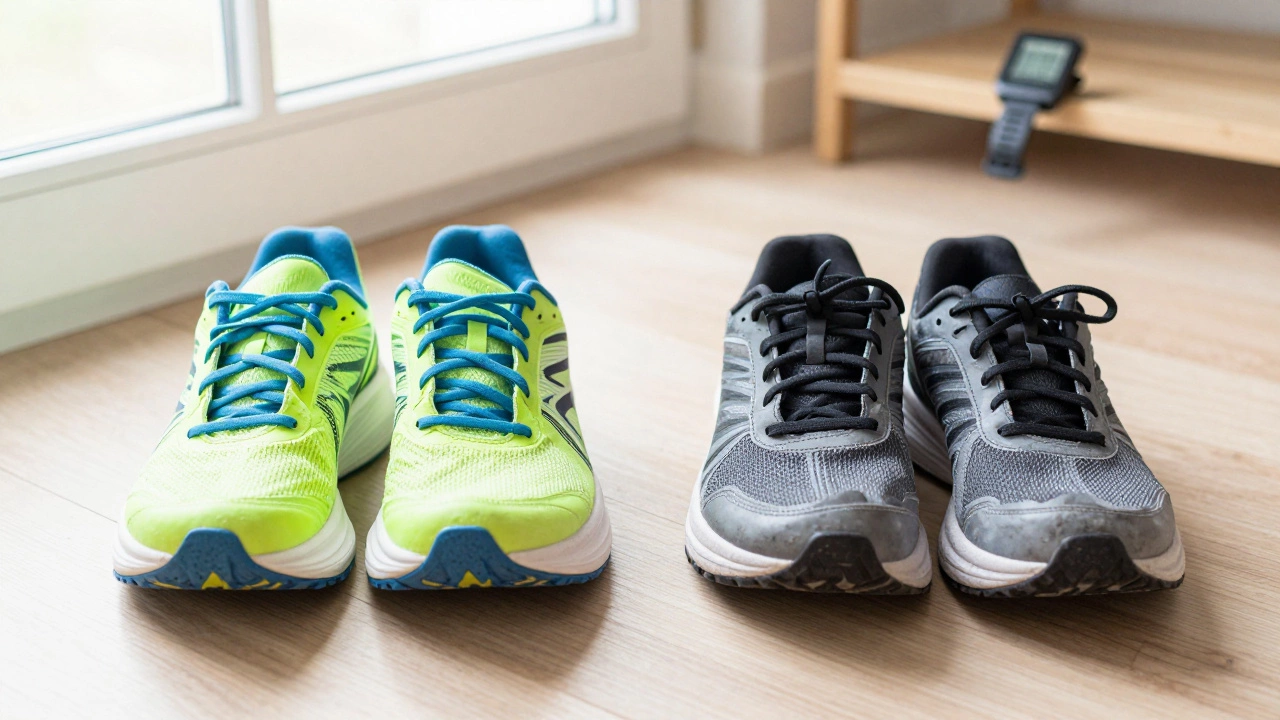
Want to stretch your budget and extend the life of your footwear? Rotate between two pairs of shoes. This is one of the best-kept secrets among serious runners. When you wear the same pair two days in a row, the foam doesn't have enough time to fully decompress and recover its shape. The cells remain collapsed, leading to permanent deformation.
By alternating Pair A and Pair B, you give each pair 48 hours to rebound. Studies suggest this rotation can increase the total lifespan of both pairs by 10-15%. Plus, varying the geometry of the shoes slightly can reduce repetitive stress on the same muscles and tendons, potentially lowering injury risk. Just make sure both pairs fit well and serve a similar purpose (e.g., both are daily trainers).
| Component | What to Look For | Impact on Runner |
|---|---|---|
| Midsole | Visible creasing, loss of bounce, feeling harder | Increased joint impact, shin splints |
| Outsole | Smooth patches, missing lugs, exposed foam | Slipping, reduced stability |
| Upper | Sagging mesh, torn seams, loose fit | Blisters, foot sliding, lack of support |
| Insole | Flattened arch support, visible holes | Fatigue, plantar fascia strain |
Tracking Your Mileage Effectively
Since visual inspection is subjective, tracking data is the most reliable method. Most GPS watches and running apps automatically log distance per shoe model. If you don't use tech, keep a simple notebook. Write down the date you bought the shoes and add the miles after each run. Set a reminder on your phone for 300 miles. When that alarm goes off, inspect the shoes. If they feel dead, replace them. If they still feel springy, you might squeeze out another 50-100 miles, but don't push past 500.
Don't forget to account for walking. If you use your running shoes for daily commuting or gym workouts, those miles count toward the total wear. Walking is lower impact than running, but it adds up. A heavy walker might burn through a pair in 6 months even if they only run occasionally.
Common Mistakes to Avoid
One major error is trying to "fix" worn shoes with new insoles. While a fresh orthotic can improve comfort temporarily, it does nothing to restore the collapsed midsole foam. You’re essentially putting a new mattress pad on a broken box spring. Another mistake is buying expensive "premium" shoes expecting them to last twice as long. Higher price tags often reflect advanced carbon plates or experimental foams, which are frequently *less* durable than basic EVA foam. Don't assume cost equals longevity.
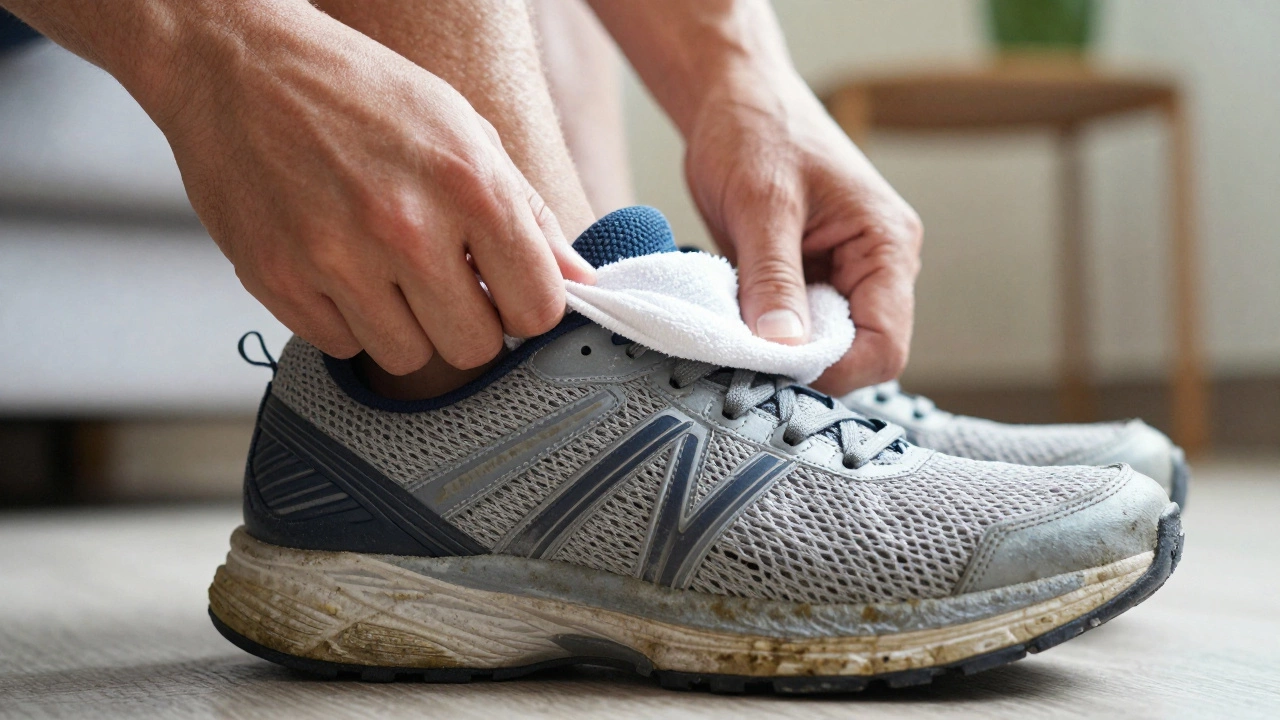
Finally, avoid storing shoes in extreme temperatures. Leaving them in a hot car trunk melts the glue and degrades the foam rapidly. Keep them in a cool, dry place with good airflow. Never wash running shoes in a washing machine; the agitation strips the waterproofing and tears the internal structure. Spot clean with a damp cloth instead.
Can I use old running shoes for walking?
Yes, if the midsole still has some cushion left. Walking puts less stress on shoes than running, so a pair that’s too worn for jogging might still be comfortable for short walks. However, if the foam is completely compressed or cracked, avoid using them for any weight-bearing activity to prevent ankle rolls or knee pain.
Do all running shoes wear out at the same rate?
No. Minimalist shoes with thin soles may wear out faster on rough surfaces but last longer on smooth tracks. Max-cushioned shoes often have softer foam that compresses quicker. Heavy-duty trail shoes with thick rubber outsoles generally last longer than lightweight road racers. Always check the manufacturer's estimated mileage for specific models.
Should I replace both shoes at the same time?
Absolutely. Mixing a new shoe with an old one creates an imbalance in cushioning and height, which can throw off your posture and lead to hip or back pain. Always replace them as a pair to maintain symmetrical support.
How does body weight affect shoe lifespan?
Heavier runners exert more force on the midsole with every step, accelerating foam compression. A runner weighing 200 pounds might need to replace shoes at 300 miles, while a 120-pound runner could get 500 miles. Heavier runners should also look for shoes with denser, more durable foam compounds rather than ultra-soft options.
Is it better to rotate two pairs of shoes?
Yes. Rotating two pairs allows the foam to decompress fully between runs, extending the life of both pairs by roughly 10-15%. It also reduces the risk of overuse injuries by slightly varying the load on your muscles and joints.
You might like