Senior Runner Pace & Strategy Estimator
Your Longevity Plan
Enter your data and click calculate to generate your senior marathon strategy.
Key Takeaways for Endurance and Age
- The oldest verified marathon finishers are typically in their late 80s or early 90s.
- Biological age is often less important than "training age" (how long you've been active).
- Heart health and joint integrity are the primary limiting factors for senior runners.
- Consistency over intensity is the secret to running into your 90s.
Who holds the record for the oldest marathoner?
When we talk about the "oldest," we have to distinguish between someone who just finished a race and someone who set a world record. For a long time, the spotlight was on athletes like Fauja Singh. While he is a global icon for longevity, his claims of being over 100 years old while running marathons were often debated due to a lack of official birth documentation from early 20th-century India. If we look at verified data, World Athletics is the international governing body for the sport of athletics, responsible for certifying world records. They track the masters categories, which break down by 5-year increments. Currently, we see athletes in their late 80s finishing full 26.2-mile courses. For example, runners in the 85-89 and 90-94 brackets occasionally appear in major city marathons, though they usually finish closer to the cutoff time than the winners. What's wild is that these runners aren't usually sprinting. They use a method called "run-walk," where they might run for two minutes and walk for one. This manages the heart rate and prevents the muscles from hitting a wall too early. It's not about the speed; it's about the finish line.The biology of aging and the 26.2-mile distance
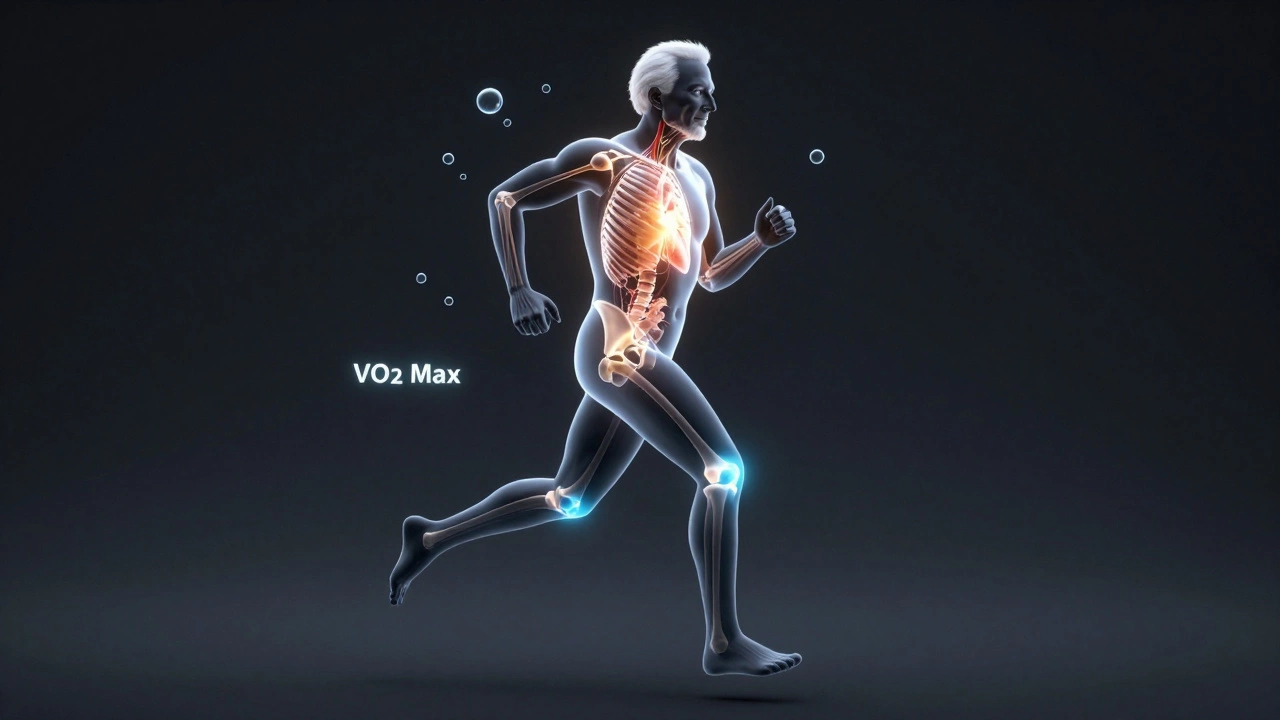
Why can some people do this while others struggle to walk a mile at 70? It comes down to VO2 Max, which is the measurement of the maximum amount of oxygen a person can utilize during intense exercise. Naturally, this drops as we age. A 20-year-old has a massive engine; an 80-year-old has a smaller one. However, the *rate* of decline depends on your lifestyle.| Attribute | Young Adult (20-30) | Senior Athlete (80+) | Impact on Performance |
|---|---|---|---|
| Muscle Mass | High / Peak | Reduced (Sarcopenia) | Slower pace, less power |
| Joint Elasticity | High | Low (Stiffer cartilage) | Higher risk of injury |
| Heart Rate Recovery | Rapid | Slower | Longer recovery between efforts |
| Bone Density | Peak | Lower (Osteoporosis risk) | Requires lower impact loads |
How to train for a marathon as a senior
If you're looking to push your own limits as you get older, you can't follow a standard "Hal Higdon" or "Pfitzinger" plan designed for 30-year-olds. Your body doesn't bounce back from a 10-mile long run in 24 hours. Instead, the focus shifts to Periodization, which is the systematic planning of athletic training to reach peak performance at a specific time. First, prioritize strength. Sarcopenia (muscle loss) is the real enemy. Incorporating resistance training-like squats, lunges, and planks-helps maintain the stability needed to keep the joints from taking the full brunt of the pavement. Without muscle support, the knees and hips wear out long before the lungs do. Second, embrace the slow. Many seniors make the mistake of trying to maintain their "glory days" pace. This is a recipe for a stress fracture. The goal is time on feet, not speed on the watch. A successful training block for a senior might look like three short runs a week and one longer, mixed-intensity walk-run session on the weekend. Third, focus on recovery. Sleep and protein intake become non-negotiable. While a young runner can get by on a burger and six hours of sleep, an older athlete needs high-quality protein (like Greek yogurt or lean fish) to repair the micro-tears in their muscle fibers.The psychological edge of longevity running
It's not just about the legs; it's about the head. Most of the oldest runners in the world possess a trait called "grit." They've lived through decades of life changes, losses, and triumphs. Compared to a mid-life crisis or a career setback, a cramp at mile 20 is a minor inconvenience. Many senior runners report that the social aspect is what keeps them going. Running clubs provide a sense of belonging that combats the isolation often felt in old age. When you're 85 and you have a group of peers pushing you to finish a 5K, the dopamine hit is powerful. This mental resilience often allows them to ignore the pain that would make a younger, less experienced runner quit.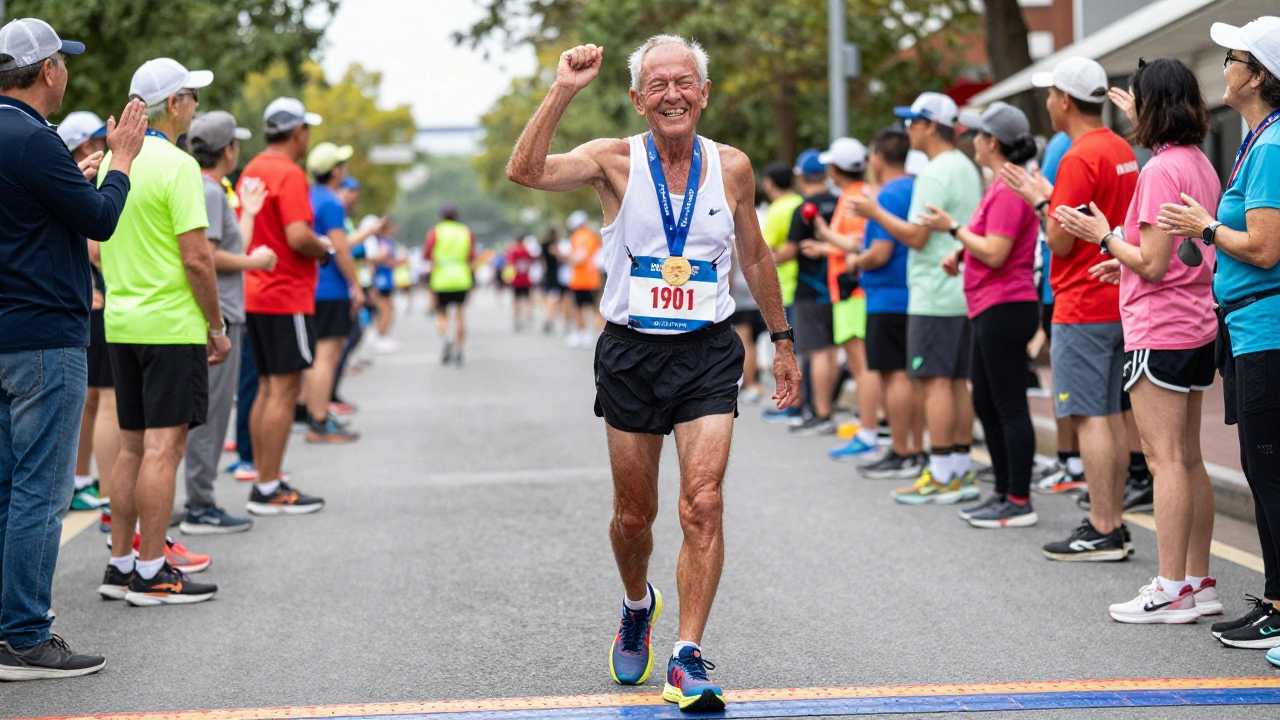
Common pitfalls and risks for older runners
We have to be honest: running a marathon at 80 isn't without danger. The most common issue is the Stress Fracture, which is a small crack in a bone caused by repetitive force or overuse. As bone density drops, the impact of each stride becomes more taxing. This is why many veteran runners switch to softer surfaces, like trails or synthetic tracks, for the bulk of their training. Then there's the risk of hyponatremia-drinking too much water without enough salt. Older adults can have a diminished thirst response, making it easy to either dehydrate or over-hydrate. Managing electrolytes becomes a scientific endeavor. Using salt tablets or high-sodium drinks is often the only way they can maintain muscle function over four or five hours of movement. Lastly, there's the "ego trap." Some runners try to prove they "still have it" by skipping warm-ups or pushing through sharp pain. In your 20s, you can run through a tweak in your calf. In your 80s, that tweak can become a tear that ends your running career permanently. The smartest runners are the ones who know when to stop.The future of the "Evergreen Athlete"
With advancements in nutrition and sports medicine, we are likely to see more people crossing marathon finish lines in their 90s. We are seeing a shift toward Low-Impact Training, where runners use ellipticals or swimming to build aerobic capacity without pounding their joints. This "hybrid' approach allows the heart and lungs to stay strong even when the ankles can't take more miles. We are also seeing better footwear. The rise of maximalist cushioning (think Hoka or New Balance Fresh Foam) has given older runners a second life. These shoes act as external shock absorbers, reducing the load on the hips and lower back, which allows those with arthritis to stay active longer. Whether you're aiming for a Boston qualifying time or just want to walk-run your first 26.2, the lesson from the oldest runners is clear: the body is remarkably adaptable. As long as you listen to the signals and prioritize recovery, there is no arbitrary age where you have to stop moving.Is it safe for someone over 80 to run a marathon?
It can be safe, but it requires a medical clearance. A full cardiovascular screening and a stress test are essential to ensure the heart can handle the prolonged effort. Most seniors who succeed do so by using a run-walk strategy and focusing heavily on strength training to protect their joints.
What is the best training method for senior marathoners?
The most effective method is low-intensity, high-consistency training. This involves focusing on "Zone 2" heart rate training to build aerobic endurance without overstressing the body. Incorporating two days of strength training and ensuring at least two full recovery days per week is critical for avoiding overuse injuries.
How do older runners deal with joint pain?
Many use a combination of maximalist cushioning shoes, running on softer surfaces (like grass or trails), and consistent mobility work. Some also use compression gear to manage swelling and inflammation in the ankles and knees during and after long runs.
Do records for the oldest runner actually exist?
Yes, World Athletics tracks age-grade records. While some individuals claim legendary ages without official papers, the certified records usually fall in the 80s or 90s, depending on the specific distance and gender category.
What is the biggest mistake senior runners make?
The biggest mistake is chasing a pace from their youth. Trying to maintain a speed the body can no longer support leads to injuries like stress fractures and tendon tears. The key to longevity is accepting a slower pace and prioritizing the completion of the distance over the clock.
You might like