US Rugby Knowledge Quiz & Scoring Calculator
Your Score: 0/10
Scoring Calculator
Calculate match scores using US Rugby Union scoring rules
Total Score:
0
Did You Know?
A Try = 5 points, Conversion = 2, Penalty Drop Goal = 3. In Union, players cannot throw the ball forward!
The Short Answer: It's Still Called Rugby
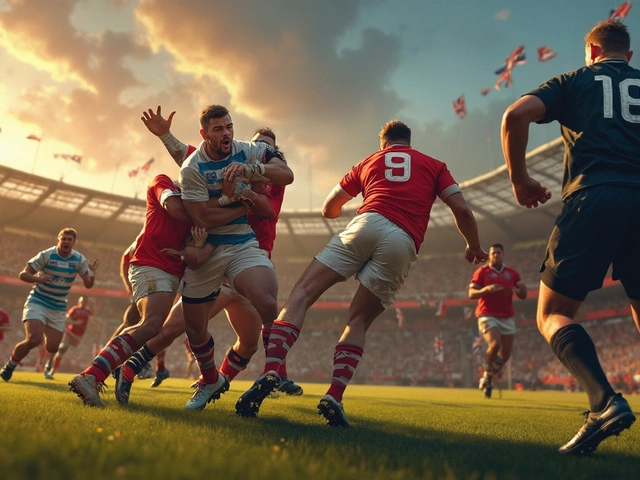
If you travel across the border from Canada into the United States, you will hear the same word we use up here. Americans call the sport Rugby. a contact team sport played with an oval ball that originated in England. . There isn't a secret slang term that changes its name entirely. However, the confusion comes from something else. Because the United States has a completely different obsession with a similar-looking sport, people sometimes mix up the names when they first learn the game.
The Great Confusion: Rugby vs. American Football
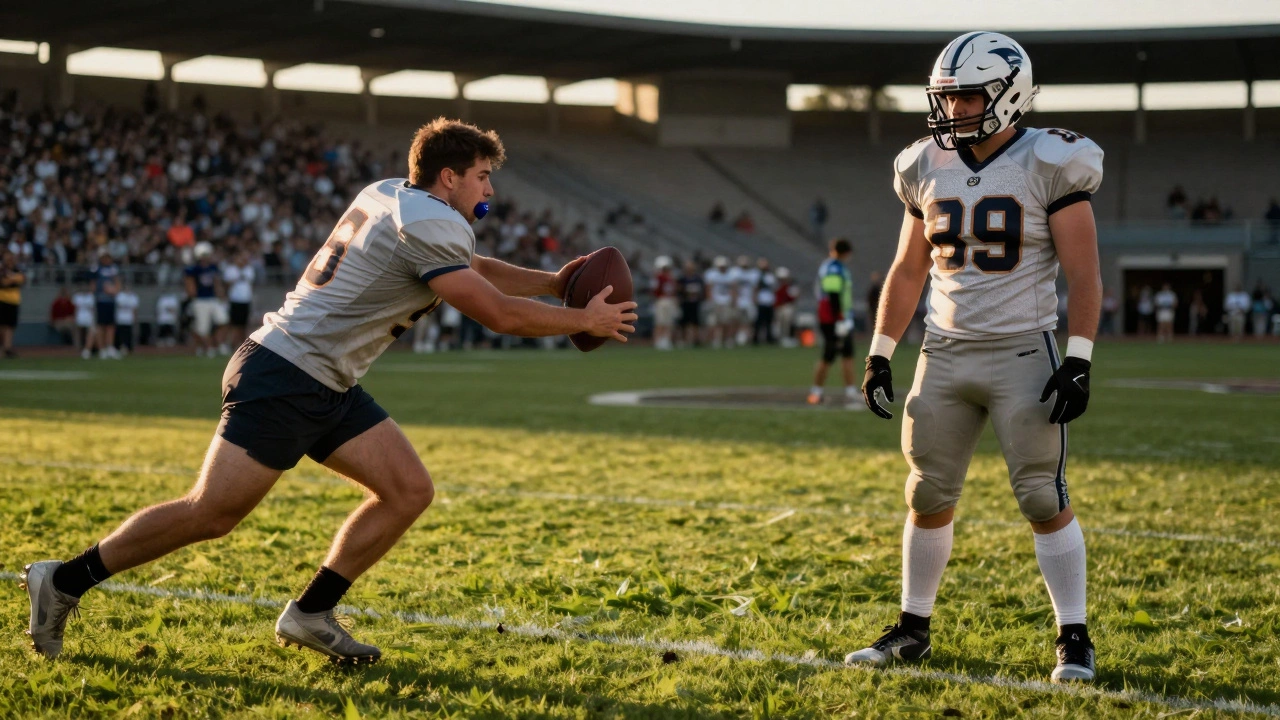
The reason this question gets asked so often stems from the popularity of American Football. a dominant sport in the US featuring padded players and downs systems. . In the US, the major professional league is the National Football League, known as the NFL. This league overshadows almost every other sport in terms of money and media coverage. When someone sees a player carrying an oval-shaped ball, many casual observers assume they are watching the version of football Americans play. But the two games are very different under the hood.
The biggest difference is equipment. In American football, players wear heavy helmets and shoulder pads to protect themselves during high-speed tackles. In rugby, the rules limit what you can wear, meaning players usually wear just a jersey, shorts, boots, and a mouthguard. You see skin more than you see plastic armor. This difference changes the flow of the game completely. The continuous clock in rugby versus the stop-start nature of American football creates a different rhythm that fans get addicted to quickly.
Major League Rugby Explained
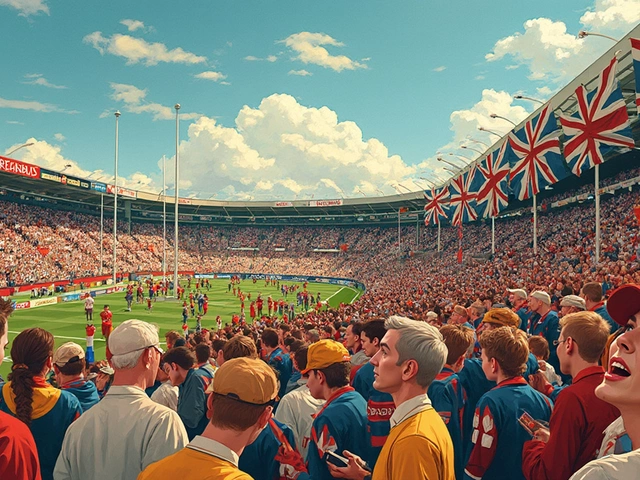
For years, there wasn't much professional rugby happening in the US compared to Europe. That changed recently with the rise of Major League Rugby. Launched in 2018, Major League Rugby. the top-tier men's professional rugby union competition in North America. has given the sport a home. Teams play in cities like Dallas, Los Angeles, San Diego, and New York. If you ask an American who follows sports about rugby today, chances are they are watching one of these teams.
The league operates on a schedule that avoids clashing too hard with the NFL. Seasons typically begin in January and wrap up with playoffs in the late spring or early summer. This timing allows fans to enjoy rugby without fighting for their attention against the Thanksgiving day football games. The quality of play has improved drastically over the last few seasons, with clubs investing heavily in facilities and coaching staff. Players come from all over the world, making it a truly international experience despite being based in the States.

College Play and Amateur Roots
Professional leagues aren't the only place rugby lives in the US. Universities take the sport seriously. The National Collegiate Athletic Association supports competitive college rugby teams. Many American colleges host robust club teams even if they aren't fully varsity funded like basketball teams. This pipeline feeds talent into the national team and professional clubs. It keeps the culture alive in high schools across the country too.
USA Rugby governs the sport nationally. They organize national teams for both men and women. The women's team, known as the Eagles, competes regularly on the world stage. Their success has driven growth in youth participation. Many parents look for contact sports that teach teamwork without the heavy reliance on protective gear found in gridiron. The accessibility of the sport makes it a good alternative for young athletes looking to try something new.
| Feature | Rugby | American Football |
|---|---|---|
| Ball Shape | Oval | Oval |
| Protective Gear | Minimal (Mouthguard) | Full Pads and Helmet |
| Players per Side | 15 | 11 |
| Clock Flow | Continuous play | Stop-start quarters |
| Primary Action | Tackling allowed | Fouling and tackling |
Understanding the Two Codes
Even within the name "Rugby," there are technical divisions that affect terminology. Most Americans playing the sport refer to Rugby Union. the most common variant of rugby played worldwide including amateur levels. . This is the Olympic sport and the one seen at the World Cup. There is also Rugby League. While less popular in the US market, some regions have interest in it. Historically, League had different rules regarding player substitutions and tackle counts. For the vast majority of US fixtures and broadcasts, however, the product shown is Union rules. If you book a ticket or turn on the TV, you are watching Union.

The Seasonal Cycle in the US
Understanding the timing helps if you want to catch a match while visiting. The domestic season runs differently from the European club season. While teams in England or France play mostly in winter months, US teams align with the calendar year. This setup ensures better weather conditions for outdoor stadiums during spring and summer. International windows interrupt the local flow occasionally. This allows national squads to train and compete in global tournaments.
Six Nations is a big deal globally, involving teams from France, Ireland, Italy, Scotland, Wales, and England. Even though these are not American teams, American fans watch them religiously. These tournaments happen annually in February and March. Following this timeframe helps contextualize when the US national team usually participates in qualifying matches or warm-ups. It connects the American fanbase to the wider international community.
Vocabulary Tips for Travelers
If you plan to attend a match in the States, learning a few key terms helps immensely. In rugby, a try is worth five points. Converting that try adds two more. A penalty kick gives three points. This scoring system is distinct from the touchdown-scoring method in American football. Using the right terminology shows respect to the locals. Fans appreciate knowing the difference between a ruck and a maul. They love explaining these nuances to newcomers. Engaging with these details makes the viewing experience richer.
Don't worry about getting it wrong initially. Most clubs in cities like Seattle or Chicago have welcoming atmospheres designed for beginners. Volunteers are often available to explain the rules before kickoff. Bar scenes surrounding the stadiums become communal areas where strangers share excitement over tries. The social aspect is arguably just as important as the gameplay itself for many attendees.
Is Rugby legal in the United States?
Yes, rugby is perfectly legal. It is fully sanctioned by various state athletic commissions for organized play. It operates alongside other recognized sports with safety regulations enforced by governing bodies like USA Rugby.
Can you catch a game in California?
Absolutely. Teams like the LA Giltinis and San Diego Legion play in Southern California venues. The Pacific region has a very active following with multiple clubs operating throughout the area.
What is the difference between Rugby Union and League?
Union allows more players on the field and focuses on continuous play with ten-tackle limits. League restricts player numbers slightly and emphasizes territorial gain with six-tackle sets. Most US fans follow Union rules exclusively.
Are there youth teams available?
Youth pathways exist nationwide. Programs often start as early as age seven with tag versions to minimize collision risks before full contact begins in teenage years.
Why do people confuse it with gridiron?
Both sports use an oval ball and involve tackling. Visual similarities lead to confusion because American Football dominates the cultural landscape. Once rules are explained, the distinction becomes very clear to viewers.
You might like