

Golf Scoring Simulator
--
Enter your strokes to see the result
Imagine standing on the green, heart pounding slightly faster than usual. You sink your putt, look up at the scoreboard, and realize you just beat the course designer’s expectation by one stroke. That moment of satisfaction? That’s what we call a birdie. But if you are new to the sport, hearing people shout "Birdie!" or seeing it listed on a scorecard can feel like decoding a secret language. Why birds? Why not just say "one under"?
Golf has its own unique vocabulary that dates back over a century. Understanding these terms is the first step to enjoying the game fully. A birdie isn't just a random name; it represents a specific achievement relative to the difficulty of the hole. To truly grasp what a birdie is, we need to look at the foundation of golf scoring: Par.
The Foundation: Understanding Par
You cannot define a birdie without first defining Par. In simple terms, par is the standard number of strokes an expert golfer should take to complete a hole. It serves as the baseline for every round of golf. Course architects design holes with specific lengths and obstacles to determine this number.
Most golf courses consist of 18 holes. The total par for a standard course is usually 72, though some vary between 69 and 74 depending on the layout. Holes are categorized into three main types based on their par:
- Par 3: Short holes, typically under 250 yards. The expectation is to reach the green in one shot (the drive) and then two putts.
- Par 4: Medium-length holes, ranging from 251 to 470 yards. The goal is two shots to reach the green, followed by two putts.
- Par 5: Long holes, usually over 471 yards. Players aim to reach the green in three shots, plus two putts.
When you hear someone talk about scoring, they are always comparing their actual performance against this par benchmark. If you match par, you have scored "even par." If you exceed it, you are "over par." And if you beat it, you enter the territory of birdies and better.
Defining the Birdie
A birdie occurs when a player completes a hole in one stroke fewer than par. It is a positive score that improves your overall total for the round. While it might seem like a small margin, accumulating birdies is exactly how professional golfers win tournaments and how amateurs break through score barriers like 90 or 80.
Let’s break down what a birdie looks like on different types of holes:
| Hole Type | Standard Strokes (Par) | Birdie Score | Typical Scenario |
|---|---|---|---|
| Par 3 | 3 | 2 | Drive onto the green, one putt to sink it. |
| Par 4 | 4 | 3 | Drive, approach shot to the green, one putt. |
| Par 5 | 5 | 4 | Drive, long second shot, approach to green, one putt. |
Notice the pattern? Regardless of the hole length, a birdie always requires excellent ball-striking and precise putting. On a Par 3, it means hitting your tee shot close enough to the pin for a tap-in or short putt. On a Par 5, it often involves reaching the green in two shots (an eagle attempt that settles for a birdie) or saving a par after a poor drive.
The Origin Story: Why "Birdie"?
If you think the term sounds whimsical, you’re right. The word "birdie" didn’t start with golf; it started with American slang from the late 19th century. Back then, calling something "bird" meant it was excellent, top-notch, or high-quality. So, a "birdie" was simply a very good thing.
The specific connection to golf happened in 1899 at the Midland Beach Country Club in New Jersey. According to historical accounts, a group of players was playing a round when one of them, Ab Smith, hit a remarkable second shot on the 12th hole. The ball landed just inches from the cup. Smith reportedly exclaimed, "That's a bird of a shot!" His playing partner, Larry Eddie, agreed, suggesting the shot deserved the term "a birdie."
From that casual conversation, the term stuck. As golf spread across the United States and eventually the world, "birdie" became the universal standard for one-under-par. This origin story also explains why other golf scores follow similar linguistic patterns, leading to terms like "bogey" and "eagle."
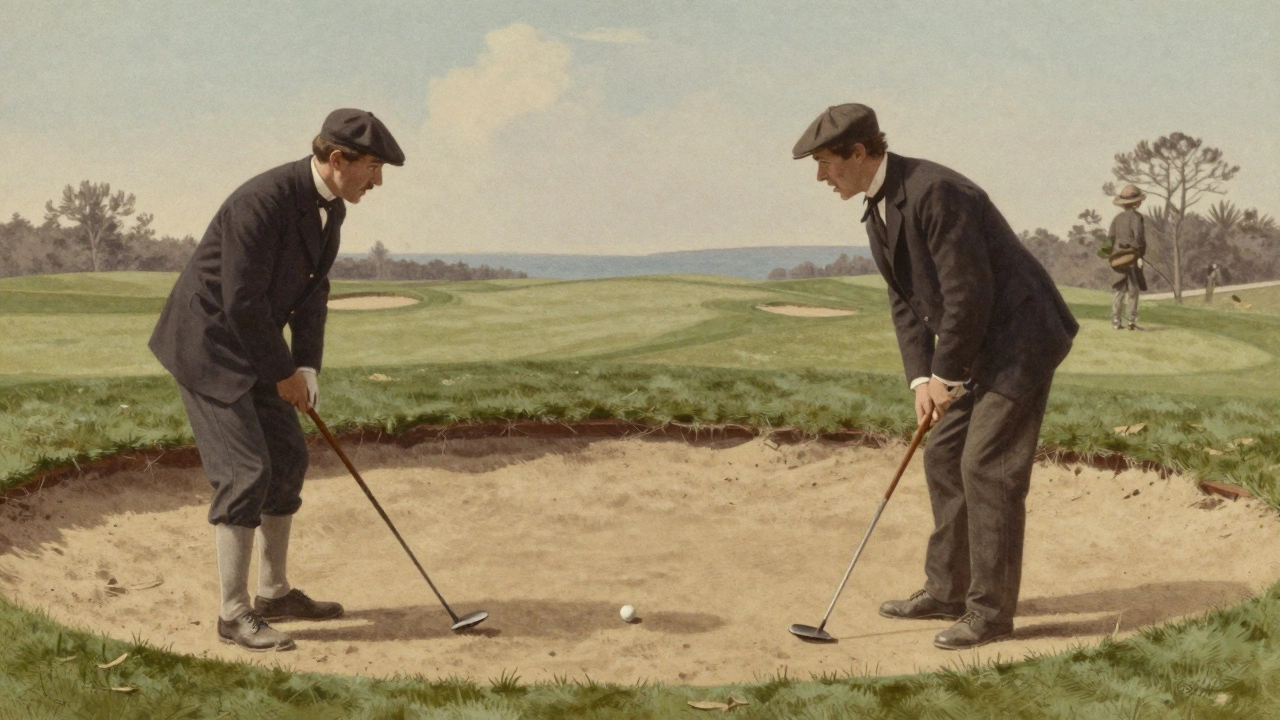
Birdie vs. Other Golf Scores
To appreciate a birdie, it helps to know where it sits in the hierarchy of golf scores. Golf terminology uses animals and colloquialisms to describe deviations from par. Here is how a birdie compares to its neighbors:
- Albatross (Double Eagle): Three strokes under par. Extremely rare, especially on a Par 5.
- Eagle: Two strokes under par. A fantastic score that excites any crowd.
- Birdie: One stroke under par. The gold standard for good play.
- Par: Meeting the expected score. Solid, respectable play.
- Bogey: One stroke over par. A frustrating but common occurrence.
- Double Bogey: Two strokes over par. Usually indicates a mistake, like a penalty stroke or a missed green.
Interestingly, while "birdie" comes from positive slang, "bogey" has a darker origin. It refers to the "bogey man," a mythical figure used to frighten children. In golf, bogey originally referred to a hypothetical perfect player who could consistently score par. Over time, as standards improved, bogey came to mean one-over-par. So, while a birdie is a celebration, a bogey is a reminder of the game’s unforgiving nature.
How Common Are Birdies?
If you are just starting out, don’t worry if you aren’t sinking birdies every round. They are statistically difficult to achieve. For the average amateur golfer, shooting a birdie might happen once every few rounds, if at all. Most recreational players focus on avoiding double bogeys rather than chasing birdies.
However, as you improve, birdies become more frequent. Mid-handicap golfers (those with handicaps between 10 and 20) might shoot a birdie once per round. Low-handicap players (single digits) often shoot multiple birdies per round. Professional golfers, who play on courses designed to challenge even the best in the world, typically shoot around 2 to 3 birdies per round. During major championships, where conditions are tougher, pros might only manage one birdie every few holes.
The frequency of birdies depends heavily on course difficulty. A flat, wide-open municipal course will yield more birdies than a narrow, tree-lined championship course with fast greens. Wind, humidity, and grass type also play significant roles. Playing in Calgary, Canada, for example, means dealing with unpredictable wind gusts that can turn a potential birdie opportunity into a bogey if you aren’t careful with club selection.

Strategies to Increase Your Birdie Count
Want to see more birdies on your scorecard? It starts with smart decision-making rather than just swinging harder. Here are practical tips to help you convert pars into birdies:
- Prioritize Putting: Most birdies are made on the green. If you can sink putts inside 3 feet, you dramatically increase your chances. Practice lag putting to get balls close to the hole, setting up easy tap-ins.
- Play Smart Off the Tee: You don’t need to hit the driver 300 yards to score a birdie. Accuracy matters more. Landing in the fairway gives you a clear approach shot. Missing the fairway often leads to difficult lies that prevent birdie attempts.
- Aim for the Center of the Green: On Par 3s and Par 4s, aiming directly at the pin can be risky. If you miss, you might end up in a bunker or rough. Aim for the center of the green to ensure you have a straightforward putt. Consistency beats heroics.
- Know When to Go for It: On Par 5s, assess whether you can realistically reach the green in two shots. If you are short, lay up to a comfortable distance for your third shot. Trying to force a long drive off the tee often results in penalties or lost balls, turning a potential birdie into a triple bogey.
- Read Breaks Carefully: Greens slope and tilt. Take time to read the grain and contour before putting. A misread putt can roll past the hole, costing you the birdie chance.
Remember, golf is a mental game. Getting frustrated after a bogey can lead to aggressive, poorly thought-out swings on the next hole, killing your birdie momentum. Stay patient, trust your process, and celebrate the small wins.
Birdies in Tournament Play
In professional golf, birdies are currency. Tournaments are won and lost on who can string together birdies without giving away free strokes through bogeys. Watch a Sunday broadcast of the Masters or the Open Championship, and you’ll notice leaders often have negative scores like -5 or -8. These numbers represent accumulated birdies throughout the week.
Course setup plays a huge role here. Tournament organizers may firm up greens or thin out rough to make birdies harder, forcing players to execute perfectly. Conversely, during wet weeks, soft greens hold approaches better, leading to higher birdie counts and lower winning scores. Understanding these dynamics helps fans appreciate why certain players thrive in specific conditions.
For amateurs, tracking your birdie percentage can be a useful metric. Instead of focusing solely on total score, note how many holes you had a realistic birdie opportunity and how many you converted. This insight highlights areas for improvement, such as chipping accuracy or short-game confidence.
Common Misconceptions About Birdies
New golfers often misunderstand what constitutes a birdie. Here are a few clarifications:
- It’s Not Just for Pros: Anyone can shoot a birdie. Even beginners occasionally hole out on short Par 3s or sink lucky long putts. It’s part of the fun!
- Penalties Don’t Disqualify You: If you incur a penalty stroke (like dropping a ball out of bounds), you can still technically shoot a birdie if your final score is one under par. However, this is extremely rare and usually involves complex situations.
- Net Birdies Count Too: In handicap play, a "net birdie" occurs when your adjusted score (after applying handicap strokes) is one under par. This is a great way for higher-handicap players to experience the thrill of a birdie regularly.
Understanding these nuances removes pressure and allows you to enjoy the game more. Golf is about progress, not perfection. Every birdie, no matter how lucky or skilled, is a reason to smile.
Is a birdie considered a good score in golf?
Yes, a birdie is considered a very good score. It means you completed the hole in one stroke less than the expected par. For most amateur golfers, shooting a birdie is a highlight of the round and indicates strong performance on that specific hole.
What is better than a birdie in golf?
Scores better than a birdie include an Eagle (two strokes under par) and an Albatross or Double Eagle (three strokes under par). An Ace or Hole-in-One is also better than a birdie, particularly on Par 3 holes, where it counts as a double eagle.
Why is it called a birdie and not something else?
The term originated from early 20th-century American slang where "bird" meant something excellent or cool. In 1899, golfers at Midland Beach Country Club used the phrase "birdie" to describe a particularly good shot, and the name stuck as the standard term for one-under-par.
Can you get a birdie on a Par 5?
Yes, absolutely. A birdie on a Par 5 means completing the hole in 4 strokes. This often involves reaching the green in two shots (a long drive and a long second shot) and then sinking two putts, or reaching the green in three shots and making one putt.
How many birdies do professionals shoot per round?
Professional golfers typically shoot between 2 and 3 birdies per round on standard tournament courses. On easier layouts or during favorable weather conditions, this number can rise to 4 or 5. Major championships often feature tougher setups, reducing birdie averages.
You might like