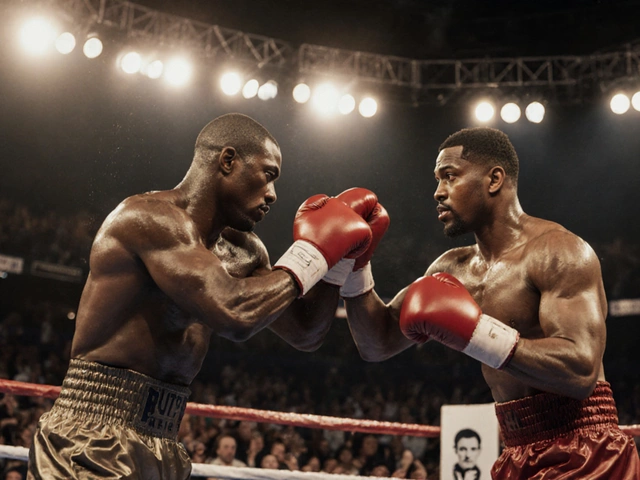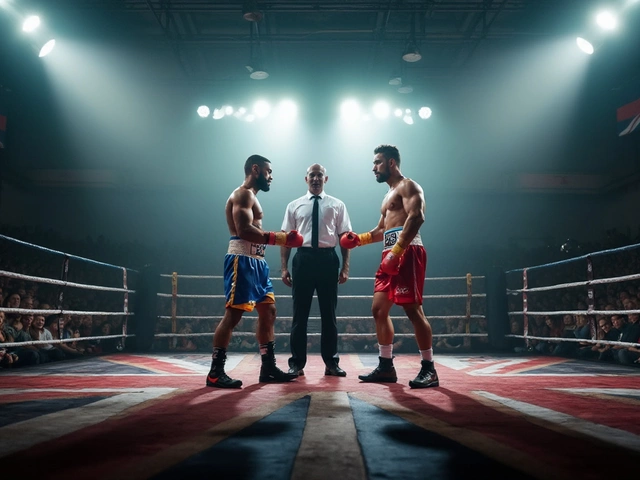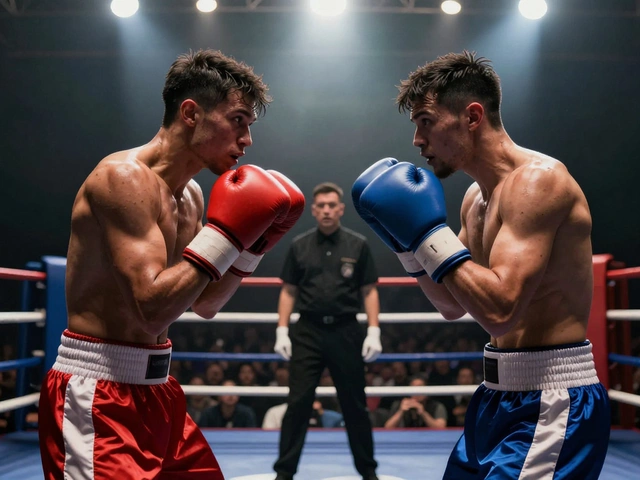
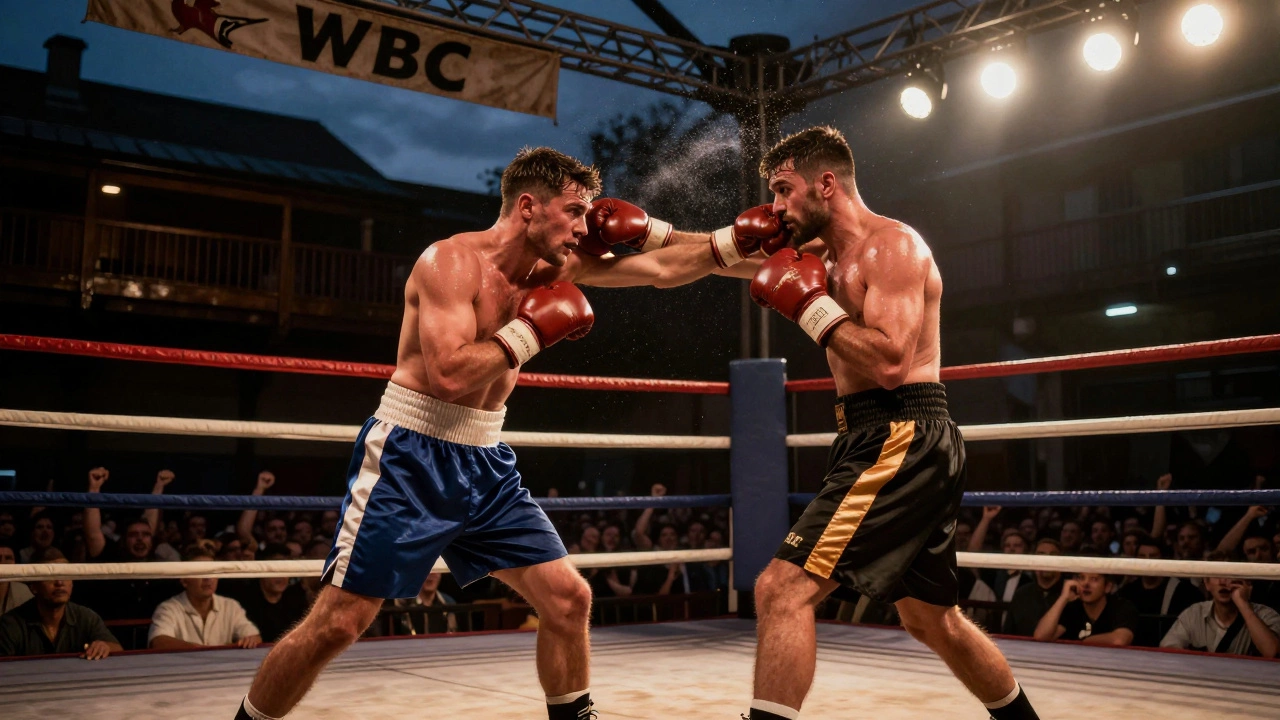
When you hear someone say "boxing match," you might picture two fighters in a ring, gloves on, sweat flying, the crowd roaring. But what’s the real term for that thing they’re doing? Is it just a "fight"? A "battle"? Or is there a specific name used by trainers, referees, and fans alike?
The Official Term: Bout
In boxing, a fighting match is officially called a bout. That’s the word you’ll see on fight cards, in official records, and heard in broadcast commentary. It’s not just slang-it’s the formal term used by sanctioning bodies like the WBC, WBA, and IBF. A bout isn’t just any punch-up; it’s a regulated contest with rules, rounds, judges, and weight classes.
Why "bout" and not "fight"? It’s partly tradition, partly professionalism. "Fight" is the casual term-something you’d say to a friend: "Did you see that fight last night?" But when the promoter prints the poster, it reads: "WBC Lightweight Championship Bout: Rivera vs. Chen." The word "bout" signals this is a structured, sanctioned event-not a street brawl.
How a Bout Works
A typical professional boxing bout lasts between 4 and 12 rounds, each round lasting 3 minutes, with a 1-minute rest between rounds. Amateur bouts are shorter-usually 3 rounds. The number of rounds depends on the level of the fighters, the title at stake, and the rules of the commission overseeing the event.
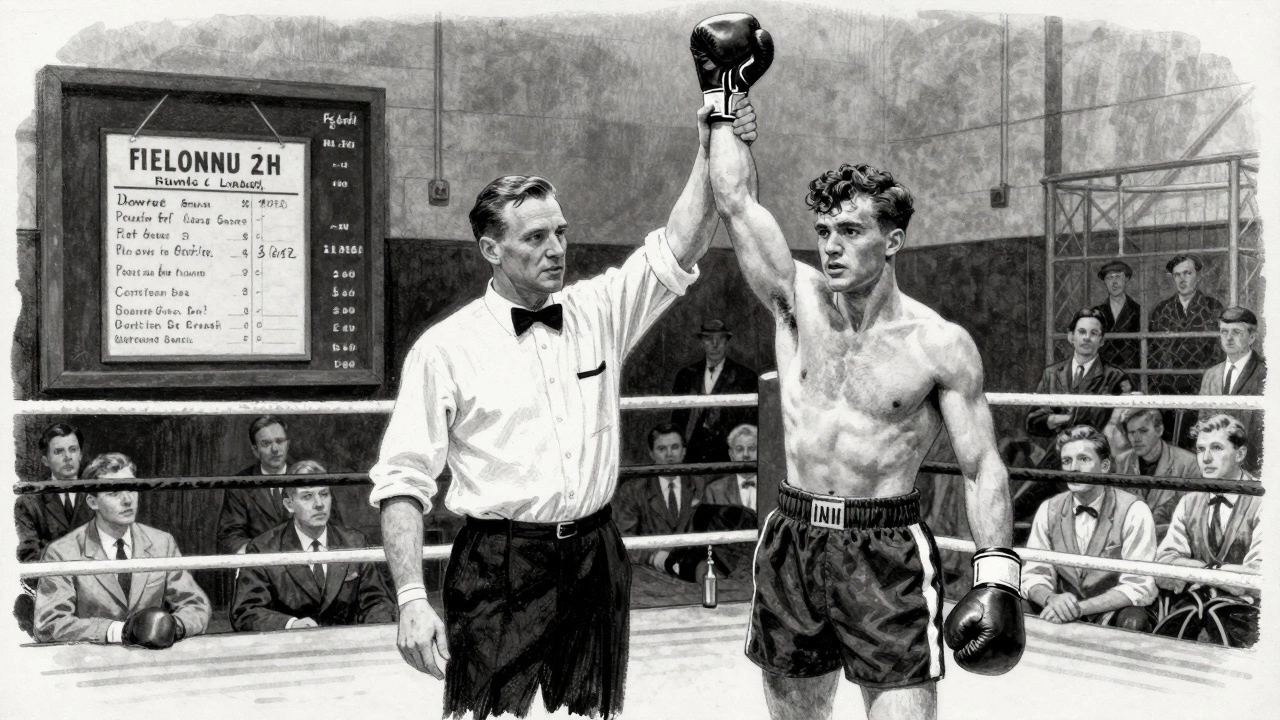
Each bout has a referee in the ring to enforce rules, three judges scoring from ringside, and a timekeeper. The winner is decided by decision (if no knockout), TKO, or disqualification. The bout ends when the final bell rings, or when one fighter can’t continue.
Some bouts are billed as "main events," others as "co-main events" or "undercard bouts." The main event is the one fans pay to see-the title fight, the big name, the one that closes the show.
Other Terms You’ll Hear
Even though "bout" is the correct term, you’ll hear other phrases thrown around. Here’s what they mean:
- Fight - The everyday word. Used by fans, media, and even fighters. "He’s got a tough fight ahead." It’s not wrong, just informal.
- Match - Common in other sports like tennis or wrestling. In boxing, it’s understood but rarely used in official contexts.
- Clash - A flashy term used in promotional material. "The Clash of Titans!" Sounds cool on a billboard, but no one’s filing paperwork with that name.
- Encounter - Rare, used in European or formal writing. Sounds like a diplomatic meeting, not a punch-up.
Bottom line: if you’re talking to a coach or reading a rulebook, say "bout." If you’re chatting at the gym, "fight" works fine. But if you want to sound like you know your stuff, use "bout."
History Behind the Word
The word "bout" comes from the Old French "bouter," meaning "to push" or "to thrust." It entered English in the 1500s to describe a short contest or trial-like a fencing bout or a wrestling bout. By the 1800s, as boxing became more organized in England, "bout" became the standard term for a regulated fight.
Before formal rules, bare-knuckle fights were called "prize fights"-because fighters competed for cash prizes. The Marquess of Queensberry Rules in 1867 changed everything: gloves, timed rounds, no grappling. With structure came new language. "Bout" stuck because it fit the new, cleaner version of the sport.
Why It Matters
Using the right term isn’t just about being correct-it’s about respect. Boxing has a long, proud history. Fighters train for years. Promoters risk thousands. Referees put their reputation on the line. Calling it a "bout" acknowledges the discipline, the skill, the tradition behind it.
Think of it like this: you wouldn’t call a symphony a "noise session," even if someone’s just banging on a piano. A bout is a performance. It’s science, strategy, and heart all wrapped in leather and sweat.
Real-World Examples
Check any official boxing record. Look up Muhammad Ali’s career. You won’t find "Ali fought 61 times." You’ll see: "Ali competed in 61 professional bouts." The same goes for Mike Tyson, Manny Pacquiao, Canelo Álvarez-all have bout counts listed in their records.
In Canada, where boxing has deep roots in cities like Montreal, Toronto, and Calgary, local promoters still use "bout" on posters and tickets. The Alberta Boxing Commission lists all events as "licensed bouts." Even the amateur youth programs call them bouts-because they’re teaching not just technique, but tradition.
What About Other Combat Sports?
Boxing isn’t the only sport with its own name for a match. MMA calls it a "fight" or "bout" interchangeably. Muay Thai uses "match" or "fight." Wrestling? "Match." But boxing? It’s always been "bout."
That’s part of what makes it unique. The language reflects the sport’s evolution-from brutal bare-knuckle contests to a global, highly regulated athletic discipline. The word "bout" carries that legacy.
Final Thought
So, what’s a fighting match called in boxing? Bout. Simple. Clear. Official. And if you want to sound like you really understand the sport, that’s the word to use. Whether you’re watching from the stands, training in the gym, or just talking about it over coffee, saying "bout" shows you get it-not just the punches, but the culture behind them.
Is a boxing bout the same as a fight?
Yes, but "bout" is the official term used in records, rules, and by professionals. "Fight" is the casual word fans and media use. They mean the same thing, but "bout" carries the weight of tradition and regulation.
How many rounds are in a boxing bout?
Professional bouts can be 4, 6, 8, 10, or 12 rounds, with each round lasting 3 minutes. Amateur bouts are usually 3 rounds. Title fights and main events are typically 12 rounds. The number depends on the fighters’ experience and the sanctioning body’s rules.
Why do they call it a bout and not a match?
"Bout" comes from French and was adopted in the 1800s as boxing became formalized. It distinguishes the sport from other combat disciplines like wrestling or MMA. The term reflects boxing’s structured, rule-bound nature. "Match" is used in other sports, but boxing kept "bout" as part of its identity.
Can a boxing bout end before the final bell?
Yes. A bout can end early by knockout (KO), technical knockout (TKO), referee stoppage, disqualification, or if a fighter’s corner throws in the towel. These are all official ways a bout concludes without going the distance.
Are all boxing bouts televised?
No. Only high-profile bouts-title fights, main events, or fights with big-name fighters-are televised. Most bouts, especially at the amateur or local level, happen in small gyms or community centers without cameras. The majority of boxing happens out of the spotlight.
You might like