

Legal Status Checker: Is It Illegal Boxing?
Select the characteristics of the fight you want to classify. The tool will analyze the factors to determine if it is considered "Illegal," "Legal," or "Unstructured."
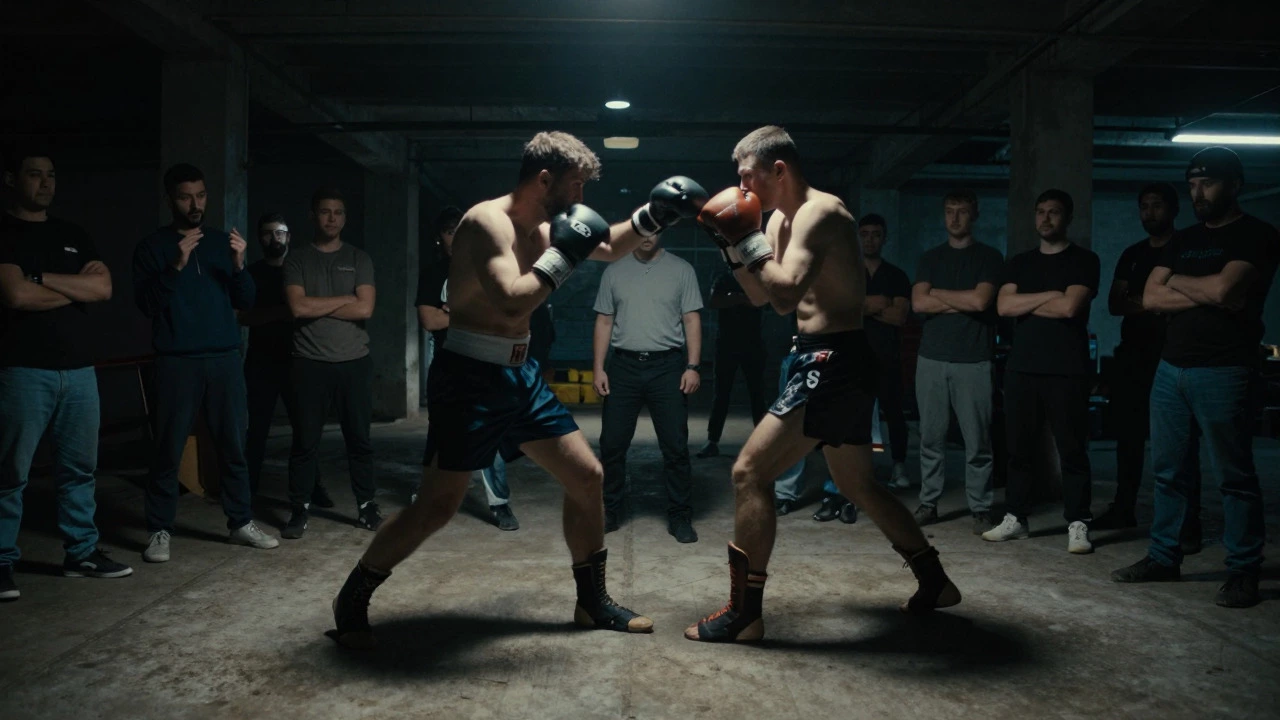
Ever watched a gritty movie where two guys step into a dark basement ring without gloves? That scene isn't just Hollywood drama; it reflects a real-world phenomenon that has existed for centuries. When people ask what illegal boxing is called, they are usually referring to one of three distinct things: bare-knuckle boxing, underground boxing, or simply unlicensed street fighting. While "illegal" implies a lack of legal sanction, the terminology varies based on whether the fighters wear gloves, have a referee, or operate outside state regulatory commissions.
The confusion often stems from the fact that bare-knuckle boxing is actually legal in several U.S. states today, yet it remains banned in most professional jurisdictions. This creates a linguistic gray area where fans use "illegal" as a catch-all term for any fight that doesn't appear on a major television broadcast or carry a state athletic commission license. Understanding these distinctions helps clarify why some fights are celebrated as heritage events while others are treated as criminal offenses.
Bare-Knuckle Boxing: The Most Common Misconception
The term most frequently associated with illegal boxing is Bare-Knuckle Boxing. It is a form of fistfighting where competitors punch each other without protective hand gear, relying instead on tape wrapped around their hands to prevent joint injury. Unlike modern Olympic or professional boxing, which mandates padded gloves to reduce the risk of cuts and skull fractures, bare-knuckle bouts emphasize speed and precision because every strike must land cleanly to be effective.
Historically, bare-knuckle boxing was the dominant form of the sport in the 19th century. It only became standardized under the Marquess of Queensberry Rules in 1867, which introduced three-minute rounds and mandatory glove usage. However, the style never fully disappeared. In recent years, organizations like Bare Knuckle Fighting Championship (BKFC) have brought the discipline back into the spotlight, operating legally in states such as New York, Nevada, and Texas. Despite this resurgence, many purists still refer to any non-gloved fight as "illegal," even when it is fully licensed and televised. This habit persists because the sport spent decades in obscurity, surviving only in private gyms and regional circuits that operated outside official oversight.
Underground Boxing: The Shadow Circuit
If bare-knuckle boxing is about the equipment, underground boxing is about the venue and legality. Underground Boxing refers to boxing matches held in unlicensed venues, often basements, warehouses, or private clubs, without the supervision of a state athletic commission. These fights can involve either gloved or bare-knuckled participants, but the defining characteristic is the absence of official regulation.
In cities like Chicago, London, and Mexico City, underground scenes have thrived for decades. Fighters in these circuits often compete for cash prizes rather than belts, and the rules can vary wildly from one night to the next. Sometimes there is a referee; sometimes there isn't. Sometimes the rounds last two minutes; sometimes they go until one fighter quits. Because these events evade taxes and regulatory fees, they are technically illegal in most jurisdictions, leading to the common label of "illegal boxing." For casual observers, the distinction between an underground gloved fight and a bare-knuckle bout is blurred by the shared atmosphere of secrecy and raw intensity.
Street Fights and Brawls: The Unstructured End
At the far end of the spectrum lies the street fight. While not a formalized sport, these encounters are often what people imagine when they hear the phrase "illegal boxing." A street fight lacks rules, referees, and rings entirely. It is a chaotic exchange of blows that can happen anywhere-a bar, a parking lot, or a sidewalk. Legally, these are classified as assaults or public disturbances rather than sporting events.
The key difference here is intent and structure. In a sanctioned bare-knuckle match, both parties agree to specific rules, such as no biting, no eye-poking, and a time limit. In a street brawl, survival is the only rule. Media coverage of celebrity brawls or viral videos of bar fights often fuels the misconception that all non-sanctioned punching is part of a single "illegal boxing" category. In reality, law enforcement treats these incidents very differently from organized combat sports, regardless of whether gloves were involved.
Legal vs. Illegal: Where Is the Line?
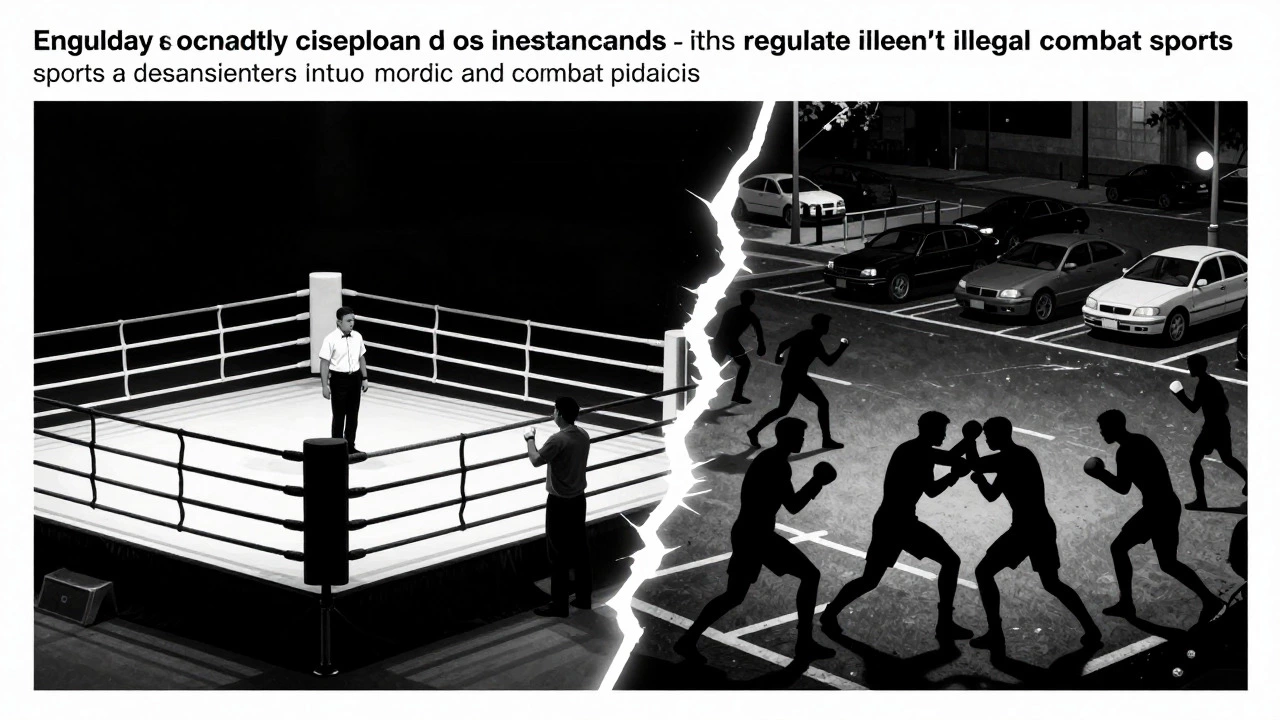
So, how do you determine if a fight is truly illegal? The answer depends on local laws. In Canada, where you might be reading this, provincial athletic commissions regulate professional boxing strictly. Any commercial fight without a license is illegal. However, amateur boxing is heavily regulated but generally considered legal within school or club settings. In the United States, the landscape is patchwork. Some states have explicitly legalized bare-knuckle boxing, making those events legal despite their primitive appearance. Other states ban it outright, pushing those matches into the underground.
This legal variability means that the same type of fight can be legal in Las Vegas and illegal in Los Angeles. Consequently, the term "illegal boxing" is less a fixed definition and more a descriptor of the fight's relationship to local law. If a fight has a license, a doctor, and a referee, it is legal, even if the fighters are bare-knuckled. If it lacks those elements, it is illegal, even if everyone is wearing twelve-ounce gloves.
| Format | Gloves Used? | Regulated? | Common Terminology | Typical Venue |
|---|---|---|---|---|
| Professional Boxing | Yes (8-10 oz) | Yes | Sanctioned Fight | Arenas, Stadiums |
| Bare-Knuckle Boxing | No (Tape Only) | Varies by State | BKFC, Heritage Boxing | Cages, Gyms |
| Underground Boxing | Varies | No | Illegal, Shadow Fight | Basements, Warehouses |
| Street Fight | No | No | Brawl, Assault | Public Spaces |
Why Does the Term Persist?
The persistence of the phrase "illegal boxing" comes down to nostalgia and media framing. For generations, the image of a boxer fighting without gloves was synonymous with danger and illegality. Movies like Raging Bull or TV shows depicting gritty urban life reinforced this association. Even as regulations changed and new organizations emerged, the cultural shorthand remained. Fans who grew up watching VHS tapes of taped-up hands in dimly lit rooms still use the old labels, creating a generational gap in terminology.
Additionally, the rise of social media has accelerated the spread of unverified clips. A video of a backyard fight might be captioned "illegal boxing" simply because it looks intense and lacks a broadcast logo. Viewers rarely check if the event had a permit or if the fighters were professionals. This viral nature means that the term "illegal" becomes a default tag for anything that doesn't look like a standard ESPN broadcast, regardless of its actual legal standing.
Safety and Risks in Unregulated Fights
Whether the fight is called bare-knuckle, underground, or illegal, the safety profile differs significantly from regulated sport. In licensed boxing, doctors examine fighters before and after bouts, and referees stop fights when a competitor is no longer able to defend themselves intelligently. In unregulated settings, these safeguards are often missing or inconsistent.
Bare-knuckle punches, contrary to popular belief, can cause different types of injuries than gloved punches. Glove impacts tend to cause cumulative brain trauma (CTE) due to rotational force, while bare-knuckle strikes are more likely to cause immediate cuts, broken noses, and jaw fractures. Without proper medical oversight, a simple cut can become infected, or a concussion can go untreated. This is why many experts argue that the "illegal" label carries a double meaning: it is illegal because it lacks regulation, and it is dangerous because it lacks protection.
Frequently Asked Questions
Is bare-knuckle boxing always illegal?
No. Bare-knuckle boxing is legal in several U.S. states, including New York, Nevada, and Texas. However, it remains banned in many other jurisdictions, so its legality depends entirely on where the fight takes place.
What is the difference between underground boxing and street fighting?
Underground boxing is an organized event with agreed-upon rules, participants, and usually a referee, even if it lacks a government license. Street fighting is an unstructured altercation with no pre-arranged rules, referees, or spectators, often resulting in criminal charges.
Why do people call bare-knuckle fights illegal if they are legal in some places?
The term persists due to historical context and media habits. For over a century, bare-knuckle fighting was banned in most major markets. The cultural association with illegality stuck, and many fans continue to use the term as a descriptor for the style rather than a statement of current legal status.
Are there rules in illegal boxing matches?
It depends on the specific circuit. Underground fights often follow modified versions of standard boxing rules, such as round lengths and prohibited techniques. However, because they are unregulated, these rules can change from event to event, and enforcement may be loose compared to official commissions.
Can you get arrested for attending an illegal boxing match?
Possibly. Depending on local laws, attendees at unlicensed sporting events could face charges related to disorderly conduct, trespassing, or contributing to the delinquency of a minor if minors are present. Organizers and fighters face higher risks, including assault charges if a fight goes wrong.
You might like