Youthfulness Calculator
Discover how your running routine might affect your visible aging. Based on scientific studies showing how running improves skin health, reduces inflammation, and preserves muscle mass.
Your estimated youthfulness compared to non-runners of the same age
What this means: You maintain skin elasticity and muscle mass similar to someone 5 years younger.
Have you ever seen a runner in their 50s or 60s and thought they looked like they were in their 30s? It’s not just a trick of the light or good lighting. Runners really do tend to look younger than their age-and it’s not because they’re using fancy creams or filters. It’s because running changes your body from the inside out. And the changes show up on your skin, your posture, your energy, and even the way you carry yourself.
Running Boosts Blood Flow to Your Skin
Your skin isn’t just a covering-it’s an organ. And like every organ, it needs oxygen and nutrients to stay healthy. When you run, your heart pumps harder. Blood rushes through your capillaries, delivering oxygen and antioxidants to your skin cells. That’s why runners often have a natural glow-even without makeup.
A 2021 study from the University of Copenhagen tracked 30 healthy adults who ran at least 30 minutes, five days a week for six months. By the end, their skin showed increased collagen density and better microcirculation compared to sedentary peers. The runners didn’t change their diet or skincare routine. Just running did it.
This isn’t about looking tan or taut. It’s about cellular renewal. Better blood flow means your skin repairs itself faster. Minor damage from sun exposure, pollution, or stress heals quicker. That’s why runners often have fewer fine lines and a more even tone.
Running Lowers Inflammation
Chronic inflammation is one of the biggest drivers of aging. It breaks down collagen, causes joint stiffness, and dulls your complexion. And guess what? Running reduces it.
Long-term runners have lower levels of C-reactive protein (CRP), a key marker of systemic inflammation. A 2023 meta-analysis of 17 studies found that people who ran regularly had CRP levels 20-30% lower than non-runners. That’s the same drop you’d see with some anti-inflammatory medications-but without the side effects.
Less inflammation means less puffiness around the eyes, fewer breakouts, and slower breakdown of elastin. That’s why runners often look fresher, even after a long night. Their bodies aren’t stuck in damage mode. They’re in repair mode.
Marathon Training Keeps Your Muscles and Posture Young
It’s not just your face. Your whole frame changes. Runners develop strong core muscles, better spinal alignment, and more balanced posture. That alone makes you look younger.
Think about it: when someone slumps, they look tired. When someone stands tall with shoulders back and head up, they look energetic-even if they’re 65. Marathon training forces you to engage your glutes, quads, hamstrings, and core with every stride. Over time, that builds a posture that defies age.
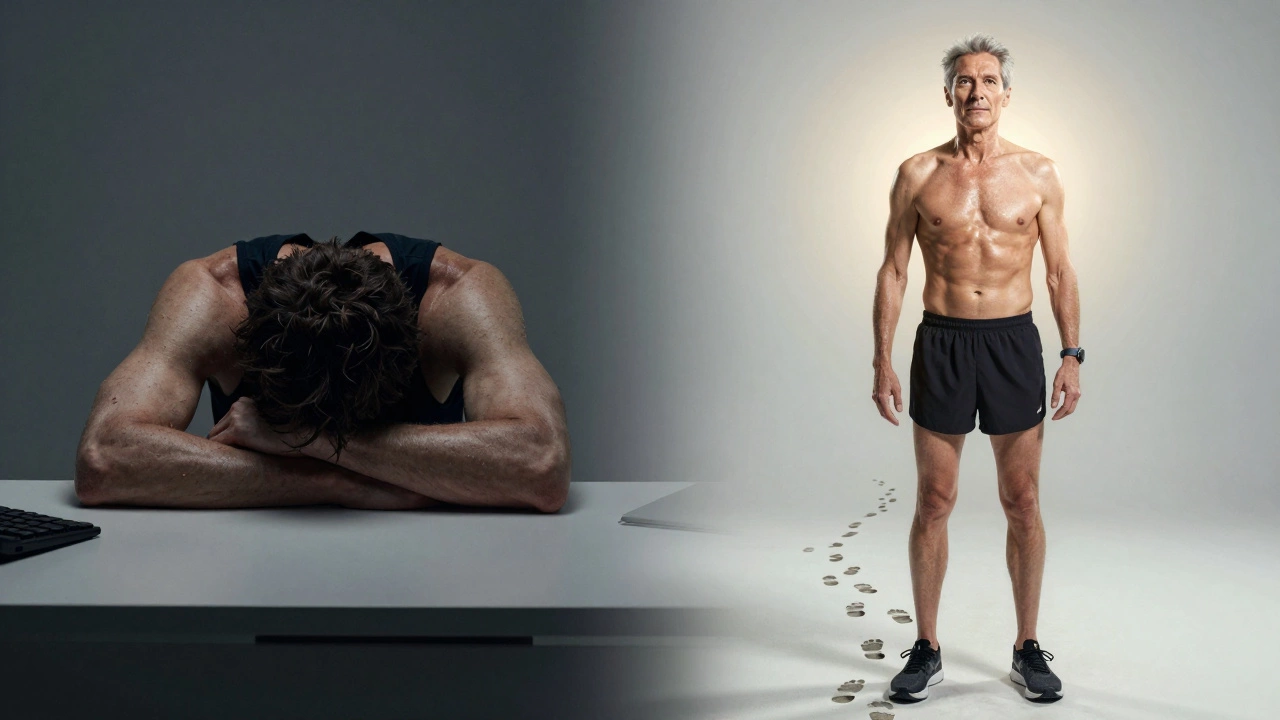
Compare two people the same age: one sits at a desk all day, the other runs 40 miles a week. The runner doesn’t just have stronger legs. They have a spine that doesn’t curve forward. They don’t shuffle. They stride. That presence alone makes them look a decade younger.
Running Slows Muscle Loss
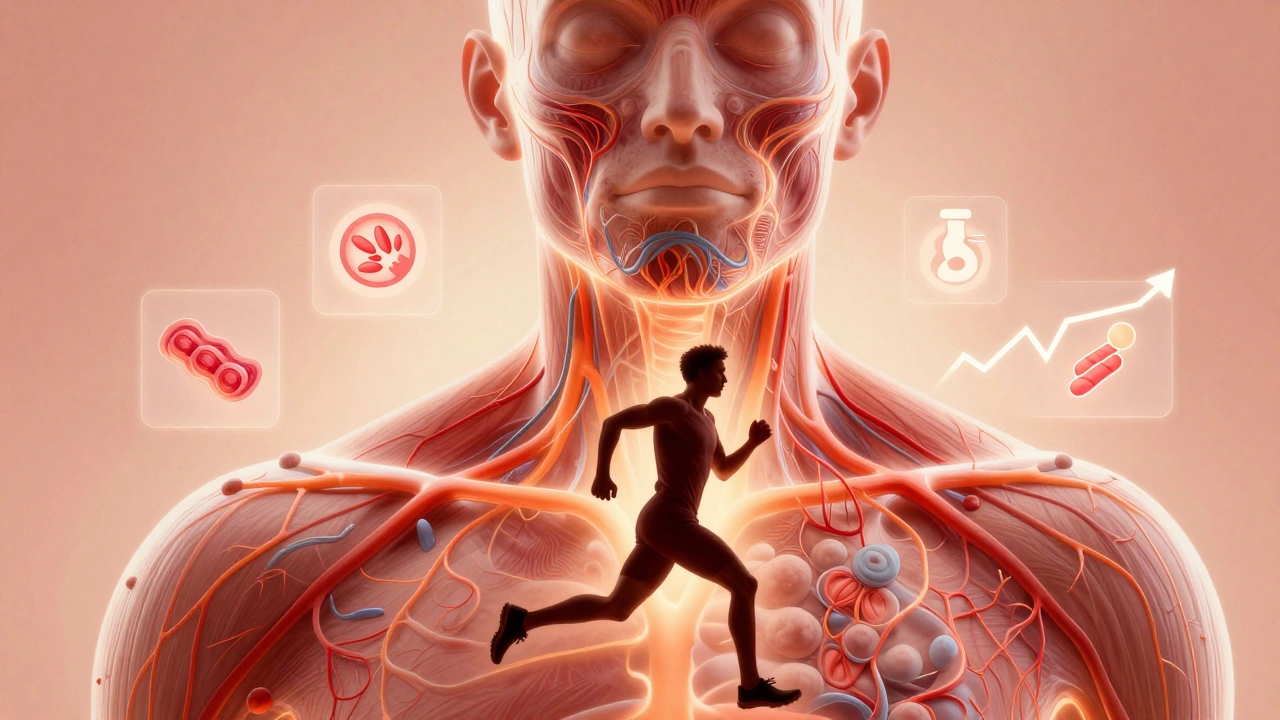
Starting around age 30, you lose 3-8% of your muscle mass every decade. That’s sarcopenia. It leads to weaker arms, thinner legs, and a slower metabolism. It also makes you look older-saggy skin, less definition, less vitality.
Runners fight this. Even endurance running builds and maintains muscle. A 2022 study in the Journal of Applied Physiology found that runners over 50 had 22% more lean muscle mass than non-runners their age. And it wasn’t just their legs. Their upper bodies were stronger too, because running engages your shoulders, arms, and core.
More muscle means better skin tone. Skin clings tighter when there’s muscle underneath. That’s why runners don’t get that loose, flabby look. Their bodies stay sculpted, not because they lift weights, but because they run.
Running Reduces Stress and Its Visible Effects
Stress ages you. It raises cortisol, which breaks down collagen, causes dark circles, and triggers breakouts. It makes you look tired, even when you’re not.
Running is one of the most effective stress relievers known. A single 30-minute run drops cortisol levels by up to 25%. And over time, runners develop better stress resilience. Their bodies recover faster from emotional strain.
That’s why runners often have calmer expressions. Less tension in their brows. Fewer worry lines. A quiet confidence. You can’t fake that. It comes from daily movement that resets your nervous system.
Running Improves Sleep Quality
Bad sleep = aging skin. Dark circles, dullness, puffiness. It’s all connected.
Runners sleep deeper and longer. Not because they’re tired-they’re energized. But because running regulates circadian rhythms. The body knows when to rest. A 2024 study in the Journal of Clinical Sleep Medicine showed that runners fell asleep 20 minutes faster and spent 15% more time in deep sleep than non-runners.
Deep sleep is when your body releases growth hormone. That’s the hormone that repairs skin, rebuilds muscle, and resets your metabolism. Runners get more of it. That’s why they wake up looking refreshed, even after a long race.
It’s Not About Genetics
Some people say, “They’re just lucky with their genes.” But that’s not the full story.
I’ve seen runners in Calgary who started in their 40s with no prior fitness. Five years later, they looked 10 years younger. Same face, same bones-but the skin glowed, the posture stood tall, the eyes sparkled. They didn’t change their genes. They changed their habits.
Running doesn’t require special equipment. You don’t need a gym membership. You just need shoes and the will to move. And that’s the secret: consistency. Not intensity. Not speed. Just showing up.
What You Should Do
You don’t need to run a marathon to see the benefits. Start with 20 minutes, three times a week. Walk if you need to. Jog if you can. The goal isn’t to race. It’s to move regularly.
Here’s what works:
- Run or brisk walk 20-30 minutes, 3-4 days a week
- Focus on breathing deeply-don’t hold your breath
- Stay hydrated-water helps skin elasticity
- Sleep 7-8 hours
- Don’t skip recovery days-your skin and muscles need rest too
After 6-8 weeks, you’ll notice your clothes fit better. Your skin looks brighter. You feel lighter. People start asking if you’ve changed your skincare routine.
You haven’t. You’ve just started running.
It’s Not Magic. It’s Biology.
Running doesn’t stop aging. But it slows down the visible signs. It keeps your skin alive, your muscles strong, your posture proud, and your mind calm. That’s why runners look younger-not because they’re hiding something, but because they’re living differently.
And you don’t have to be fast. You just have to keep moving.
Does running make you look younger even if you’re over 50?
Yes. A 2023 study in the British Journal of Sports Medicine found that runners over 50 had skin elasticity and muscle mass similar to people 20 years younger. The key is consistency-not speed. Even walking 30 minutes a day improves circulation and reduces inflammation, which directly affects how young you look.
Do I need to run marathons to see results?
No. Marathon training offers more benefits, but you don’t need to run 26.2 miles to look younger. Just 150 minutes of moderate running or brisk walking per week is enough to improve skin tone, reduce inflammation, and boost muscle retention. Many people see changes in as little as 6-8 weeks.
Can running reverse wrinkles?
Running won’t erase deep wrinkles, but it can reduce fine lines by improving collagen production and skin elasticity. Studies show runners have thicker dermis layers and better microcirculation, which helps skin bounce back. It’s not a magic fix, but it’s a natural, science-backed way to slow aging.
Why do some runners still look old?
Running helps, but it’s not the only factor. Smoking, excessive sun exposure, poor sleep, and a high-sugar diet can still age you faster than running can fix. Runners who look older often have other unhealthy habits. The benefits of running are strongest when paired with good nutrition, hydration, and rest.
Does running help with dark circles and puffiness?
Yes. Running improves lymphatic drainage and reduces fluid retention, which cuts down on puffiness under the eyes. Better sleep and lower cortisol levels from running also reduce dark circles. It’s not instant, but over time, your face looks more rested and alert.
You might like