Sports Gear vs. Sports Equipment: What's the Real Difference?

Sports Gear vs. Equipment Classifier
Confused about whether an item is gear or equipment? Use this quick classifier to make smarter purchasing decisions.
Classification Result
Why this classification?
Buying Tip
Maintenance
You walk into a store looking for basketball stuff. You grab a jersey, some shorts, maybe a pair of sneakers. Then you pick up a ball. Are they the same thing? Technically, no. One is sports gear, the other is sports equipment. Most people use these terms interchangeably, but in the industry-and if you want to shop smarter-there’s a clear line between them.
Why does this matter? Because mixing them up can lead to bad purchases. You might buy a $200 jacket thinking it’s essential performance gear when it’s just apparel. Or you might think your running shoes are "equipment" and ignore the fact that your watch (gear) is doing more for your training than your feet ever will. Let’s break down exactly what separates the two, why the distinction exists, and how to tell which one you actually need.
The Core Definition: Apparel vs. Apparatus
At its simplest level, the difference comes down to function and location. Sports gear refers to items worn on the body or carried personally by an athlete to enhance performance, protection, or comfort. Think jerseys, cleats, helmets, gloves, and smartwatches. It is personal. It fits you. It moves with you.
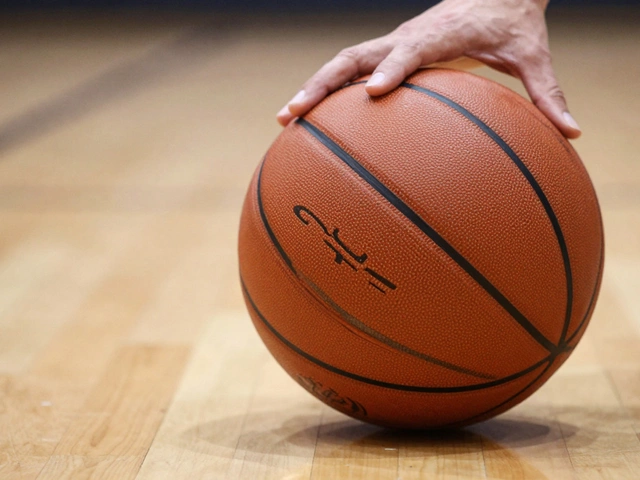
Sports equipment, on the other hand, is the apparatus used to play the game. It is often stationary, shared, or manipulated by the player rather than worn. This includes balls, nets, goals, rackets, bats, and gym machines like treadmills or squat racks. If you leave it at the field or the gym, it’s likely equipment. If you take it home because it’s molded to your foot or head, it’s gear.
This isn’t just semantics. Manufacturers design them differently. Gear focuses on ergonomics, moisture-wicking fabrics, and fit. Equipment focuses on durability, standardization, and physics. A tennis racket (equipment) must meet strict weight and balance regulations so every match is fair. Your wristband (gear) just needs to stop sweat from getting in your eyes.
Where the Lines Blur: The Gray Area
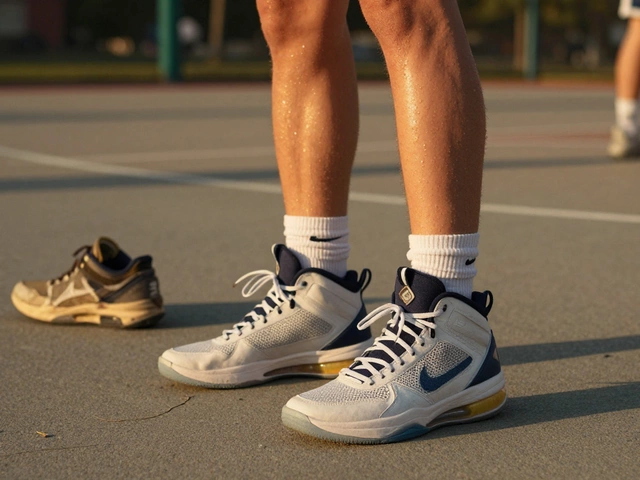
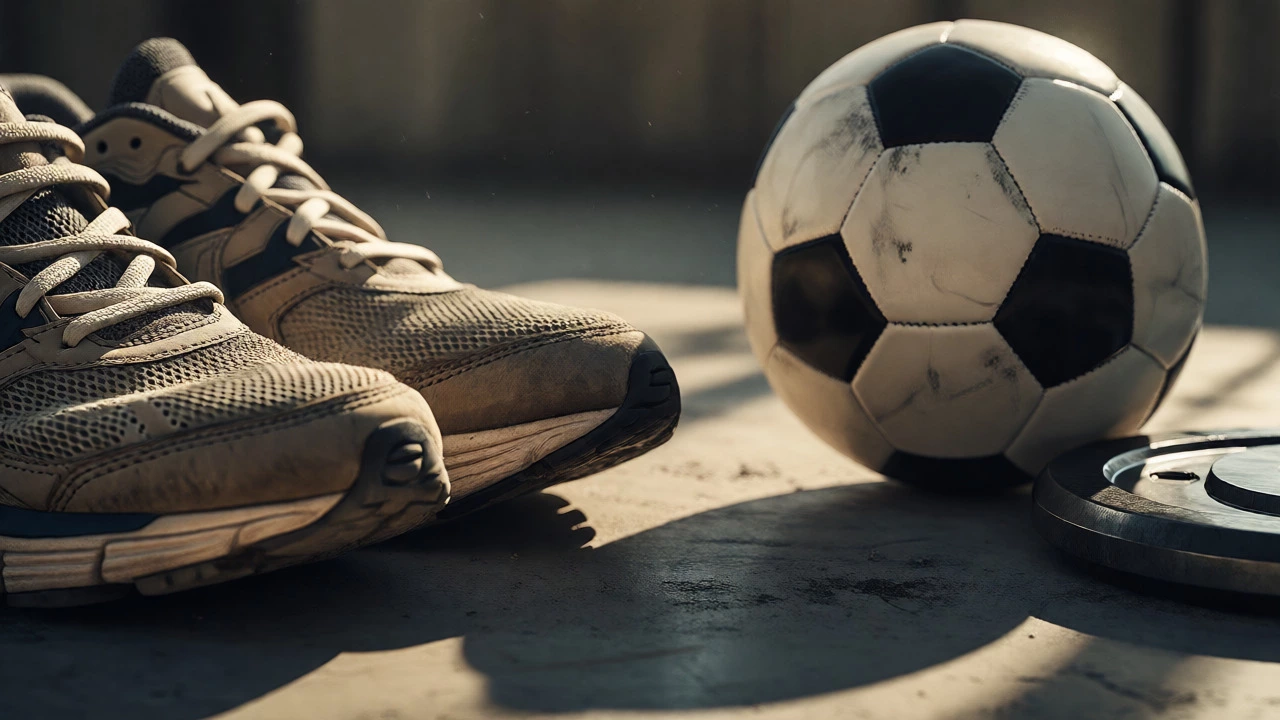
Not everything fits neatly into one box. Shoes are the classic example. Are they gear or equipment? In most contexts, they are considered gear because they are size-specific, worn by the individual, and directly impact biomechanics. However, in team settings, coaches might refer to "footwear as part of the kit," grouping it with uniforms.
Then there’s protective padding. A football helmet is definitely gear-it’s fitted to the skull. But the tackling dummy in practice? That’s equipment. What about a swimming suit? It’s gear. But the starting blocks at the pool? Equipment. The key test is ownership and customization. If you customize it, clean it yourself, and it breaks because you dropped it, it’s probably gear. If it stays at the venue and gets abused by hundreds of users, it’s equipment.
| Feature | Sports Gear | Sports Equipment |
|---|---|---|
| Primary Function | Personal performance, protection, identity | Facilitating gameplay, structure, rules compliance |
| Ownership | Usually individual/personal | Often institutional/shared (gym, club, league) |
| Lifespan | Degrades with wear/body chemistry (sweat, skin oils) | Degrades with impact/environment (weather, heavy use) |
| Fitting | Requires precise sizing (S/M/L, shoe width) | Standardized dimensions (e.g., regulation net height) |
| Examples | Cleats, jerseys, goggles, watches, gloves | Balls, bats, nets, weights, scoreboards |
Why the Distinction Matters for Your Wallet
Understanding this split saves money. Here’s why: Gear wears out faster and requires more frequent replacement. Your running shoes lose cushioning after 300-500 miles. Your compression shirt loses elasticity after a year of washing. These are consumables. Budget for them annually.
Equipment lasts longer. A steel barbell doesn’t degrade significantly over ten years. A soccer goal frame won’t rot if it’s aluminum. When you’re building a home gym or outfitting a youth team, you spend big upfront on equipment, then trickle down small amounts on gear. If you treat your gear like equipment-expecting it to last forever-you’ll end up performing poorly in degraded shoes or unsafe helmets.
Conversely, don’t overspend on equipment features that don’t change the game. Does a $100 basketball bounce better than a $40 one? Barely. The material matters less than the court surface. But does a $150 running shoe protect your knees better than a $60 one? Absolutely. Gear impacts your body directly; equipment impacts the environment.
Tech Blurs the Line Further
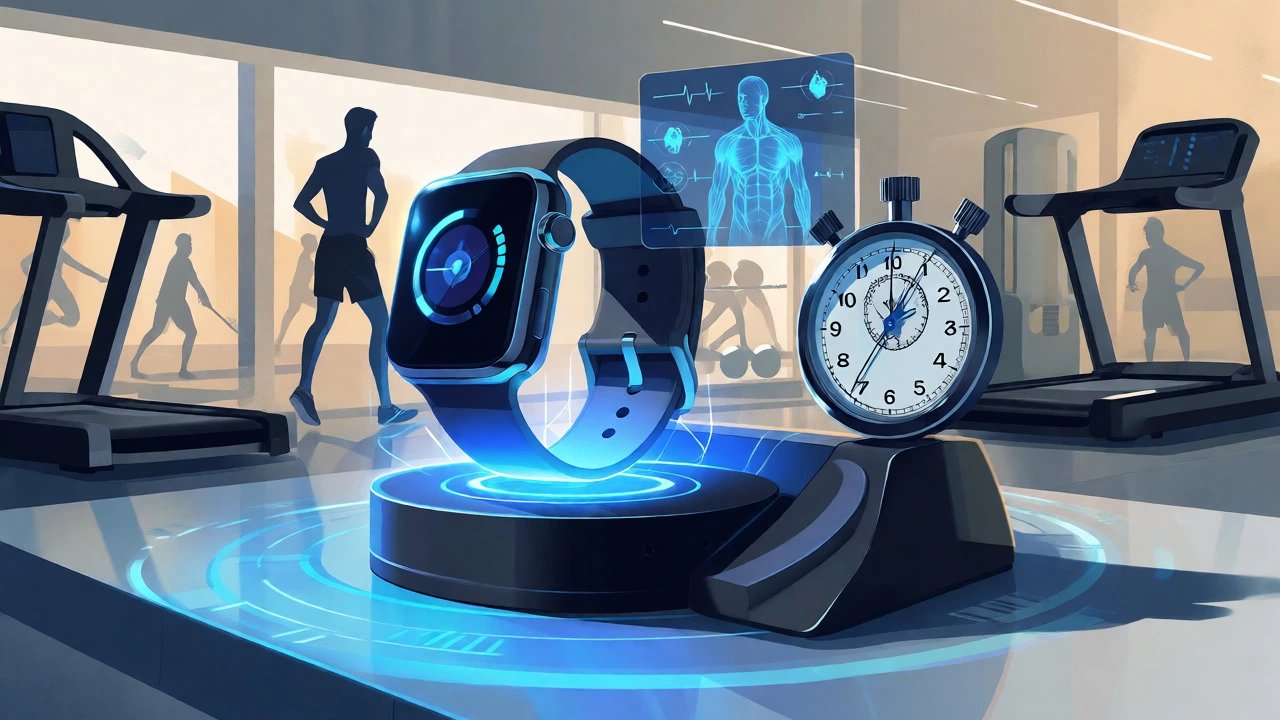
Wearable technology has complicated things. Is a Garmin watch gear or equipment? It’s worn, so it feels like gear. But it tracks data, stores history, and connects to networks-functions closer to electronic devices. In retail, these are often categorized under "electronics" or "accessories," bridging the gap.
Smart clothing is another frontier. Shirts with embedded sensors measure heart rate and breathing. They are washable, wearable, and personalized. This is high-end gear. But the server processing that data? That’s infrastructure, not even close to equipment. As tech integrates deeper, the definition shifts toward "connected gear." If it touches your skin, it’s gear. If it sits on a table charging it, it’s equipment.
How to Classify Items Quickly
If you’re standing in a store aisle confused, ask three questions:
- Do I wear it? If yes, it’s gear. Jerseys, socks, hats, watches.
- Does it have a specific size for my body? If yes, it’s gear. Even if it’s not clothing, like custom-molded ski boots.
- Is it standardized for everyone? If yes, it’s equipment. A tennis ball is the same size for Djokovic and for me. My racket grip size is different-that’s why the racket handle is customizable (gear-adjacent), but the frame is regulated (equipment).
There are exceptions, of course. Ski poles are technically equipment, but many skiers prefer specific pole lengths and grips, making them feel personal. Yet, since they aren’t worn, they remain equipment. Stick to the "worn vs. used" rule, and you’ll be right 90% of the time.
Buying Tips Based on Category
When shopping for sports gear, prioritize fit and material. Try before you buy. Check return policies. Gear fails if it doesn’t fit. A blister from bad socks ruins a marathon faster than a slow pace.
When buying sports equipment, prioritize durability and safety standards. Look for certifications (NHL-approved helmets, ITF-approved balls). Don’t worry about "fit" in the same way. Worry about condition. Check for cracks, rust, or warping. Equipment failure can cause injury to anyone using it, not just you.
Also, consider maintenance. Gear needs cleaning. Equipment needs storage. You wash your yoga mat (gear). You wipe down the treadmill (equipment). Neglecting either leads to premature replacement, but for different reasons. Sweat kills gear fabric. Moisture kills equipment metal.
Are running shoes considered sports gear or equipment?
Running shoes are generally classified as sports gear. They are worn on the body, require specific sizing based on foot shape, and are personal items that degrade with individual use patterns. Unlike a basketball, which is standardized equipment, your shoes are tailored to your biomechanics.
What is the main difference between sports apparel and sports equipment?
Sports apparel is a subset of sports gear focused specifically on clothing (shirts, shorts, jackets). Sports equipment refers to the tools and apparatus used to play the sport (balls, bats, nets). Apparel is worn; equipment is manipulated or interacts with the player indirectly.
Is a helmet gear or equipment?
A helmet is sports gear. It is worn on the head, fitted to the individual user, and provides personal protection. While it serves a functional role similar to equipment, its personal nature and direct contact with the body place it firmly in the gear category.
Why do manufacturers separate gear and equipment categories?
Manufacturers separate them because they involve different materials, production processes, and marketing strategies. Gear relies on textile innovation and ergonomic design, while equipment relies on structural engineering and material science. Separating them helps retailers organize inventory and helps consumers navigate based on their immediate needs (comfort/protection vs. gameplay mechanics).
Can an item be both gear and equipment?
Rarely, but context matters. A customized golf club could be seen as personal gear due to its fitting, but strictly speaking, it is equipment because it is used to strike the ball and isn't worn. However, some hybrid products like smart glasses blur the line, functioning as wearable gear while providing equipment-like data feedback.
You might like