Golf Etymology Timeline Explorer
Current Term
Netherlands
13th Century Origins
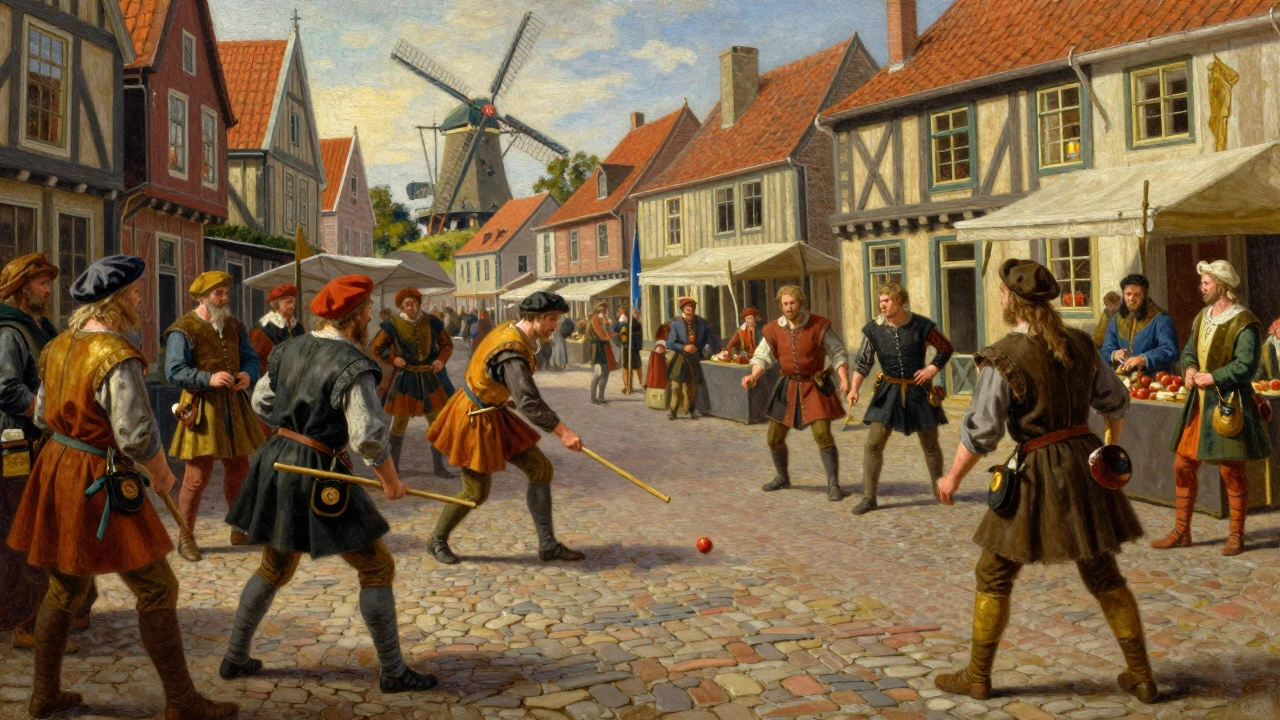
In the Low Countries (modern-day Netherlands and Belgium), people played a stick-and-ball game called Kolf. The verb kolfen meant "to strike" or "to knock." This was the direct precursor to what would become golf.
13th Century
NetherlandsOrigin of Kolf/Kolfen
15th Century
ScotlandAdaptation to Gouf/Gouff
16th-17th Century
ScotlandStandardization as Golf
18th Century
England/GlobalInternational Spread & R&A Rules
You’ve probably heard the joke that golf stands for "gentlemen often forget lunch." It’s a classic bar-room myth, but it has nothing to do with reality. The truth is far more interesting, rooted in medieval trade routes and linguistic evolution. So, why is golf called golf? It’s not an acronym, nor is it a random choice by early players. It comes from a specific word used in the Low Countries centuries ago.
The Short Answer: It’s Not an Acronym
Let’s clear up the biggest misconception first. If you search for what G.O.L.F. stands for, you’ll find dozens of funny backronyms like "Get Out and Find" or "Gentlemen Only, Ladies Forbidden." None of these are true. The name didn’t start as letters; it started as a single word. The term evolved from a dialectal pronunciation of a Dutch or Flemish word. This linguistic shift happened long before the modern rules of the game were codified in Scotland.
The Dutch Connection: Kolf to Kolven
To understand the name, we have to look at the Netherlands. In the 13th century, people in the Low Countries played a stick-and-ball game called Kolf is a precursor to modern golf where players hit a ball into a hole using a club. The verb associated with this action was kolfen, which means "to strike" or "to knock." When the game traveled north to Scotland, the local Scots language adapted the foreign terms. The 'k' sound in kolf softened, and the final consonants shifted, eventually morphing into "gouf," "gouff," and finally, "golf." This phonetic drift is a common occurrence in language history, especially when words cross regional borders.
Scotland’s Role in Standardizing the Name
While the roots are Dutch, Scotland is where the game became what we recognize today. By the early 15th century, golf was popular enough in Scotland to be considered a distraction from archery practice. King James II banned the game in 1457 because he wanted his subjects focused on military readiness. However, the ban failed to stop the sport's growth. Instead, it cemented the game's place in Scottish culture. As the game spread across the country, the spelling stabilized. By the late 1600s, "golf" was the standard written form, replacing earlier variations like "gouf" found in historical records.
Common Myths About the Name
Because the true origin involves obscure medieval dialects, many myths have filled the gap. Here are the most persistent ones and why they don’t hold up:
- Gentlemen Only, Ladies Forbidden: This suggests the game was exclusive to men. While early golf was largely male-dominated due to social norms, the name predates this exclusion. Women played golf in Scotland during the 18th and 19th centuries, well after the name was established.
- Get Off Lazy Farm: A humorous take on the leisurely nature of the sport. There is no historical evidence linking farm labor to the terminology.
- Green Onions Like Ferns: Another playful backronym that ignores the linguistic timeline entirely.
These stories are fun to tell, but they rely on reverse-engineering the acronym rather than tracing the actual word’s journey from Dutch to Scots.
How the Game Spread and Changed the Term
As golf moved from Scotland to England and then to the rest of the world, the name remained consistent. The Royal and Ancient Golf Club of St Andrews, founded in 1754, helped standardize both the rules and the terminology. When the United States Golf Association (USGA) was formed in 1895, it adopted the existing English term "golf" without modification. This global adoption ensured that the Dutch root, though distant, became the universal identifier for the sport. Today, whether you’re playing in Calgary or California, you’re using a word that traveled hundreds of miles and several centuries to get there.
| Time Period | Region | Term Used | Meaning/Context |
|---|---|---|---|
| 13th Century | Netherlands | Kolf / Kolfen | Stick-and-ball game; verb meaning to strike |
| 15th Century | Scotland | Gouf / Gouff | Early Scots adaptation of the Dutch term |
| 16th-17th Century | Scotland | Golf | Standardized spelling emerges in legal and social documents |
| 18th Century | England/Global | Golf | International spread; rules formalized by R&A |

Why the Name Matters to Players Today
Knowing the origin adds a layer of appreciation for the sport. It connects you to a lineage of players who struck balls on links courses in Scotland, following traditions set in the Low Countries. It also dispels the idea that golf is an elite, invented-for-exclusivity sport. It’s a folk game that evolved naturally, carried by sailors, merchants, and nobles alike. The simplicity of the name "golf" reflects the simplicity of the core mechanic: hit the ball into the hole. No complex acronyms needed.
Frequently Asked Questions
Did golf originate in the Netherlands?
The precursors to golf, specifically the game of kolf, originated in the Low Countries (modern-day Netherlands and Belgium). However, the modern version of the game, including its rules and course design, was developed and standardized in Scotland.
What does the word kolf mean in Dutch?
In Middle Dutch, kolf refers to a small stick or club used to hit a ball. The verb kolfen means to strike or knock. This linguistic root is the direct ancestor of the English word golf.
Is it true that golf stands for Gentlemen Only, Ladies Forbidden?
No, this is a backronym, not the actual origin. The word golf existed long before the phrase "Gentlemen Only, Ladies Forbidden" was coined. Historical records show women playing golf in Scotland during the 1700s, well after the name was established.
When did the spelling of golf become standardized?
The spelling "golf" became standard in the late 1600s in Scotland. Earlier variations included gouf, gouff, and golfe. The establishment of the Royal and Ancient Golf Club of St Andrews in 1754 further cemented this spelling in official records.
Who banned golf in Scotland and why?
King James II of Scotland banned golf in 1457. He issued a proclamation stating that golf should be abandoned so that young men could focus on practicing archery, which was essential for military defense against potential invasions.
You might like