Boxing Combination Builder
- 1 Jab Distance/Setup
- 2 Cross Power/Straight
- 3 Lead Hook Head Angle
- 4 Rear Hook Counter/Angle
- 5 Lead Upper Close Range
- 6 Rear Upper Counter/Lift
- 7 Lead Body Hook Liver/Ribs
- 8 Rear Body Hook Ribs/Solar
Combo Analysis
You’re watching a title fight. The champion slips a jab, ducks under a cross, and suddenly unleashes a flurry of punches that ends with a devastating left hook to the liver. The commentator yells, "There’s the seven!" You pause. Seven what? Is it a specific type of punch? A rule? A secret move only pros know?
Here’s the truth: there is no single physical punch called "the 7." In boxing, numbers refer to positions in a combination system. When a coach or fighter talks about a "7," they are almost always referring to the left hook (if you are orthodox) as the seventh step in a standard offensive sequence. But context matters. Sometimes it’s a counter. Sometimes it’s part of a longer string like 1-2-3-4-5-6-7. If you want to understand how boxers communicate strategy without shouting full sentences, you need to decode this numbering system.
The Numbering System Decoded
To grasp what a "7" is, you first have to learn the language of the ring. Most Western boxing gyms use a 1 through 8 numbering system for basic punches. This isn’t universal-some coaches use different codes-but this is the most common standard used by trainers like Freddie Roach or Floyd Mayweather Sr.
| Number | Punch Type | Target Area | Primary Function |
|---|---|---|---|
| 1 | Jab | Face/Chin | Distance management, setup |
| 2 | Cross | Chin/Solar Plexus | Power shot, straight line |
| 3 | Left Hook | Temple/Liver | Angle change, power |
| 4 | Right Hook | Temple/Jaw | Counter, angle change |
| 5 | Left Uppercut | Chin/Solar Plexus | Close range, lifting opponent |
| 6 | Right Uppercut | Chin | Counter, close range |
| 7 | Left Hook (to Body) | Liver/Ribs | Body attack, breaking guard |
| 8 | Right Hook (to Body) | Ribs/Solar Plexus | Body attack, finishing |
Wait, didn’t number 3 already say "Left Hook"? Yes. Here is where the nuance comes in. In many systems, odd numbers are lead-hand punches and even numbers are rear-hand punches. However, when a coach calls out "7," they are often specifying a body hook with the lead hand, distinct from the head-level hook at number 3. Alternatively, some coaches simply extend the count: 1 (jab), 2 (cross), 3 (lead hook), 4 (rear hook), 5 (lead upper), 6 (rear upper), 7 (lead body hook), 8 (rear body hook). So, if someone asks "what is a 7 punch," they are likely asking about the lead-hand hook aimed at the body.
Why the "7" Matters in Combat
So why isolate this punch? Why not just call it a body hook? Because timing and sequence matter more than the punch itself. A lone body hook can be blocked easily. But a "7" usually implies it is part of a chain. Think of it as the closer in a conversation. You don’t walk up to a stranger and scream; you say hello, ask their name, then deliver the punchline. Same with boxing.
Consider the classic 1-2-3-4-5-6-7 combo. It starts with a jab (1) to measure distance, follows with a cross (2) to force a reaction, adds hooks (3, 4) to overwhelm the guard, uses uppercuts (5, 6) to lift the chin, and finishes with the 7 (lead body hook) while the opponent is looking up or guarding high. This sequence exploits the physiological limitation of human reaction time. Your eyes track high punches. Your hands rise to block them. That leaves your ribs exposed. The 7 hits where the defense isn’t.
Anatomy of the Lead Body Hook
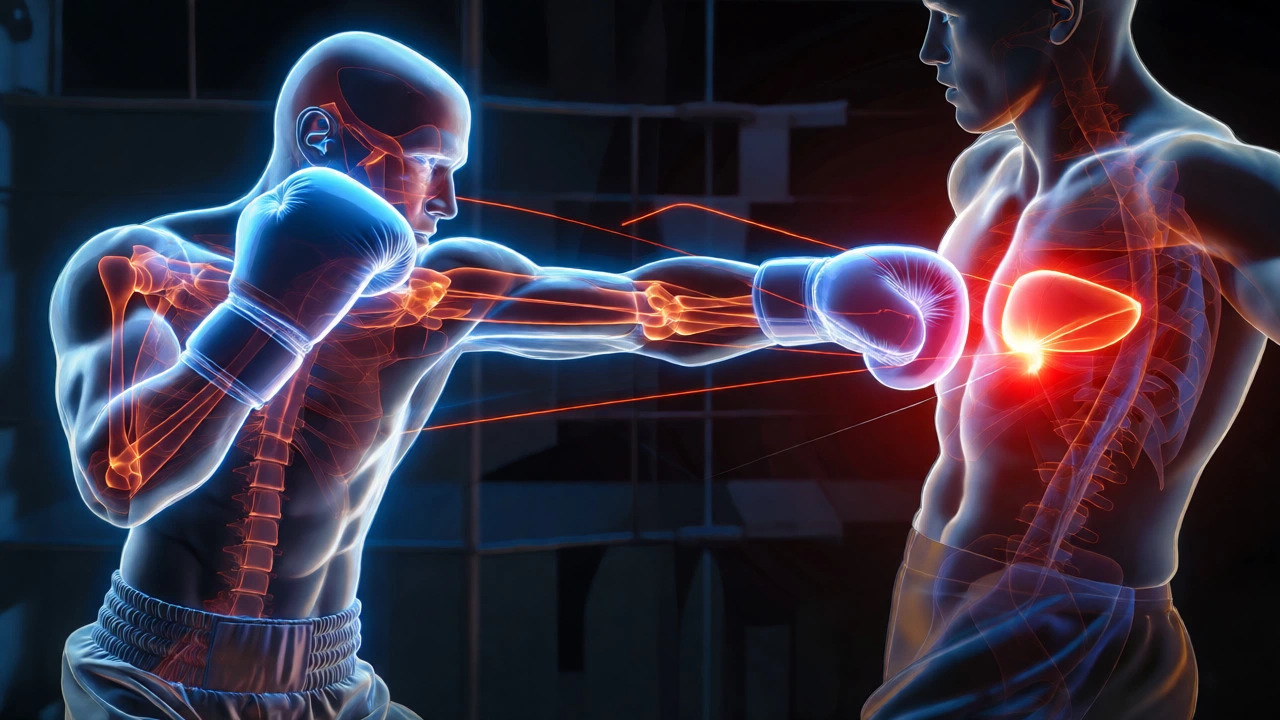
If you are an orthodox fighter (right-handed stance), the 7 is your left hook to the right side of the opponent’s torso, specifically targeting the liver. For a southpaw, it’s the right hook to the left side. Let’s break down the mechanics because doing this wrong gets you countered instantly.
- Rotation: Unlike a head hook which relies on shoulder turn, a body hook requires significant hip rotation downward. You aren’t just turning; you are dropping your level slightly.
- Elbow Position: Keep your elbow higher than your fist. If your elbow drops too low, you telegraph the punch and risk injuring your wrist upon impact with the floating ribs.
- Entry: Step in with your lead foot simultaneously with the punch. Power comes from the ground up. If you stand still and swing your arm, it’s a slap, not a strike.
- Follow-through: Aim through the target, not at it. You want to feel the shock travel up your arm into your core.
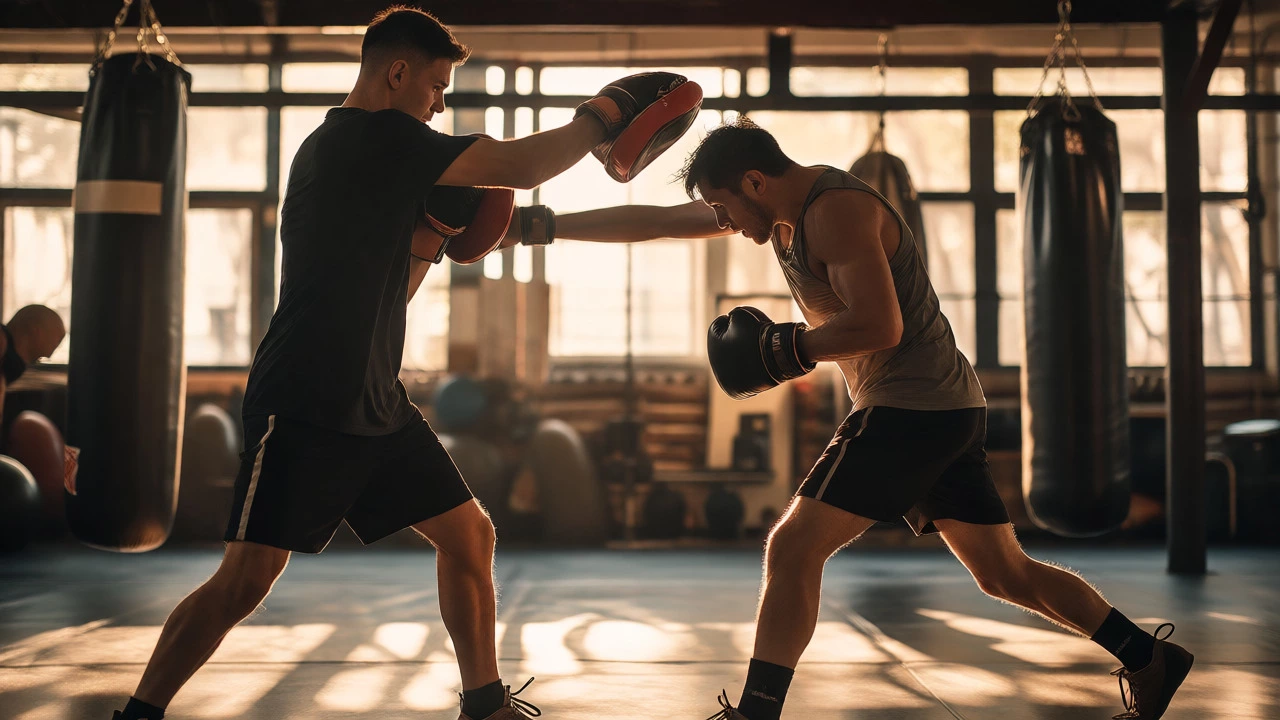
Professional fighters like Gennady Golovkin or Canelo Alvarez excel at this. They don’t throw random body shots. They set them up. Notice how Golovkin often throws a stiff jab (1) to keep opponents busy, then dips his weight and fires the left body hook (7) over the top of the opponent’s extended arm. It’s brutal because the opponent is focused on the face.
Variations and Contextual Meanings
Not every gym uses the same code. Some trainers use a simplified 1-4 system (1=Jab, 2=Cross, 3=Lead Hook, 4=Rear Hook). In those gyms, a "7" might not exist unless they are counting a long combination. However, if you hear "hit the 7" in a corner during a fight, assume it means a lead-hand body hook. There are other interpretations depending on the coach’s philosophy:
- The Counter-Hook: Some coaches number counters differently. A "7" might refer to a slip-and-hook counter. For example, slipping a right cross (2) and throwing a left hook (which would be #3 in standard, but maybe #7 in a counter-specific drill).
- The Overhand Variation: Rarely, a "7" might denote a looping overhand right followed by a left hook, though this is less common in numeric coding.
- Combination Length: Sometimes "a 7" simply means "throw a seven-punch combination." If a trainer says, "Give me a clean 7," they want a sequence of seven strikes ending strongly, regardless of which specific punches make up the middle.
This ambiguity is why communication with your coach is vital. Always clarify the code. But in 90% of modern professional contexts, especially in North America, 7 equals the lead body hook.
Drilling the 7 for Muscle Memory
You can’t just understand the theory; you have to feel it. If you try to throw a 7 cold in a sparring session, you’ll miss. You need to drill the entry. Here is a simple progression to master this punch.
Step 1: Shadowboxing with Visualization
Stand in front of a mirror. Throw a 1-2 (jab-cross). Immediately after retracting the cross, drop your left shoulder and rotate your hips to fire the left hook to the imaginary body. Watch your reflection. Did your head stay behind your center of gravity? If you leaned forward, you’re vulnerable. Correct the posture. Repeat 50 times.
Step 2: Heavy Bag Integration
Use a heavy bag. Start with a 1-2-3 (jab-cross-head hook). Then add the 7. The transition from 3 to 7 should be fluid. Don’t reset between punches. The momentum from the head hook should help load the body hook. Focus on hitting the bag at mid-height. Listen for the sound. A dull thud means you missed the sweet spot. A sharp crack means you connected with the ribs or liver area.
Step 3: Partner Drills with Mitts
Have a partner hold focus mitts. Ask them to hold one mitt high (head level) and one low (body level). Call out "1-2-7." Hit the high mitt with the jab and cross, then dive the left hook into the low mitt. Your partner should simulate resistance. If you pop up too early, they will tap your head. This teaches you to stay down and committed to the body shot.
Common Mistakes When Throwing the 7
Even experienced amateurs mess this up. Here are the pitfalls that ruin the effectiveness of the lead body hook.
- Telegraphing: Dropping your hand before you throw. If your glove falls below your chin before the punch launches, your opponent sees it coming. Keep your hands tight until the moment of ignition.
- Overcommitting: Swinging so hard that you lose balance. If you miss the body, you are wide open for a counter cross. Always leave enough energy to return to guard.
- Hitting the Elbow: Opponents often tuck their elbows tight to their ribs. If you hit the elbow, you hurt your hand, not them. Adjust your angle slightly upward or wait for the elbow to flare out.
- Ignoring Footwork: Standing flat-footed. You must step off the centerline slightly as you throw the 7 to avoid being caught by a straight right hand.
Strategic Application: When to Use the 7
Knowing when to throw the 7 is as important as knowing how. It is not a panic button. It is a strategic tool.
Against Tall Fighters: If your opponent is taller, they likely rely on reach. They will jab from a distance. Close the gap, throw a feint, and when they raise their hands to block the feint, drive the 7 into their body. Their long arms mean their body is further away, but also easier to target once inside.
Against Aggressive Pressure Fighters: These guys come forward swinging. They expect you to retreat. Instead, pivot off the centerline and throw the 7 as they pass by. Their own momentum adds power to your punch. This is a classic counter-body shot.
To Break Rhythm: If you’ve been fighting high, switching to a sudden 7 disrupts their defensive pattern. They are braced for head shots. A body shot freezes them for a split second, allowing you to follow up with a cross or another hook.
Frequently Asked Questions
Is the 7 punch always a left hook?
For orthodox fighters (right-handed stance), yes, the 7 is typically the left lead hook to the body. For southpaws (left-handed stance), the numbering system often mirrors, making the 7 the right lead hook to the body. However, always confirm with your specific coach, as some use different coding systems.
Can I throw a 7 as a single punch?
You can, but it is rarely effective alone. A lone body hook is easy to see and block. The power of the "7" concept lies in its integration into a combination, using previous punches to create openings and distract the opponent's defense.
What is the best target for a 7 punch?
The primary target is the liver (on the right side of the body for orthodox fighters). Secondary targets include the floating ribs and the solar plexus. Hitting the liver causes intense pain and can incapacitate an opponent quickly due to nerve clusters.
How do I defend against a 7 punch?
Keep your elbows tucked tightly against your ribs. Rotate your hips away from the incoming punch rather than leaning back. You can also parry the punch downward with your rear hand while stepping off the centerline to avoid the counter.
Do all boxing gyms use the same number for the 7?
No. While the 1-8 system is common, some gyms use 1-4 for basics and reserve higher numbers for complex combinations. Others may assign 7 to a rear uppercut or a specific counter. Always ask your trainer for their specific code sheet.
Final Thoughts on Mastering the Sequence
Understanding that a "7" is a code word, not a magical new weapon, changes how you train. It shifts the focus from learning a new motion to mastering timing and sequencing. The lead body hook is one of the most powerful tools in a boxer’s arsenal because it attacks the engine room of the fighter-the torso. By integrating it into your combinations, you force opponents to choose between protecting their chin and their ribs. You win when you make them guess.
Next time you watch a fight, listen for the commentary. When they mention a "seven," look for the dip in the shoulders and the snap of the hips. See how the fighter sets it up. Try it yourself on the heavy bag tomorrow. Start slow, focus on the rotation, and build speed gradually. Before long, that "7" won't just be a number-it will be your signature finisher.
You might like