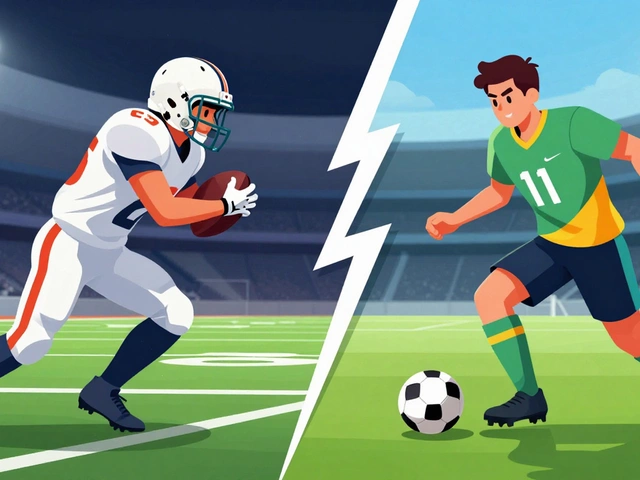
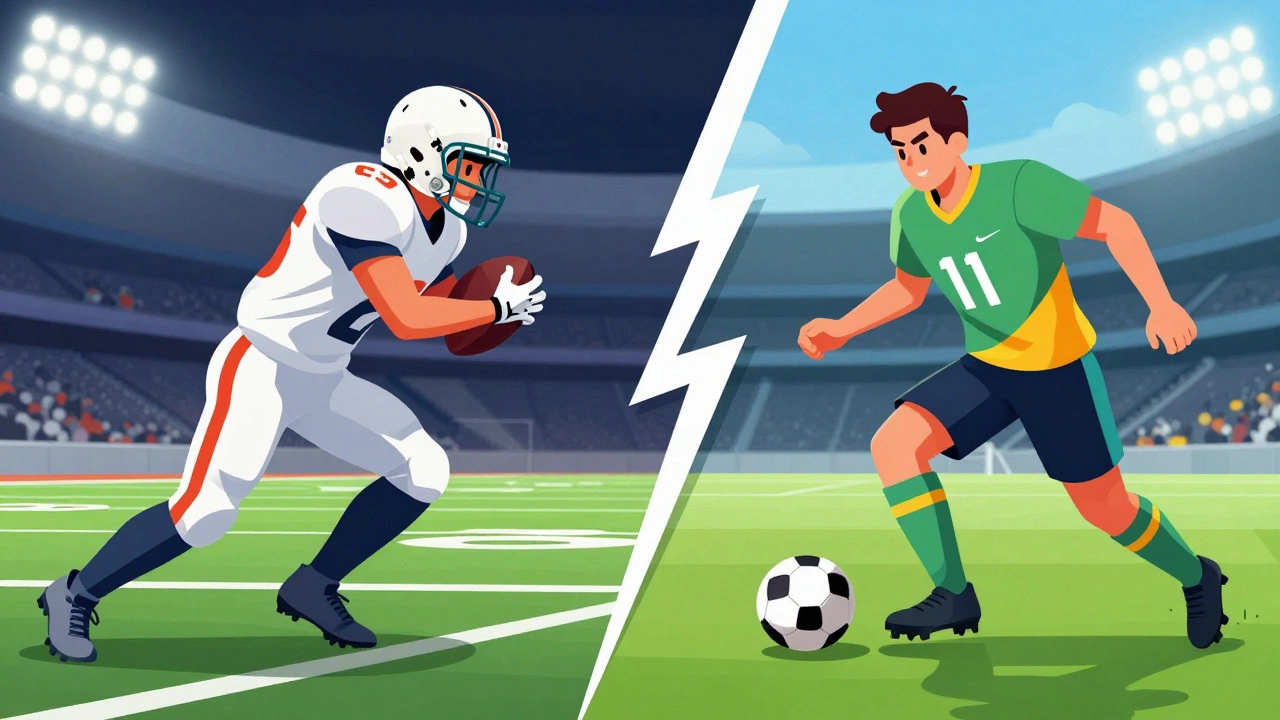
Football vs. Soccer Scoring Simulator
Click buttons to add points. Touchdowns are worth 6.
0
Goals are worth 1 point each.
0
Comparison Analysis
You ask a group of people from different countries what they call "football," and you will get five different answers. In Brazil, it is the beautiful game. In England, it is just football. But if you ask an American, they will look at you like you just asked them to explain quantum physics while wearing oven mitts. To them, football means something entirely different than what the rest of the world understands.
This linguistic split isn't just about vocabulary; it’s a cultural divide that has confused travelers, frustrated sports fans, and created endless memes for decades. If you are trying to follow sports news, talk to friends across the Atlantic, or simply understand why your American neighbor screams at the TV during autumn, you need to know exactly what words mean what in this context.
The Short Answer: It Depends on the Ball
If you want the quick version, here is the rule of thumb. When Americans say "football," they are talking about the sport played with an oval-shaped ball, where players wear helmets and pads, and the primary goal is to run or throw the ball into an end zone. This is known globally as American football.
When Americans talk about the round-ball game played by two teams of eleven, using mostly their feet to score goals, they call it soccer. This is what the rest of the world calls football.
So, if you tell an American you love football, they will assume you are a fan of the NFL (National Football League). If you show them a clip of Lionel Messi dribbling past defenders, they will nod politely and say, "Oh, nice soccer move." They aren’t being rude; they are speaking their native sporting dialect.
Why Did America Get It Wrong?
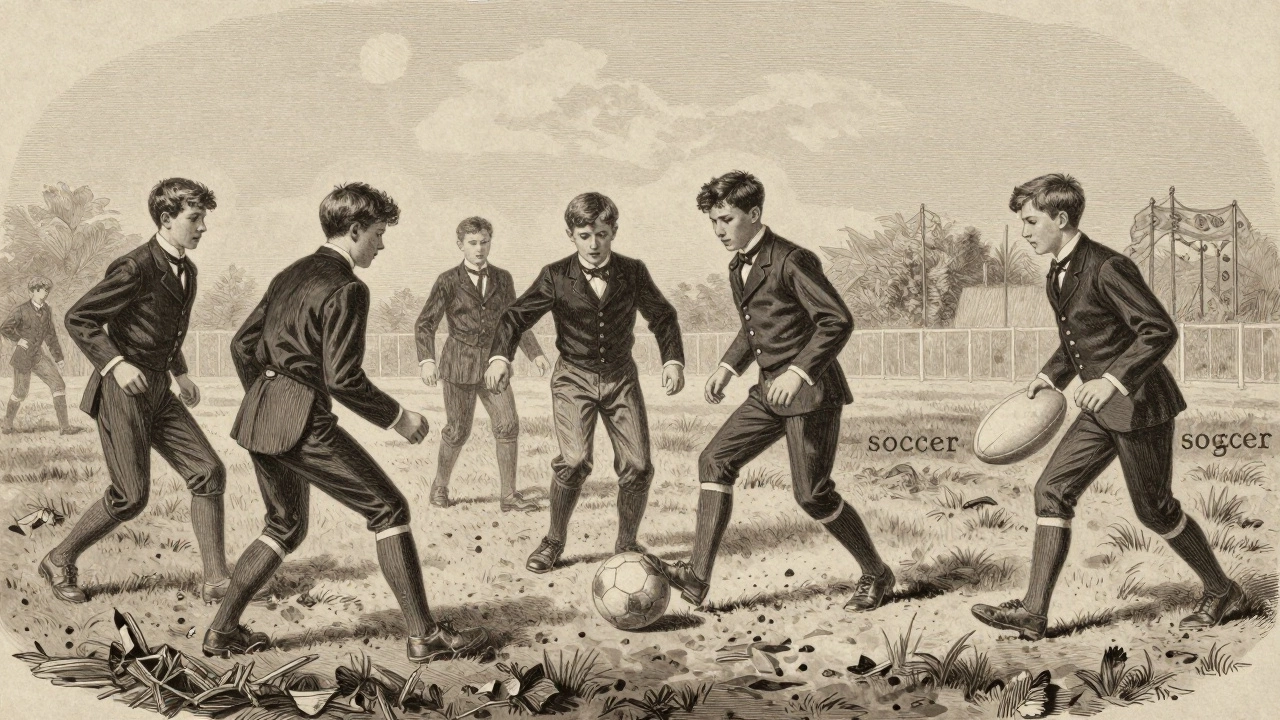
To understand the naming convention, you have to look back at history. In the late 19th century, British schools played various forms of football. Some allowed carrying the ball (rugby-style), and some only allowed kicking (association-style). The term "soccer" actually originated in Britain, not America. It was a slang abbreviation of "Association Football"-dropping the 'a' and adding '-er,' similar to how "rugger" came from Rugby Football.
In the UK, the word "football" eventually became shorthand for Association Football because it was the most popular version. However, in the United States, the sport evolved differently. Colleges like Harvard and Yale started mixing rugby rules with local football games. By the 1870s, this hybrid game had distinct enough rules that it needed a new name to distinguish it from soccer. Since it involved both running and tackling, it stuck with the broader term "football."
Meanwhile, the British dropped the word "soccer" because it sounded too informal, while Americans kept it because they needed a specific word to differentiate the round-ball game from their newly beloved gridiron sport. So, ironically, calling the round-ball game "soccer" is historically accurate, even if Europeans think it sounds quaintly old-fashioned.
American Football: The Gridiron Giant
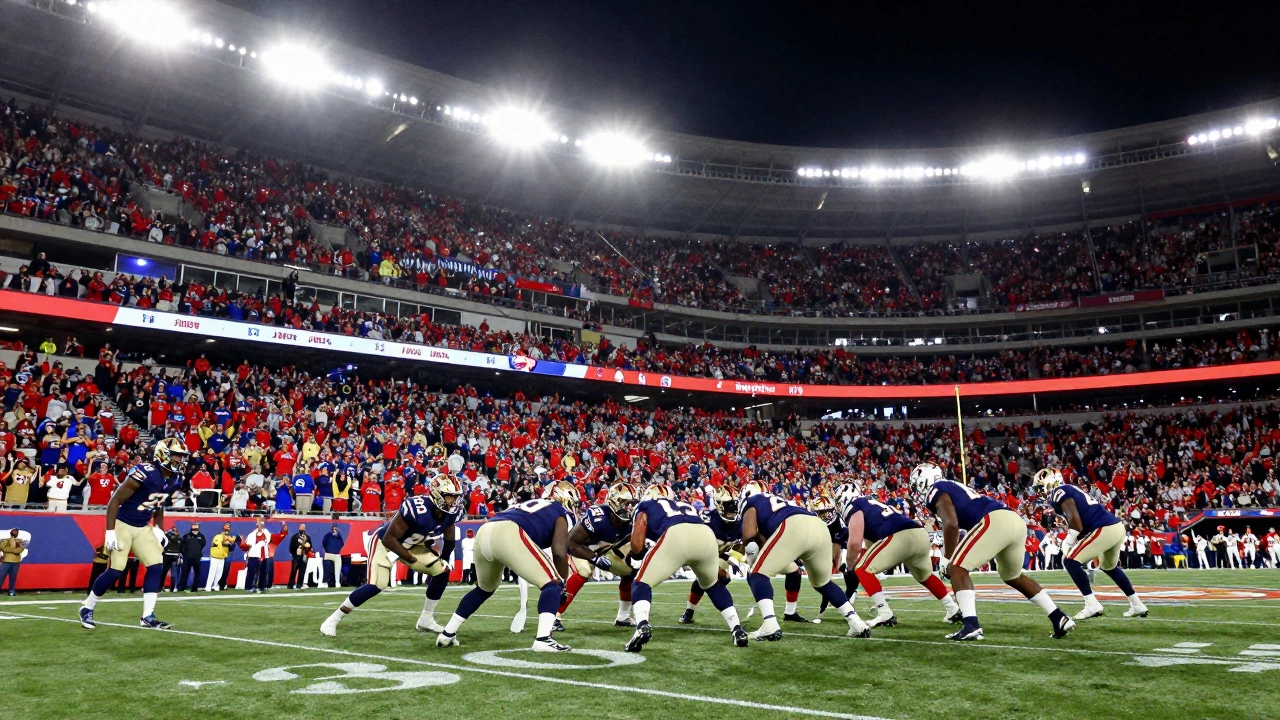
Let’s break down what Americans mean when they say "football." This sport is a contact team sport played between two squads of eleven players. The field is rectangular, marked with yard lines every five yards, resembling a gridiron (an old cooking grate), which is why the sport is often called gridiron football.
The objective is simple but hard to execute: advance the ball down the field by running with it or throwing it forward to a teammate. If you reach the opponent's end zone, you score a touchdown, worth six points. You can then attempt an extra point kick (one point) or a two-point conversion pass. Field goals, kicked through the uprights, are worth three points.
The gameplay is stop-start. Unlike soccer, which flows continuously, American football is strategic and tactical. Each team gets four attempts (downs) to move the ball ten yards. If they succeed, they get a new set of four downs. If they fail, the other team takes over possession. This structure makes the sport feel like chess played by gladiators. Coaches draw up plays, players memorize complex schemes, and milliseconds decide outcomes.
The peak of this season is the Super Bowl, held annually in early February. It is not just a game; it is a national holiday in the US. Viewership regularly exceeds 100 million people, and commercials cost millions per thirty-second spot. For Americans, this event defines winter culture more than Christmas does for many families.
Soccer: The Growing Force
Now, let’s talk about what the rest of the world calls football. In the US, it is soccer. While it used to be considered a niche sport, primarily for youth leagues and college campuses, its popularity has skyrocketed in recent years.
The Major League Soccer (MLS) has expanded significantly, adding teams in cities like Las Vegas, San Diego, and Toronto. High-profile players like Lionel Messi joining Inter Miami in 2023 brought unprecedented media attention. Suddenly, soccer stadiums were sold out, and jersey sales broke records. The US hosted the men's World Cup in 2026 alongside Canada and Mexico, further cementing the sport's place in the American consciousness.
Despite this growth, soccer still trails behind American football, baseball, and basketball in terms of overall viewership and revenue. However, among younger demographics and diverse urban populations, soccer is often the dominant passion. Many American kids play soccer before they ever touch a football, making it the most common introductory sport for children.
Other Types of Football That Cause Confusion
It doesn’t stop at just two types. If you travel further north or south, the confusion deepens.
- Canadian Football: Played in Canada, this sport is similar to American football but with key differences. The field is larger (110 yards long vs. 100), there are twelve players per side instead of eleven, and teams only get three downs instead of four. The goalposts are also positioned differently. Canadians call it "football" or "CFL" (Canadian Football League). To an American, it looks like faster, wider American football. To a European, it looks like... well, another type of football.
- Australian Rules Football (AFL): Played in Australia, this is a high-speed, high-contact sport played on an oval cricket ground. There are eighteen players per side, no forward passing, and scoring involves kicking a ball through large central posts (six points) or smaller outer posts (one point). Australians call it "footy."
- Gaelic Football: Popular in Ireland, this combines elements of soccer and handball. Players can carry the ball for four steps before bouncing or soloing (kicking it up and catching it). It is fast-paced and requires immense stamina.
When an American hears "football," they do not imagine any of these. Their mental image is strictly the helmeted player diving for the pylon.
How to Navigate the Conversation
If you are traveling to the US or chatting with American friends, clarity is key. Here is a quick guide to avoid awkward moments.
| Concept | Term in USA/Canada | Term in Rest of World | Key Difference |
|---|---|---|---|
| Oval ball, helmets, touchdowns | Football | American Football / Gridiron | Contact sport, strategic stops |
| Round ball, goals, no hands | Soccer | Football / Association Football | Continuous flow, global popularity |
| Oval ball, larger field, 3 downs | Canadian Football | Football (in Canada) | Faster pace, bigger field |
| Oval ball, oval pitch, 18 players | Aussie Rules / Footy | AFL / Australian Rules | No forward passing, unique scoring |
If you want to watch the big game in February, ask for the Super Bowl. If you want to watch the World Cup, ask for the Soccer World Cup. Using the word "football" alone will likely lead to a conversation about Tom Brady or Patrick Mahomes, not Kylian Mbappé.
The Future of the Divide
Will Americans ever start calling soccer "football"? Unlikely. The brand recognition of the NFL is too strong. The economic engine of American football is massive, generating billions in revenue annually. It is deeply embedded in high school and college cultures, serving as a community rallying point in small towns across the Midwest and South.
However, the rise of soccer suggests a softening of the boundary. More bilingual households exist, and global streaming allows Americans to easily access Premier League matches. Younger generations might use "football" interchangeably depending on context, especially if they are following international stars. But for now, the distinction remains firm. "Football" is gridiron. "Soccer" is the round ball. Knowing this simple rule saves you from countless misunderstandings.
Do Americans hate soccer?
No, that is a myth. Many Americans love soccer, especially women's soccer, which has been highly successful in the US. The US Women's National Team (USWNT) has won multiple World Cups. While soccer doesn't have the same mainstream dominance as the NFL, it has a huge and passionate fanbase.
Is Canadian football the same as American football?
They are very similar but not identical. Canadian football uses a larger field, twelve players per team, and only three downs to gain ten yards. This leads to a more open, passing-heavy style of play compared to the more physical, run-oriented approach often seen in American football.
Why is the NFL so popular in the US?
The NFL benefits from a perfect storm of factors: a short regular season (18 games) that creates scarcity and excitement, intense local rivalries, and a playoff format that guarantees drama. Additionally, the sport is deeply tied to American traditions like Thanksgiving Day games and the Super Bowl halftime show.
Can you play both American football and soccer?
Yes, many athletes do. In fact, many professional American football players grew up playing soccer, which helps with footwork and agility. Conversely, some soccer players have dabbled in flag football or other variants. The skill sets overlap in terms of cardiovascular endurance and coordination.
What is the difference between a touchdown and a goal?
A touchdown is scored in American football by carrying the ball into the end zone or catching a pass there, worth six points. A goal is scored in soccer by kicking the ball into the net, worth one point. The mechanics and scoring values are completely different.
You might like