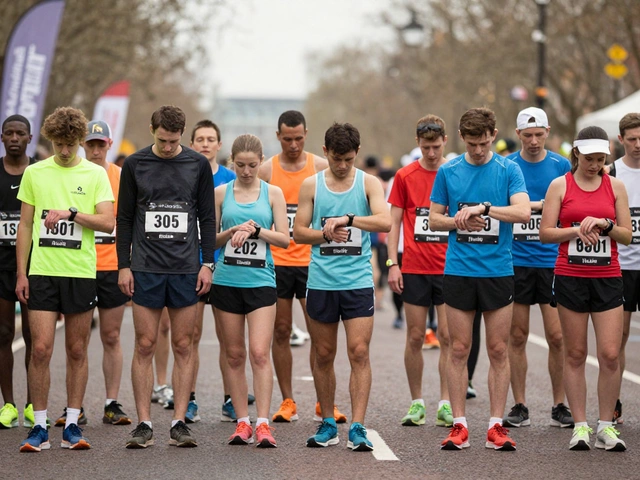

Marathon Time Estimator
How This Calculator Works
Based on data from major races like Boston and Chicago, we estimate your realistic marathon finish time using your training history and current fitness. Remember: realistic means sustainable, not fast.
Your Realistic Finish Time
For reference: Most first-time runners finish between 4-5 hours (9:00-11:00 min/mile).
Running your first marathon isn’t just about finishing. It’s about crossing the line feeling proud, not broken. Too many beginners set unrealistic goals - like aiming for a 3:30 finish when they’ve never run 10 miles - and end up injured, demotivated, or both. So what’s a realistic time for a first marathon? The answer isn’t a single number. It’s shaped by your current fitness, how long you’ve trained, and how smartly you’ve prepared.
Most First-Time Runners Finish Between 4 and 5 Hours
If you’re starting from scratch - meaning you’ve been walking or jogging a few miles a week - and you’ve followed a solid 16- to 20-week training plan, a finish time between 4 and 5 hours is typical. That’s roughly a 9:00 to 11:00 minute per mile pace. About 70% of first-time marathoners land in this range, according to data from major races like Boston, Chicago, and Vancouver. It’s not fast. But it’s solid. And it’s sustainable.
Think about it: running 26.2 miles at 10:00 per mile means you’re on your feet for over 4 hours. That’s longer than most people sit through a workday. If you’ve never run more than 8 miles before, expecting to hold a 7:30 pace for the full marathon is like trying to lift a car you’ve never bench-pressed. It doesn’t work.
What Determines Your Time?
Your finish time isn’t magic. It’s built from habits you’ve formed over months. Here’s what actually matters:
- Weekly mileage: Most successful first-timers average 25-35 miles per week during peak training. Running under 20 miles a week? You’re asking for trouble.
- Long run progression: If your longest training run was 18 miles and you barely made it, your marathon pace will slow down hard after mile 20. Aim for at least one 20-mile run, and ideally two, done at a comfortable pace.
- Consistency: Missing two weeks of training? You lose about 30 minutes off your potential time. Missing four? That’s more like an hour. Training isn’t about one epic run - it’s about showing up, week after week.
- Recovery: People who rest, sleep, and stretch finish faster than those who push through every ache. Your body repairs itself when you’re not running.
There’s no shortcut. A 3:45 marathoner didn’t wake up one day and decide to run fast. They built up slowly, ate well, slept enough, and stayed injury-free.
Realistic Goals Based on Your Starting Point
Let’s say you’re not starting from zero. You’ve run a few 5Ks or even a half-marathon. Here’s how to estimate your first marathon time:
- If your best half-marathon time is 2:00: You’re likely looking at 4:10-4:30. That’s a 9:30-10:00 pace. You’ve got solid endurance - now it’s about pacing and fueling.
- If your best half-marathon time is 1:40: You can realistically aim for 3:40-4:00. That’s a 8:30-9:00 pace. You’re in good shape, but marathon fatigue hits differently. Don’t go out too fast.
- If you’ve never run a race longer than 5K: Aim for 4:30-5:00. That’s a 10:15-11:30 pace. Walk breaks are fine. Slow and steady wins this race.
Use this rule of thumb: double your half-marathon time and add 10-20 minutes. It’s not perfect, but it’s better than guessing.

Why You Shouldn’t Chase a Sub-4 Hour Time on Your First Try
Sub-4 hours sounds impressive. But for most beginners, it’s a trap.
To hit a 3:59 marathon, you need to run 9:09 per mile for 26.2 miles. That means your long runs should be around 8:30 pace. Your 10-mile tempo runs? 8:15. Your 5K time? Probably under 22 minutes. If you’ve never run a 5K that fast, you’re not ready.
Most people who try to run sub-4 on their first marathon end up hitting the wall hard - like, 18 miles in, legs locked up, walking, crying. They don’t finish with pride. They finish with regret. And they often get injured.
Instead, aim to finish strong. If you cross the line with energy left, you’ve done it right. You’ll want to run another one next year. And then you can chase faster times.
How to Actually Train for a Realistic Goal
Training isn’t about running more. It’s about running smarter.
- Start with a plan: Pick a beginner-friendly program like Hal Higdon’s Novice 1 or Jeff Galloway’s run-walk method. Stick to it.
- Build your long run slowly: Increase your longest run by no more than 1 mile per week. Don’t jump from 12 to 18 miles in one week.
- Practice your race-day fuel: If you plan to use gels or sports drinks during the marathon, test them on your long runs. Your stomach doesn’t like surprises.
- Run slow on easy days: If you’re breathing hard on your recovery runs, you’re going too fast. You should be able to hold a conversation.
- Rest before race day: The last 10 days before the marathon? Cut mileage by 50%. Sleep 8+ hours. Hydrate. This is when your body recovers and gets ready to perform.
One runner I know from Calgary trained for 18 months before her first marathon. She ran 20 miles once. Finished in 4:52. Smiled the whole way. Said it was the best day of her life. She didn’t break any records. But she didn’t break down either.
What to Expect on Race Day
Even with great training, race day throws curveballs. Weather. Crowds. Nerves. That hill at mile 22 you didn’t train for.
Here’s what usually happens:
- Miles 1-6: You feel great. You’re excited. You’re running faster than you planned. Slow down. Seriously.
- Miles 7-18: This is your sweet spot. Stay calm. Stick to your pace. Eat every 45 minutes.
- Miles 19-23: The wall hits. Your legs feel heavy. Your mind says, “I can’t.” That’s normal. Walk if you need to. Drink water. Eat a gel. Keep moving.
- Miles 24-26.2: You’re exhausted. But you’re also closer than you’ve ever been. The crowd is loud. Your legs are done. But your heart isn’t. Keep going.
People who finish strong don’t have superhuman strength. They just didn’t quit.
What If You Don’t Hit Your Goal Time?
Let’s say you trained hard, followed the plan, ate right, slept well - and still finished in 5:10 instead of 4:45. Does that mean you failed?
No.
Marathons aren’t tests of perfection. They’re tests of persistence. If you crossed the line, you beat 95% of people who ever signed up. You didn’t just run 26.2 miles. You proved you could stick with something hard for months. That’s more valuable than any time on a clock.
Next time, you’ll be faster. Because now you know what it feels like. And you know you can do it.
Can I run a marathon if I’ve never run more than 5 miles?
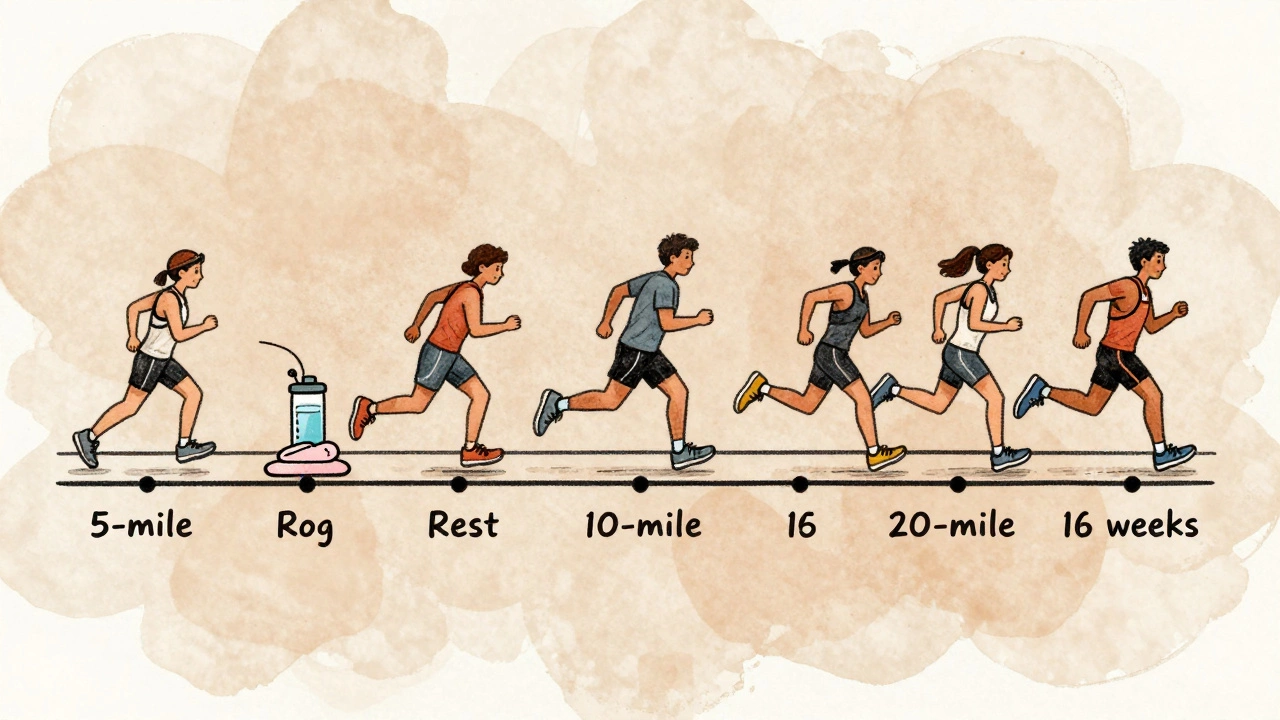
Yes - but you need to train properly. Most beginner marathon plans start with 5-mile runs and build up to 20 miles over 16-20 weeks. The key is consistency, not speed. If you can run 3-4 times a week and complete your long runs, you’ll finish. Walk breaks are allowed. Many first-timers use the run-walk method (run 5 minutes, walk 1 minute) and still finish under 5 hours.
Is it better to walk or run the entire marathon?
Walking the whole thing is possible - and many people do it. But if your goal is to finish in under 6 hours, you’ll need to maintain a 13:45-minute-per-mile walking pace. That’s faster than most people walk. Most first-timers mix running and walking. It reduces injury risk and helps you finish stronger. Run when you can, walk when you need to. There’s no shame in it.
How much weight should I lose before training for a marathon?
You don’t need to lose weight to run a marathon. Many runners finish strong at every body size. If you’re carrying extra weight, your body will naturally adjust during training - but don’t try to lose weight while training. That’s when injuries happen. Focus on fueling your runs with balanced meals. Your body will find its optimal weight over time.
What’s the most common mistake first-time marathoners make?
Going out too fast. Most people feel great at the start and run 30-60 seconds per mile faster than they should. That burns out their energy reserves early. By mile 18, they’re exhausted. The fix? Start slower than you think you should. If your goal is 4:30, run the first 10 miles at 10:30 per mile. You’ll have energy left for the last 6 miles.
Can I train for a marathon in 12 weeks?
It’s possible - but risky. Most experts recommend 16-20 weeks. If you’ve already been running regularly (at least 3-4 times a week for 6+ months), a 12-week plan might work. But if you’re starting from zero, 12 weeks is too short. You’ll increase injury risk and likely struggle to finish. Don’t rush it. Give yourself time to build endurance safely.
Realistic doesn’t mean slow. It means sustainable. It means finishing with your head up, not your knees bent. Your first marathon isn’t about speed. It’s about proving to yourself that you can do something hard - and love it.
You might like