What is Another Name for Sports Equipment? Understanding Gear, Kit, and Supplies

Sports Terminology Decoder
Click on a term below to see its definition, regional preference, and best use case.
Gear
North AmericaKit
UK / AustraliaSupplies
GlobalSporting Goods
Retail GlobalApparel
GlobalEquipment
Formal / GlobalDetails about the selected term will appear here.
You walk into a store looking for sports equipment, but the sign above the aisle says "Athletic Gear." You ask your friend to bring their sports kit to practice, and they hand you a bag of sporting goods. It can get confusing. Are these terms interchangeable? Mostly, yes. But there are subtle differences in how we use them depending on where you live, what sport you play, and who you are talking to.
If you have ever wondered, "What is another name for sports equipment?" you are not alone. The language around what we wear and use to play games is vast. This guide breaks down the most common synonyms, explains when to use each one, and helps you sound like an insider whether you are buying a tennis racket or packing for a rugby match.
The Big Three: Gear, Kit, and Supplies
When people ask for alternatives to "sports equipment," three words usually come up first: gear, a broad term often used in North America for all items needed for an activity, kit, a term preferred in the UK and Australia, especially for team uniforms and personal items, and supplies, consumable or auxiliary items that support the main activity.
Let's look at why these words stick around. They aren't just random choices; they reflect culture and function.
Gear is the casual king of synonyms. If you say, "I need new gear," everyone knows you mean shoes, rackets, helmets, or pads. It feels rugged and practical. Cyclists talk about "cycling gear." Skiers talk about "ski gear." It implies durability and utility. When you buy gear, you expect it to last.
Kit is different. In British English, if you join a local soccer club, you buy your "kit." This specifically refers to the uniform-jersey, shorts, socks-and sometimes the bag you carry it in. It’s less about the hardware (like the ball or goalposts) and more about what you wear. However, in some contexts, "kit" can mean a set of tools, like a "first-aid kit" or a "toolkit." In sports, though, keep it to uniforms and personal protective items.
Supplies is the odd one out. You wouldn’t call a basketball a supply. But you might call water bottles, tape, chalk, or replacement strings "supplies." These are things you run out of. They are consumables. If you are managing a team budget, you separate "equipment costs" from "supply costs." One buys the bats; the other buys the grip tape.
Regional Differences: US vs. UK vs. Australia
Language changes across borders. If you are shopping online from another country, knowing these regional preferences saves you from buying the wrong thing.
| Term | Primary Region | Typical Usage Context | Example Phrase |
|---|---|---|---|
| Gear | USA, Canada | Casual, all-encompassing | "Check out my new hiking gear." |
| Kit | UK, Ireland, Australia | Team uniforms, specific sets | "Did you wash your football kit?" |
| Sporting Goods | Global (Retail) | Store names, industry reports | "Visit the sporting goods section." |
| Apparel | Global | Clothing only | "Performance apparel for runners." |
| Paraphernalia | Global (Formal/Humorous) | Excessive or complex items | "All the golf paraphernalia." |
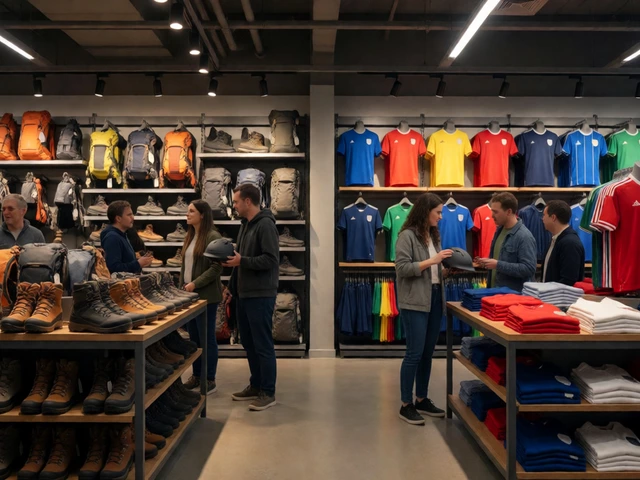
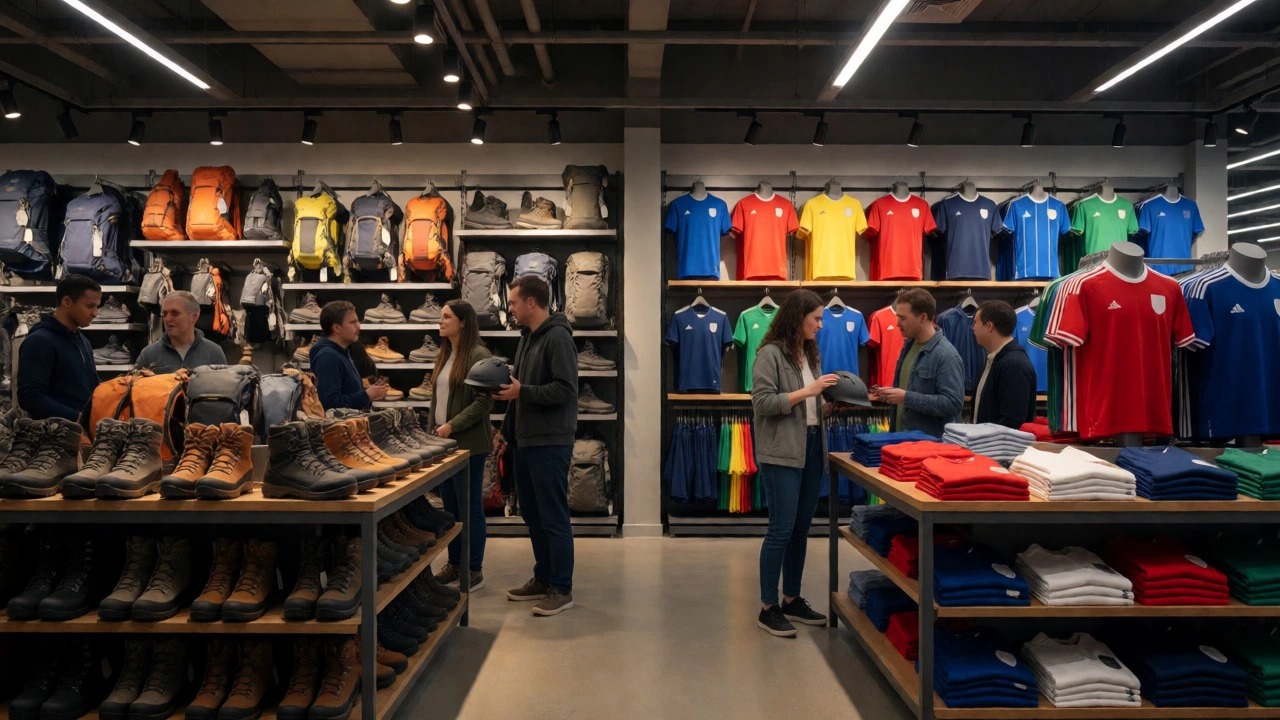
In the United States, "sporting goods" is the standard retail category. You will see signs saying "Sporting Goods" rather than "Sports Equipment." It sounds commercial. If you tell a friend you bought "sporting goods," they might think you went to a big-box store like Dick's Sporting Goods. If you say you bought "gear," it sounds personal and active.
In the UK and Australia, "kit" dominates team sports. If you go to a cricket shop, you are buying "cricket kit." Using the word "equipment" here can sound stiff or overly formal, like a school administrator speaking. Conversely, if you use "kit" in the US to refer to a baseball bat, people might look at you funny. They’d say "bat" or "gear."

Specific Terms by Sport Type
Some sports have developed their own vocabulary that doesn't translate well. Knowing these niche terms makes you sound experienced.
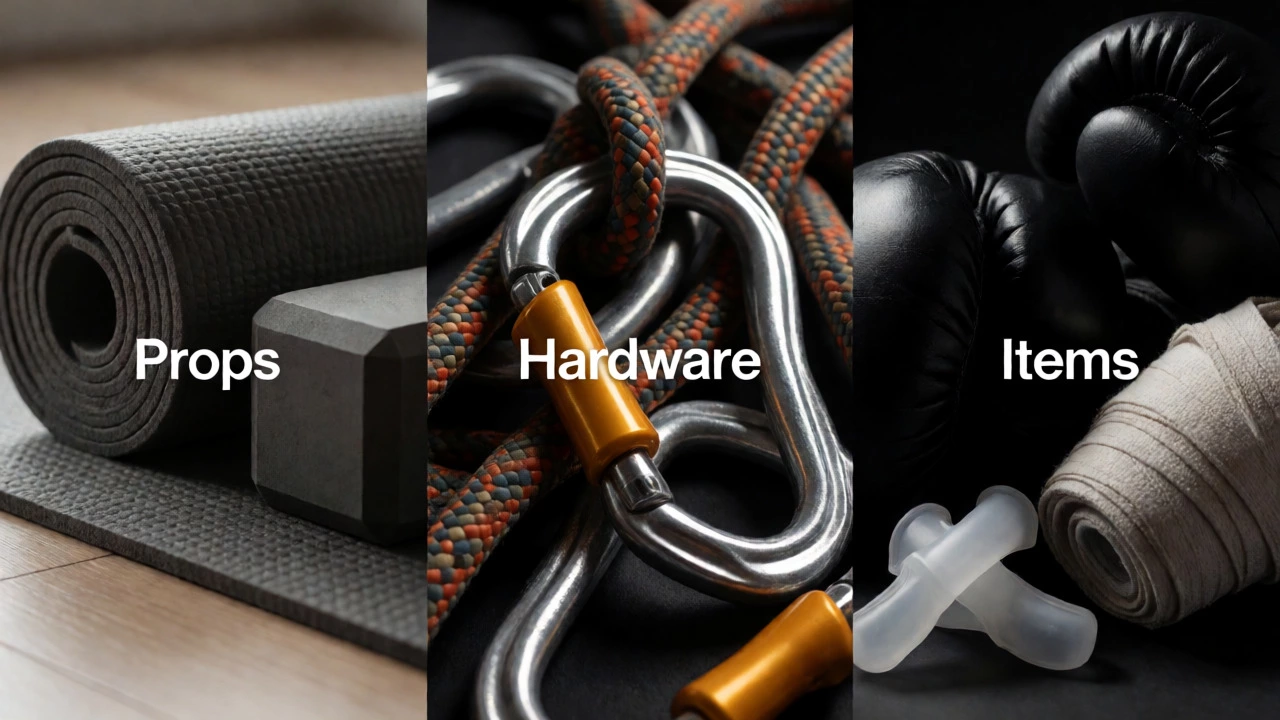
In Martial Arts, combat sports focusing on striking or grappling techniques, practitioners rarely say "equipment." They say "gi" for the uniform and "protective gear" for headgear and mouthguards. In boxing, you don't buy "boxing equipment"; you buy "gloves," "wraps," and "mouthguard." The items are named directly because there are so few of them.
In Racket Sports, games played with a racket and ball, such as tennis and badminton, players often refer to their "racket setup" or "string tension." While "equipment" works, serious players talk about "specs" (specifications). They care about weight, balance, and stiffness. Calling a tennis racket "gear" is acceptable, but calling it "apparatus" would be weird.
In Fitness and Gym Workouts, physical exercises aimed at improving health and strength, the term "apparatus" sometimes creeps in. Pilates uses a "reformer," which is technically a piece of apparatus. Yoga practitioners might call mats and blocks "props." Notice the difference? A yoga mat isn't really "equipment" in the sense of machinery; it's a prop. It supports the pose. Similarly, resistance bands are "accessories."
For outdoor activities like hiking or climbing, the term "hardware" is common. Carabiners, ropes, and harnesses are "climbing hardware." This distinguishes them from "soft goods" like backpacks and jackets. If you ask a climber for their "sports equipment," they might laugh. They want to know if you mean their rope (hardware) or their jacket (apparel).
Formal vs. Casual: When to Use Which Word
Your choice of synonym depends heavily on who is listening. Are you writing a grant proposal for a school gym? Or are you texting a friend to meet at the park?
Use Equipment in formal settings. It is neutral, precise, and professional. Insurance companies cover "sports equipment." Schools inventory "PE equipment." Manufacturers list "product specifications" under "equipment details." If you are filing a claim for a stolen bike, you file it under "personal property/equipment." It leaves no room for ambiguity.
Use Gear in casual conversation. It builds rapport. "Nice gear!" is a compliment. "Your equipment looks adequate" sounds like a robot evaluating you. Gear implies passion. People who love their hobby use the word gear. It suggests they care about the quality and performance of what they hold in their hands.
Use Kit when discussing teams and identity. Wearing the right kit shows loyalty. In youth sports leagues, parents often complain about the cost of the "kit." They aren't worried about the field maintenance; they are worried about the jerseys. Kit carries emotional weight-it represents belonging.
Avoid using Apparatus unless you are being intentionally humorous or highly technical. It sounds old-fashioned. No one says, "I forgot my running apparatus at home." It’s too clinical. Save it for medical devices or laboratory tools.
Common Mistakes and Misconceptions
One major mistake is conflating "clothing" with "equipment." Technically, your shoes are equipment. Your shirt is apparel. But many people lump them together. If you are returning an item to a store, check their policy. Some stores classify shoes as "footwear" and shirts as "apparel," while rackets are "hard goods." Knowing this distinction helps when you are trying to find something on a website filter menu.
Another confusion arises with "accessories." Are sunglasses equipment? Yes. Is a water bottle equipment? Debatable. Most retailers put water bottles under "hydration" or "accessories," not primary equipment. If you are searching for a helmet, do not search for "accessories." You will miss it. Search for "protective gear" or simply "helmets."
Finally, don't ignore pluralization. "Sports equipment" is often treated as a mass noun (uncountable) in American English. You say, "The equipment is expensive," not "The equipments are expensive." However, "pieces of equipment" is correct. In contrast, "sports gears" is rarely used. "Gears" usually refers to mechanical cogs. Stick to "gear" as a singular collective noun.
Why Does This Matter?
You might wonder why you should care about synonyms. Here is the practical payoff: better communication and smarter shopping.
When you know the right terms, you search more effectively. Searching for "football kit" on a UK site yields jerseys. Searching for "football equipment" yields balls, cones, and goals. If you mix them up, you waste time scrolling through irrelevant products.
It also helps in resale markets. If you are selling used items on eBay or Facebook Marketplace, use the terms buyers search for. Title your listing "Vintage Tennis Racket - Great Gear" instead of just "Tennis Item." Buyers looking for "tennis gear" will find you. Buyers looking for "sports supplies" won't.
Ultimately, language evolves with usage. The term "sports equipment" is safe, but it is bland. Using specific synonyms like "gear," "kit," or "props" adds color and precision to your description. It tells people you understand the culture of the sport you are playing.
Is "sports gear" the same as "sports equipment"?
Yes, in most casual contexts, they are interchangeable. However, "gear" is more informal and commonly used in North America for personal items like shoes and bags, while "equipment" is more formal and often includes larger items like nets or machines.
What is the difference between "kit" and "uniform"?
A "uniform" strictly refers to the clothing worn by members of a team. "Kit" is broader; it can include the uniform plus accessories like shin guards, socks, and sometimes even the bag. In the UK, "kit" is the preferred term for everything a player wears.
Are "sporting goods" and "sports equipment" different?
"Sporting goods" is a retail category term that encompasses all items sold for sports, including clothing, footwear, and hard equipment. "Sports equipment" typically refers to the tools and apparatus used to play the game (e.g., bats, balls, rackets), excluding apparel.
Can I use "apparatus" for any sport?
No, "apparatus" sounds unnatural for most sports. It is best reserved for gymnastics (where rings and bars are called apparatus) or scientific/medical contexts. Using it for running or basketball will make you sound overly formal or confused.
What do cyclists call their equipment?
Cyclists often refer to their bicycle and components as their "bike" or "rig." Clothing is called "kit" (especially in Europe) or "kit/gear" (in the US). Accessories like lights and computers are often called "electronics" or "accessories," while helmets and gloves fall under "protective gear."
You might like