
Marathon Pace & Goal Estimator
Enter your desired finish time to find out what pace you need to hold per mile.
See average finishing times based on global data for your age group and gender.
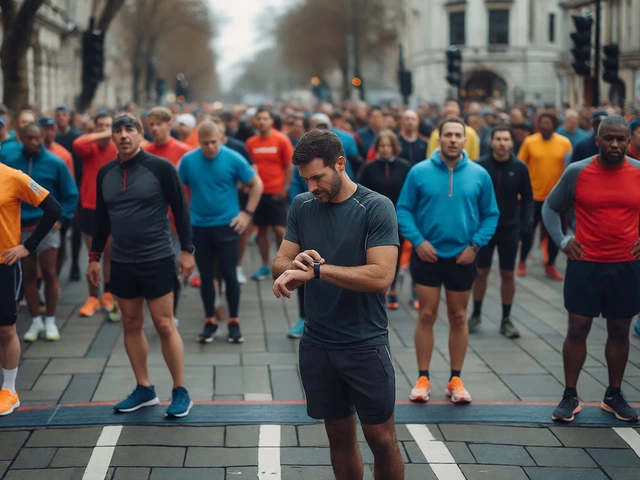
You’ve put in the miles. You’ve eaten enough gel packets to last a lifetime. Now you’re standing at the start line, wondering one thing: what is the average time it takes to run a marathon?
It’s a fair question. But here’s the catch-there isn’t one single number that applies to everyone. The "average" changes drastically depending on who you ask, where you are, and how old you are. A sub-3-hour finish might be elite for a recreational runner but a warm-up for a pro. If you’re aiming for your first 26.2 miles, knowing the realistic benchmarks helps you set a goal that doesn’t crush your spirit or leave you bored.
The Global Baseline
Let’s start with the big picture. According to data from RunRepeat, which analyzes millions of race results, the global average marathon finishing time hovers around 4 hours and 31 minutes. This figure aggregates men and women across all age groups and skill levels. It sounds daunting if you’ve never run more than 10k, but remember, this includes people walking parts of the course, those suffering from injuries mid-race, and seasoned veterans chasing personal bests.
If we break it down by gender, the gap narrows slightly but remains significant due to physiological differences in muscle mass and oxygen uptake. Men typically finish around 4 hours and 22 minutes, while women average about 4 hours and 52 minutes. These numbers have remained relatively stable over the past decade, suggesting that while shoe technology has improved, the fundamental challenge of covering 26.2 miles hasn’t changed much for the general population.
Age Matters More Than You Think
Your age is probably the biggest factor influencing your finish time, even more so than your weekly mileage. Peak performance generally occurs between ages 30 and 35. After that, natural physiological changes kick in. Muscle mass decreases, recovery slows, and maximum heart rate drops. However, experienced older runners often compensate with better pacing strategies and mental resilience.
Here’s what typical averages look like across different decades:
| Age Group | Men (Avg) | Women (Avg) | Pace per Mile |
|---|---|---|---|
| 20-29 | 4:30:00 | 4:55:00 | ~10:20 min/mi |
| 30-39 | 4:25:00 | 4:50:00 | ~10:10 min/mi |
| 40-49 | 4:35:00 | 5:05:00 | ~10:30 min/mi |
| 50-59 | 4:50:00 | 5:25:00 | ~11:00 min/mi |
| 60+ | 5:15:00 | 5:50:00 | ~11:50 min/mi |
Notice the trend? As you get older, the average time increases. But don’t let that discourage you. Many runners in their 50s and 60s beat younger competitors because they know how to pace themselves. They don’t go out too fast in the first 5k, which saves them from hitting the wall at mile 20.

What Counts as a "Good" Time?
Average is just a statistical midpoint. For most recreational runners, a "good" time is subjective. Here are some common milestones people aim for:
- Sub-4 Hours: This is the holy grail for many beginners. Running under four hours means maintaining an average pace of 9:09 per minute. It requires consistent training but is achievable for many dedicated amateurs.
- Sub-3:30: This puts you in the top tier of casual runners. You need solid speed work and long-run discipline. Finishing under 3:30 often qualifies you for major marathons like Boston (depending on your age group).
- Sub-3 Hours: Breaking three hours is a serious achievement. Only about 4% of all marathoners ever do this. It demands near-perfect execution, ideal weather, and months of high-volume training.
If you’re new to the sport, don’t obsess over these numbers immediately. Your first marathon should be about finishing strong, not necessarily hitting a specific clock time. Once you’ve crossed the line, you’ll have a baseline to improve upon.
Factors That Skew Your Time
Why did your friend run a 4:10 while you ran a 4:40 despite similar training logs? Several variables play a role beyond fitness.
Course Profile: Not all marathons are created equal. A flat course like the Chicago Marathon allows for faster times compared to the hilly New York City Marathon. Elevation gain adds fatigue; every 100 feet of uphill climbing can slow you down by several seconds per mile. Check the elevation profile before setting your goal.
Weather Conditions: Heat and humidity are silent killers. Ideal marathon temperatures range between 40°F and 50°F (4°C-10°C). If it’s above 70°F, expect your pace to drop by 10-15 seconds per mile. Hydration becomes critical, and gastrointestinal issues become more likely.
Pacing Strategy: Going out too fast is the most common mistake. If you start at an 8:30 pace when your target is 9:30, you’ll pay for it later. Negative splitting-running the second half faster than the first-is a hallmark of smart racing. It prevents early burnout and keeps your legs fresh for the final miles.

How to Calculate Your Target Pace
So, how do you translate a desired finish time into daily training paces? Use a simple formula. Take your goal time in minutes, divide by 26.2, and that’s your average pace per mile.
For example, if you want to finish in 4:00:00:
240 minutes ÷ 26.2 miles = ~9.16 minutes per mile.
That’s roughly 9:10 per mile.
But you won’t run exactly 9:10 for every mile. Training plans usually include different types of runs:
- Easy Runs: 1-2 minutes slower than goal pace. This builds aerobic base without excessive stress.
- Tempo Runs: 15-30 seconds faster than goal pace. These teach your body to clear lactate efficiently.
- Long Runs: Often done at easy pace, but sometimes include segments at goal pace to simulate race conditions.
Don’t ignore the taper. In the last two weeks before the race, cut your mileage by 50%. You’ll feel sluggish during the taper, but trust the process. Your muscles are repairing and storing glycogen. Trusting the rest period is part of the strategy.
Realistic Expectations for First-Timers
If this is your first marathon, aim for a finish time between 4:30 and 5:00 hours. Why? Because adrenaline will make you feel great at mile 10, but reality sets in at mile 20. Most first-timers underestimate the cumulative fatigue. By targeting a conservative time, you give yourself a buffer. If things go well, you can speed up in the second half. If you hit the wall, you still finish within your comfort zone.
Remember, the clock doesn’t care about your feelings. But your experience does. Enjoy the crowd support, the energy, and the sheer absurdity of running 26 miles. Whether you cross in 3:45 or 5:15, you’ve accomplished something remarkable.
Is a 4-hour marathon good?
Yes, a sub-4-hour marathon is considered a very good achievement for a recreational runner. It places you in the upper echelon of amateur athletes, requiring consistent training and disciplined pacing throughout the entire distance.
What is the fastest recorded marathon time?
As of recent records, Kelvin Kiptum holds the men's world record with a time of 2:00:35, set in Chicago in 2023. For women, Ruth Chepngetich holds the record at 2:09:56, also set in Chicago. These times represent elite professional performance far beyond the average runner's capability.
Does age affect marathon finishing time significantly?
Yes, age is a major factor. Performance tends to peak in the early 30s and gradually declines thereafter due to physiological changes such as reduced muscle mass and slower recovery rates. However, experience can mitigate some of these effects through better pacing and race strategy.
How long should I train for my first marathon?
Most training plans recommend 16 to 20 weeks of preparation for a first-time marathoner. This duration allows for gradual mileage buildup, adequate adaptation to long runs, and sufficient time for tapering before race day.
What is the average pace for a 4-hour marathon?
To finish a marathon in 4 hours, you need to maintain an average pace of approximately 9 minutes and 9 seconds per mile, or 5 minutes and 41 seconds per kilometer. Consistency is key to achieving this pace over the full distance.
You might like