Running Shoe Lifespan Calculator
Your Running Profile
ESTIMATED TOTAL LIFESPAN
TIME UNTIL REPLACEMENT
You should start looking for new shoes in --.
Wear Progression
The Hard Truth About Shoe Lifespan
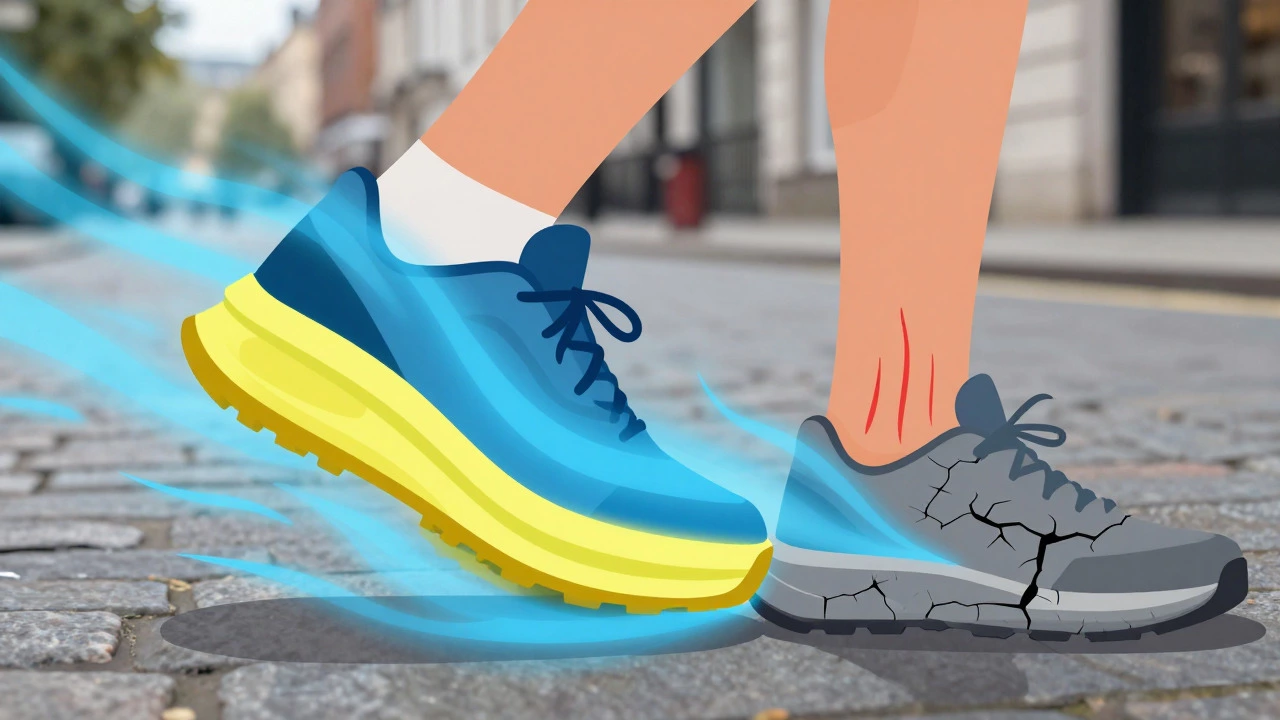
You probably think your running shoes are fine because they still look decent on the outside. But that’s exactly where most runners get tricked. The real damage happens inside, specifically in the foam cushioning under your feet. Once that foam breaks down, it doesn’t bounce back. You lose shock absorption, which means more impact goes straight into your knees, shins, and hips.
So, how long should a pair of running shoes last? The general rule of thumb is 300 to 500 miles. That’s not just a random number; it’s based on how long modern EVA and polyurethane foams can maintain their structural integrity before compressing permanently. If you run five miles a day, that’s about six months. If you’re training for a marathon and logging 40 miles a week, you might burn through a pair in two months.
Ignoring this timeline isn’t just bad for your wallet-it’s a fast track to injury. I’ve seen too many runners push through shin splints or knee pain only to realize later that their shoes were dead weight. Let’s break down exactly how to track this, what to look for, and how to stretch your budget without risking your health.
Why Miles Matter More Than Months
Time is a terrible metric for shoe life. A pair of shoes sitting in your closet for two years will be fine until you lace them up. But once you start pounding pavement, the clock starts ticking based on distance, not calendar days. Why? Because every step you take compresses the midsole foam. Over hundreds of miles, those tiny compressions add up to permanent deformation.
Think of the midsole like a car spring. At first, it absorbs bumps smoothly. After enough cycles, it gets saggy and stiff. In running shoes, this material is usually Ethylene-Vinyl Acetate (EVA) or newer super-foams like Pebax. These materials are designed to be lightweight and responsive, but they degrade with repeated stress. Heat, humidity, and even washing them can accelerate this breakdown, but mileage is the biggest factor.
| Weekly Distance | Average Lifespan (Miles) | Estimated Time Before Replacement |
|---|---|---|
| 10 miles/week | 400 miles | ~10 months |
| 20 miles/week | 400 miles | ~5 months |
| 30+ miles/week | 350 miles | ~3 months |
Note that heavier runners often need to replace shoes sooner. If you weigh over 200 pounds, you might hit the end of your shoe’s useful life closer to the 300-mile mark. Lighter runners might squeeze out 500 or even 600 miles from durable daily trainers. It’s all about the force exerted on the midsole with each footstrike.
Visual and Physical Signs Your Shoes Are Done
Since most of us don’t log every single mile perfectly, you need to know what to look for. There are three main areas to inspect: the midsole, the outsole, and the upper.
1. Midsole Compression (The Silent Killer)
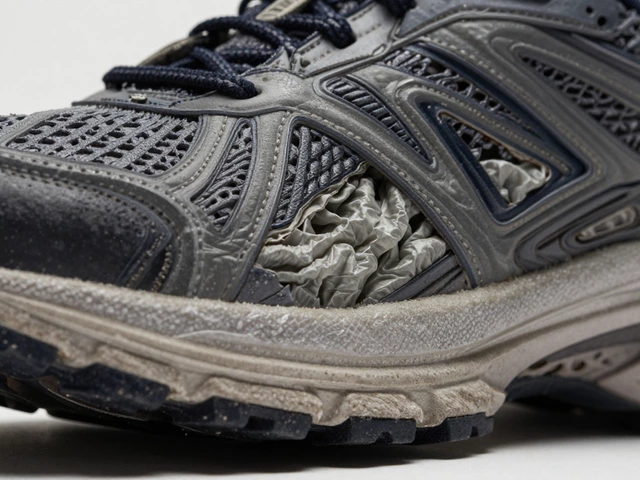
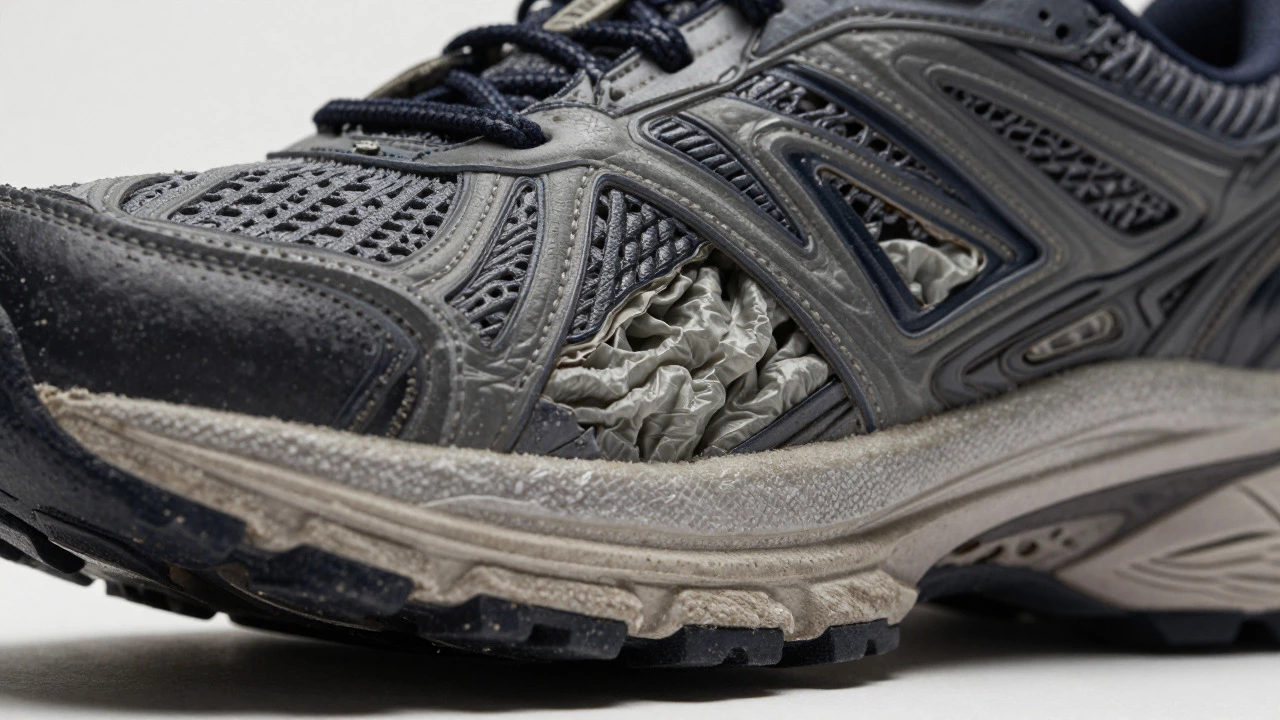
This is the most critical sign. Look at the side of your shoe. Is the foam wrinkled? Does it look compressed or flattened compared to a new pair? Try pressing your thumb into the midsole. If it feels hard and unyielding, or if it doesn’t spring back quickly, the cushioning is gone. You won’t see this damage from the top, so you have to look closely at the sides.
2. Outsole Wear Patterns
Check the bottom of your shoes. The rubber tread protects the foam underneath. If you can see the foam showing through the rubber, you’re running on bare cushioning. This drastically reduces traction and durability. Also, look at the pattern of wear. If the outer edge of your heel is completely smooth while other parts are intact, you might be overpronating or supinating, which wears shoes unevenly. Uneven wear means some parts of the shoe die faster than others, leading to instability.
3. Upper Damage and Fit
The mesh upper holds your foot in place. If there are holes, tears, or if the fabric has stretched out significantly, your foot won’t be secure. A loose fit causes friction, blisters, and inefficient energy transfer. Also, check the insole. If it’s crumbling or worn thin, the support structure inside the shoe is compromised.
How to Track Your Mileage Accurately
If you want to avoid guessing, you need data. Here are the best ways to keep track:
- Running Apps: Most GPS apps like Strava, Garmin Connect, or Nike Run Club let you assign shoes to specific runs. This is the easiest method. Just update your active shoe profile when you switch pairs.
- Smart Watches: Devices like the Apple Watch or Garmin Fenix series integrate directly with these apps, automatically logging distance per shoe.
- Manual Log: If you prefer low-tech, use a notebook or a simple spreadsheet. Write down the date, distance, and which shoes you wore. It takes ten seconds after each run and saves you from unexpected injuries.
- Phone Notes: Create a note titled “Shoe Tracker.” Add a line for each pair: “Nike Pegasus 40 - Started Jan 2026 - Current: 150 miles.” Update it weekly.
Pro tip: Don’t wait until the very last mile. Start looking for a replacement pair when you hit 250 miles. This gives you time to break in the new shoes gradually, mixing them with your old ones for the final few weeks. This rotation also extends the life of both pairs because the foam gets time to recover between runs.
Factors That Shorten Shoe Life
Not all miles are created equal. Several factors can make your shoes die faster than the standard 300-500 mile estimate.
Surface Type: Concrete is unforgiving. It’s harder than asphalt and much harder than dirt trails. Running exclusively on concrete will compress your midsole faster. Trail running, on the other hand, is gentler on the cushioning but rougher on the outsole rubber due to rocks and roots. If you mix surfaces, your shoes will likely last longer overall because the stress is distributed differently.
Weather Conditions: Water is the enemy of foam. Wet conditions cause EVA foam to absorb moisture, which breaks down its cellular structure. If you run in rain or snow frequently, your shoes will lose resilience quicker. Always let wet shoes dry naturally at room temperature-never put them in the dryer or near a heater, as heat melts the adhesives and deforms the foam.
Storage: Leaving your shoes in a hot car trunk or direct sunlight accelerates UV degradation. The foam becomes brittle and cracks. Store them in a cool, dry place away from direct light.
Should You Rotate Multiple Pairs?
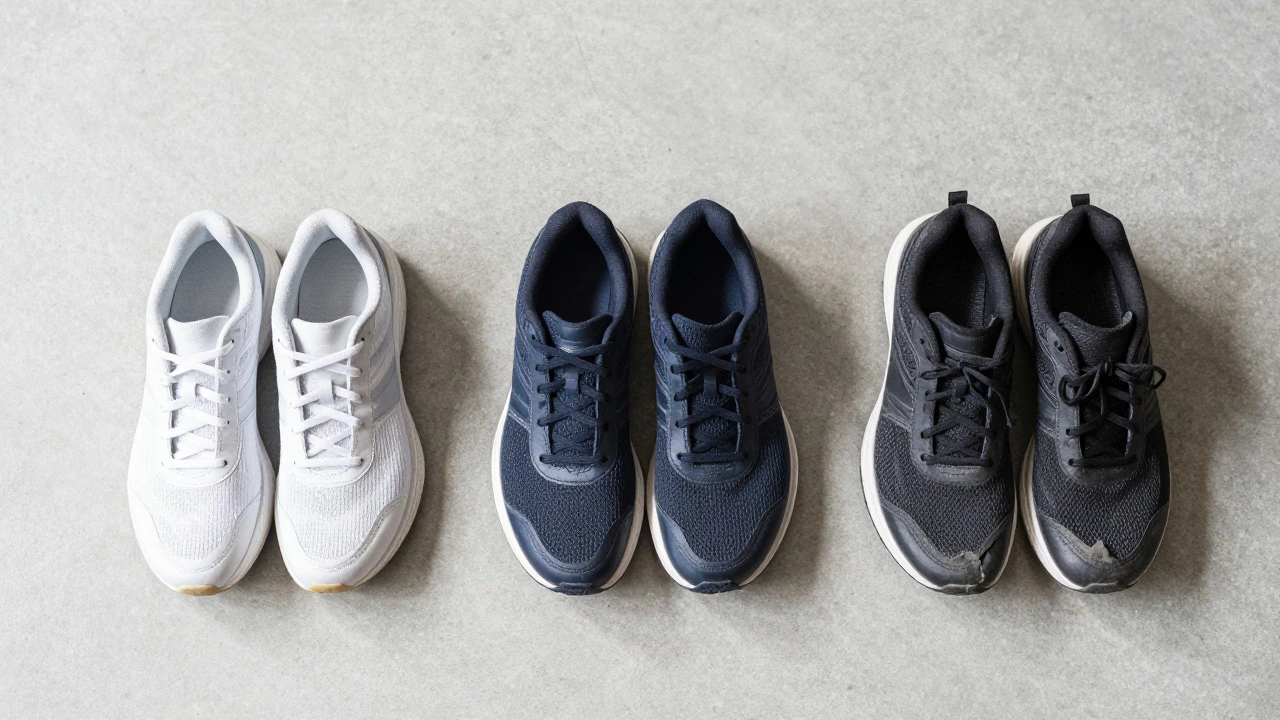
Yes, absolutely. Rotating between two or three pairs of running shoes is one of the best things you can do for your longevity and performance. When you run in one pair, the foam compresses. If you give it 24-48 hours to rest, the foam partially rebounds to its original shape. This recovery process maintains cushioning efficiency longer.
Plus, rotating shoes varies the biomechanical stress on your body. Different shoes have slightly different geometries and stiffness levels. Changing them up prevents repetitive strain injuries by altering the load patterns on your muscles and joints. Many elite runners rotate pairs religiously. For recreational runners, having a second pair means you always have fresh cushioning available, reducing the risk of overuse injuries.
When to Replace vs. When to Repair
Can you fix a worn-out running shoe? Generally, no. Unlike hiking boots, running shoes are engineered systems. Replacing the insole might help with comfort, but it won’t restore lost midsole cushioning. Gluing a separated sole might hold for a week, but the structural integrity is already compromised.
If your shoes are under 200 miles but feel uncomfortable, try replacing the insoles. Sometimes the factory insole packs down, causing pressure points. New aftermarket insoles can refresh the fit. However, if the midsole is wrinkled or the outsole is bald, it’s time to retire them. Don’t try to salvage dead shoes for long runs. Use them for walking, gym workouts, or errands instead.
Budgeting for New Shoes
Running shoes are an expense, but think of them as insurance against medical bills. Treating a stress fracture or severe tendonitis costs far more than a new pair of trainers. To manage costs:
- Buy Sales: Running brands release new models every year. Older versions often drop in price by 30-50%. They perform almost identically to the latest tech.
- Consider Used Gear: Sites like eBay or local running stores sometimes sell gently used shoes. Check the mileage carefully.
- Rotate Brands: Don’t feel loyal to one brand. Trying different models helps you find the right fit and can save money if you discover cheaper alternatives that work well for you.
Can I use my running shoes for walking if they are worn out?
Yes, absolutely. Walking puts significantly less stress on your feet than running. Worn-out running shoes are perfect for casual walking, gym sessions, or household chores. Just avoid using them for high-impact activities like jogging or interval training.
Does washing running shoes make them last shorter?
Machine washing can accelerate wear. The agitation and heat can break down adhesives and deform the foam. If you must wash them, remove the insoles, hand wash gently with cold water and mild soap, and air dry away from direct heat. Spot cleaning is usually sufficient for most dirt.
Why do my new shoes hurt immediately?
New shoes often require a break-in period. The materials are stiff and haven't molded to your foot shape yet. Start with short runs (1-2 miles) and gradually increase distance over 1-2 weeks. If pain persists after 50 miles, the model may not suit your foot type or gait.
Is 500 miles realistic for all runners?
For lighter runners (under 150 lbs) who run on softer surfaces like trails or tracks, 500 miles is achievable. Heavier runners or those who run primarily on concrete will likely reach the end of their shoe's life closer to 300-400 miles. Always prioritize physical signs of wear over strict mileage counts.
How does shoe rotation prevent injury?
Rotating shoes allows the midsole foam to fully decompress and recover its elasticity between runs. Additionally, varying the slight differences in geometry and stiffness between different shoe models distributes mechanical stress across different muscle groups and joints, reducing the risk of repetitive strain injuries.
You might like