

Personalized Gym Plan Generator
Select your preferences and click "Generate My Plan" to see your customized routine.
Walking into a gym with a vague idea of "getting fit" is the fastest way to quit within three months. You might spend twenty minutes on the treadmill, lift some random weights, and leave feeling like you did something, but not knowing if it actually worked. A good gym plan isn't about doing the most exercises or sweating the hardest; it's about a structured approach that tells your body exactly what to adapt to.
The core problem most people face is lack of direction. Without a clear framework, workouts become chaotic. One day you focus on arms, the next on legs, and the week after that you skip cardio entirely because you're tired. This inconsistency prevents measurable progress. A solid plan solves this by defining your goals, selecting appropriate movements, and setting a realistic schedule that fits your life.
Defining Your Primary Goal
Before picking specific exercises, you need to know what you are actually trying to achieve. "Getting in shape" is too vague. Are you trying to build visible muscle mass? Lose body fat while maintaining strength? Improve general health markers like blood pressure and mobility? Each goal requires a different volume and intensity approach.
- Muscle Hypertrophy: Focuses on moderate loads (60-80% of one-rep max) with higher rep ranges (8-12 reps). Requires adequate protein intake and caloric surplus or maintenance.
- Strength Gains: Prioritizes heavy loads (85-95% of one-rep max) with lower reps (1-5 reps). Longer rest periods (2-5 minutes) are essential between sets.
- Fat Loss: Combines resistance training to preserve muscle mass with consistent energy deficit. Cardio can be added, but lifting weights is non-negotiable for metabolic health.
- General Fitness: Balances all aspects with moderate intensity. Ideal for beginners who want to improve overall well-being without specializing.
Your choice here dictates the structure of every subsequent decision. If you pick strength, you won't do high-rep bicep curls as a primary driver. If you pick hypertrophy, you won't spend an hour doing light squats.
Building the Foundation: Exercise Selection
A good plan relies on compound movements first. These are multi-joint exercises that recruit multiple muscle groups simultaneously, offering the highest return on investment for time spent in the gym.
| Category | Examples | Primary Benefit | Recommended Frequency |
|---|---|---|---|
| Compound Movements | Squats, Deadlifts, Bench Press, Overhead Press, Rows | Full-body engagement, hormonal response, functional strength | 2-3 times per week |
| Isolation Movements | Bicep Curls, Leg Extensions, Lateral Raises | Targeting weak points, aesthetic refinement, joint stability | 1-2 times per week |
Start with four to five compound lifts per session. For example, a basic full-body routine might include Squats, Bench Press, Bent-over Rows, Overhead Press, and Planks. This covers the major movement patterns: squatting, hinging, pushing, pulling, and core stabilization. Once you have mastered these basics, you can add isolation work to address specific aesthetics or weaknesses.
Don't overcomplicate the selection. More exercises don't mean better results. In fact, adding too many movements often leads to fatigue before you finish the key lifts, reducing the quality of your main work.
Structuring Frequency and Volume
How often should you train? The answer depends on your recovery capacity and experience level. For most beginners, training three days a week is sufficient and sustainable. As you progress, you may increase to four or five days, but only if your sleep, nutrition, and stress levels allow it.
Volume refers to the total amount of work performed, usually measured in sets and reps. A common heuristic is to aim for 10-20 hard sets per muscle group per week. For instance, if you train chest twice a week, you might perform 10 sets on Monday and 10 sets on Thursday. This ensures each muscle receives enough stimulus without being overworked.
Split routines are popular for managing volume. Here are two common structures:
- Full Body Split: Train the entire body three times a week. Best for beginners and those with limited time. Allows frequent practice of technique.
- Upper/Lower Split: Alternate between upper body and lower body days, four times a week. Offers more volume per session than full body but less frequency per muscle group.
- Push/Pull/Legs (PPL): Six-day rotation focusing on pushing muscles, pulling muscles, and legs. High volume, suitable for intermediates and advanced lifters.
Choose the split that matches your available days. If you only have three days, a full-body routine is superior to a PPL split because you will hit each muscle group more frequently.

The Role of Progressive Overload
This is the single most important factor in long-term success. Progressive overload means gradually increasing the demand on your musculoskeletal system over time. If you lift the same weight for the same number of reps every week, your body has no reason to change.
You can achieve progressive overload in several ways:
- Weight: Adding small increments to the bar (e.g., 2.5 lbs or 1 kg).
- Reps: Doing more repetitions with the same weight.
- Form: Improving technique to use more of the range of motion.
- Rest: Reducing rest time between sets while maintaining performance.
Keep a training log. Write down the weight, reps, and how the set felt. This data helps you track progress objectively. If you bench pressed 135 lbs for 8 reps last month, your goal this month is either 140 lbs for 8 reps or 135 lbs for 9-10 reps. Without tracking, you rely on memory, which is notoriously unreliable in the gym.
Nutrition and Recovery: The Hidden Half
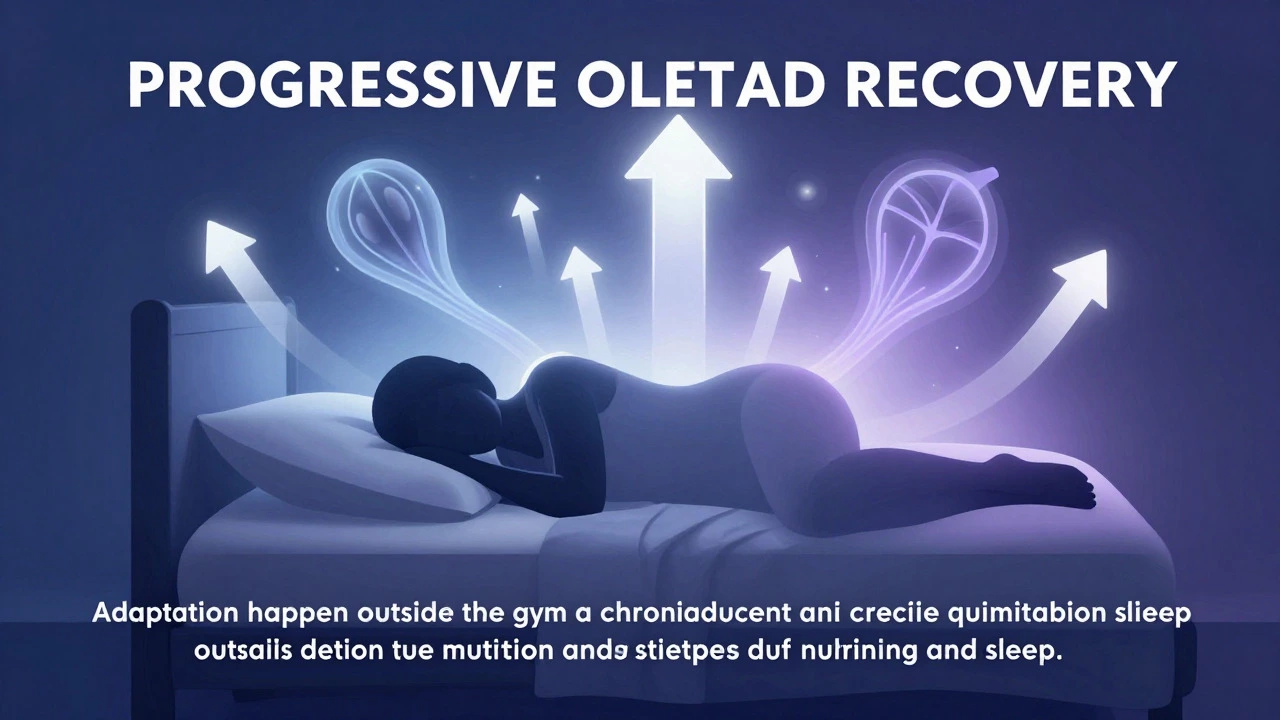
A gym plan fails if you ignore what happens outside the gym. Training provides the stimulus; nutrition and recovery provide the adaptation. You cannot out-train a bad diet, especially if your goal is body composition change.
For muscle gain, you need a slight caloric surplus and adequate protein. Aim for approximately 0.7-1 gram of protein per pound of body weight daily. For fat loss, you need a caloric deficit, but keep protein high to protect lean mass. Hydration is also critical; even mild dehydration can reduce strength output by up to 10%.
Recovery includes sleep. Most adults need 7-9 hours of quality sleep per night. During deep sleep, growth hormone is released, which aids tissue repair. If you are sleeping five hours a night, your progress will stall regardless of how hard you train. Consider your lifestyle: if you work late shifts or travel frequently, adjust your training intensity to match your recovery capacity rather than forcing a rigid elite-level program.
Common Mistakes to Avoid
Even with a good plan, execution errors can sabotage results. Watch out for these pitfalls:
- Chasing Novelty: Changing your program every two weeks because you saw a new influencer video. Consistency beats novelty. Stick to a plan for at least 8-12 weeks.
- Ego Lifting: Using momentum to swing weights instead of controlled eccentric and concentric phases. This increases injury risk and reduces muscle activation.
- Ignoring Weak Points: Focusing only on favorite exercises (like biceps) while neglecting lagging areas (like back or glutes). Balance is key for posture and injury prevention.
- Overtraining Cardio: Spending an hour on the elliptical after lifting. This can interfere with muscle growth signals. Keep cardio separate or limit it to low-intensity steady state.
Listen to your body. Sharp pain is a signal to stop. Soreness is normal, but persistent joint pain is not. If you feel consistently drained, take a deload week-reduce volume by 40-50% for seven days to let your nervous system recover.
Sample Weekly Structure for Beginners
Here is a practical template you can start with immediately. Adjust the exercises based on equipment availability and personal preference.
- Day 1 (Monday): Full Body A - Squats: 3 sets x 8-10 reps - Bench Press: 3 sets x 8-10 reps - Bent-over Rows: 3 sets x 8-10 reps - Plank: 3 sets x 30-60 seconds
- Day 2 (Tuesday): Rest or Light Cardio - 20-30 minutes walking or easy cycling
- Day 3 (Wednesday): Full Body B - Deadlifts: 3 sets x 6-8 reps - Overhead Press: 3 sets x 8-10 reps - Lat Pulldowns: 3 sets x 10-12 reps - Face Pulls: 3 sets x 15 reps
- Day 4 (Thursday): Rest
- Day 5 (Friday): Full Body A - Repeat Day 1 exercises, attempt to add weight or reps
- Weekend: Active Recovery - Hiking, swimming, or stretching
This structure hits each major muscle group twice a week, which is optimal for natural lifters. It allows for adequate rest between sessions while maintaining frequency. After 8-12 weeks, assess your progress. If you are making consistent gains in strength or size, continue. If progress stalls, consider switching to an Upper/Lower split to increase volume per session.
How long does it take to see results from a gym plan?
You should notice improvements in strength and endurance within 2-4 weeks. Visible changes in body composition typically take 8-12 weeks of consistent training and proper nutrition. Patience is crucial, as biological adaptation is slower than motivation.
Do I need a personal trainer to create a good gym plan?
Not necessarily. Many people succeed with self-designed plans based on proven principles. However, a trainer can help with form correction, accountability, and personalized programming if you have specific injuries or complex goals. Start with a basic plan and hire a professional only if you plateau or struggle with technique.
Is it better to train in the morning or evening?
The best time is the one you can stick to consistently. Morning workouts may offer better discipline, while evening workouts might allow for higher performance due to warmed-up muscles. Choose the slot that minimizes conflicts with work and family obligations.
Should I do cardio on rest days?
Yes, low-intensity cardio on rest days is beneficial for cardiovascular health and active recovery. It increases blood flow without causing significant fatigue. Avoid high-intensity interval training (HIIT) on complete rest days if you are prioritizing muscle recovery.
How do I know if my gym plan is working?
Track your metrics: weight lifted, reps completed, body measurements, and photos taken monthly. If your numbers are trending upward (for strength) or downward (for body fat), the plan is working. If there is no change for 4+ weeks, adjust variables like volume, intensity, or nutrition.
You might like