Endurance vs. Power Body Type Estimator
Marathon runners often appear "fragile" or lean compared to sprinters. This is due to physics (moment of inertia) and biology (muscle fiber types). Use this tool to estimate where you might fall on the spectrum based on your current habits and genetics.
Estimated Fiber Composition
Body Type Implication
Analysis pending...
High percentages of Type I fibers correlate with the "lean leg" phenotype seen in elite marathoners. These fibers are smaller, denser, and rely on oxygen rather than glycogen, reducing bulk but increasing efficiency.
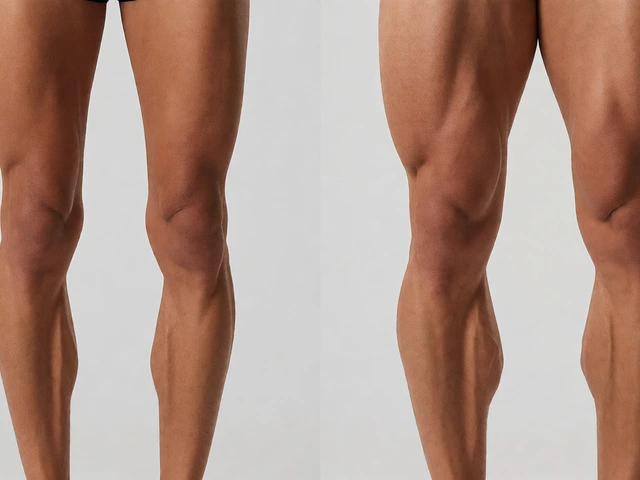
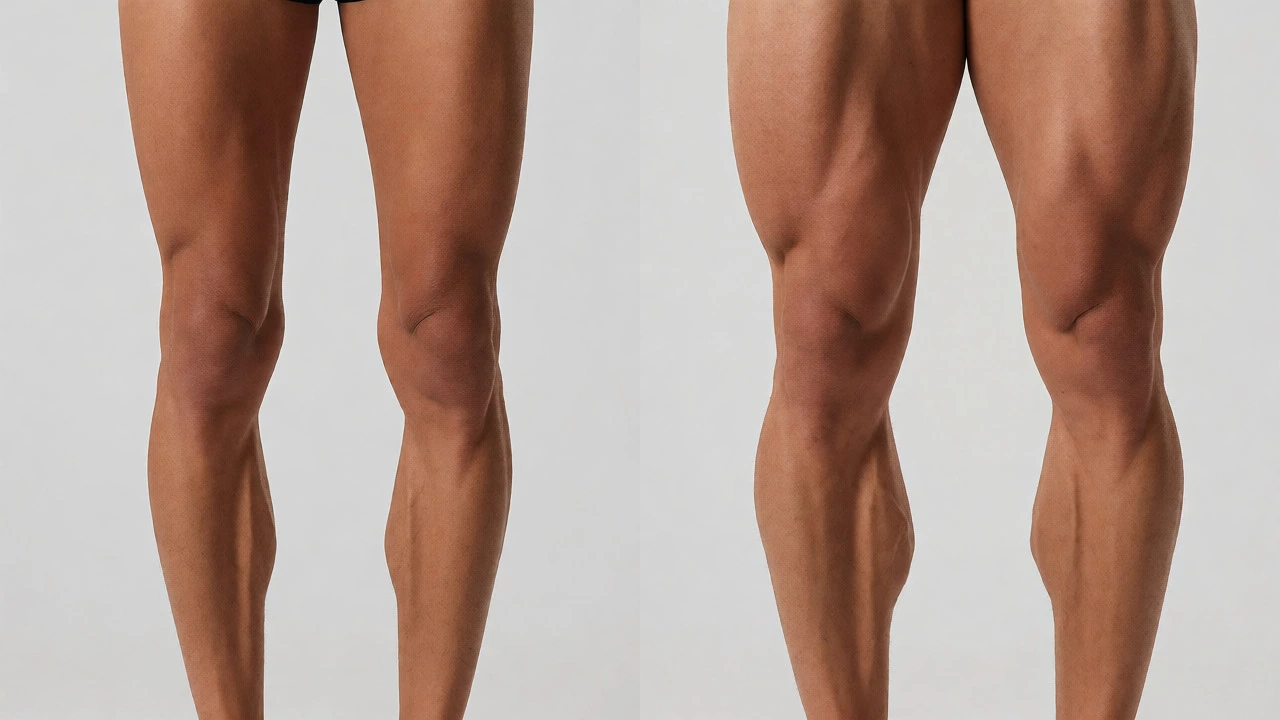
You’ve seen them on TV or in person at the starting line of a major race. They look almost fragile compared to a sprinter like Usain Bolt or a CrossFit athlete. Their thighs are slender, their calves are defined but not bulky, and their entire frame screams efficiency rather than power. It feels counterintuitive, doesn’t it? If you’re pounding 26.2 miles (42.195 km) over several hours, shouldn’t your legs be massive engines built for destruction?
The truth is, marathon runners don’t have big legs because size is actually a liability when your goal is covering long distances with minimal energy waste. This isn’t about vanity; it’s about physics and biology. A heavy leg requires more oxygen to move, generates more heat, and demands more fuel per stride. For an elite runner trying to shave seconds off a world record, every gram of unnecessary muscle mass is a tax they can’t afford to pay.
The Physics of Moving Heavy Limbs
Think about swinging a baseball bat versus swinging a broomstick. The bat is heavier, so it takes more force to accelerate and decelerate. Your legs work similarly during running. When you run, you aren’t just moving your body forward; you’re constantly lifting and swinging your lower limbs back and forth. Biomechanists call this the "swing phase."
Research from the University of Colorado Boulder has shown that for every 100 grams added to your ankle, your energy cost increases by about 1%. That might sound small, but multiply that by tens of thousands of steps in a marathon, and it becomes a massive metabolic penalty. If a runner had the thigh circumference of a bodybuilder, their heart would have to pump significantly harder just to supply blood to those extra muscles, diverting resources away from the lungs and brain. Lean legs reduce the moment of inertia, allowing the runner to swing their legs faster and easier with less effort.
Muscle Fiber Types: Slow-Twitch vs. Fast-Twitch
To understand why some athletes get huge while others stay lean, you have to look inside the muscle cells. Human skeletal muscle consists primarily of two types of fibers: Type I (slow-twitch) and Type II (fast-twitch).
| Feature | Type I (Slow-Twitch) | Type II (Fast-Twitch) |
|---|---|---|
| Primary Fuel | Oxygen (Aerobic) | Glycogen/ATP (Anaerobic) |
| Fatigue Resistance | High | Low |
| Size Potential | Small/Dense | Large/Hypertrophic |
| Best For | Marathons, Cycling | Sprinting, Weightlifting |
Elite marathoners typically have a genetic predisposition for a high percentage of Type I slow-twitch muscle fibers. These fibers are efficient at using oxygen to generate fuel for continuous, extended muscle contractions over a long time. They fire more slowly and are far more resistant to fatigue than fast-twitch fibers. Crucially, slow-twitch fibers do not hypertrophy (grow larger) nearly as much as fast-twitch fibers do under stress. Even if an elite marathoner lifts weights, their muscles tend to become denser and more efficient rather than significantly bulkier.
In contrast, sprinters and weightlifters rely heavily on Type II fibers. These fibers are designed for explosive power and can grow very large (hypertrophy) when challenged. But they burn through energy quickly and produce lactate rapidly, which causes fatigue. You can’t sustain a Type II-dominant engine for four hours without hitting a wall.

The Role of Genetics and Body Composition
Let’s be honest: genetics play a huge role here. Not everyone who runs marathons looks like Eliud Kipchoge. Recreational runners often have thicker legs because they carry more subcutaneous fat or simply have a different genetic baseline. However, among the professional tier, there is a distinct phenotype known as the "ectomorph"-tall, thin, with narrow joints and long limbs.
Long limbs act as levers. A longer femur allows for a longer stride length, which means fewer steps are needed to cover the same distance. Fewer steps mean less impact shock absorbed by the knees and hips, and less total energy expenditure. Additionally, narrow bone structure reduces weight. While you can’t change your bone width, the selection process for elite running naturally favors those with lighter frames. If you have broad shoulders and wide hips, you might find cycling or rowing more mechanically advantageous, whereas narrow-hipped runners often excel at endurance events.
Caloric Deficit and Metabolic Efficiency
Another practical reason marathon runners lack bulk is simple math: calories. To perform at an elite level, runners consume massive amounts of food, but their training volume burns even more. A typical elite runner might log 80-100 miles (130-160 km) per week. This creates a caloric environment where the body struggles to build significant muscle mass because it is constantly breaking down tissue for energy.
Muscle building (anabolism) generally requires a caloric surplus and adequate recovery. Elite runners live in a state of chronic catabolism (breakdown). While they eat enough to maintain performance, they rarely eat enough to add substantial muscle size on top of what they already have. Their bodies prioritize repairing micro-tears and replenishing glycogen stores over adding new contractile proteins that increase girth.

Training Methods: Volume Over Intensity
If you want big legs, you lift heavy weights with low reps. If you want endurance, you run long distances at a moderate pace. This difference in stimulus dictates physical adaptation.
- Hypertrophy Training: High load, low repetition, short rest. Signals the body to build bigger muscle fibers to handle stress.
- Endurance Training: Low load, high repetition (thousands of strides), long duration. Signals the body to improve capillary density and mitochondrial efficiency.
Marathon training focuses on increasing mitochondrial density-the power plants within your cells that produce energy. More mitochondria mean you can use oxygen more effectively. This adaptation happens without making the muscle fiber itself much larger. In fact, too much muscle mass can crowd out capillaries, reducing oxygen delivery efficiency. So, the training itself actively discourages bulkiness in favor of vascularization and cellular efficiency.
Are Big Legs Ever Good for Running?
It’s worth noting that not all runners are skinny. Look at Kenyan hill climbers or ultra-runners tackling mountainous terrain. Sometimes, slightly more muscle mass helps with stability and power on uneven ground. Also, older recreational runners often benefit from having stronger, slightly larger legs to protect joints and prevent injury. There is no single "right" body type for health; there is only the right body type for specific competitive goals.
For the average person asking this question, the takeaway isn’t to starve yourself into looking like a stick figure. It’s to understand that strength and size are not the same thing. You can have incredibly strong, resilient legs that look lean because they are optimized for endurance, not aesthetics. If you’re training for a half-marathon or full marathon, expect your legs to slim down slightly as you lose excess water weight and fat, and as your muscles adapt to become more efficient rather than bulky.
Do marathon runners lift weights?
Yes, most elite marathon runners incorporate strength training into their routine. However, they focus on exercises that improve core stability, hip alignment, and tendon resilience rather than maximum hypertrophy. They typically use higher repetitions with moderate weights to avoid excessive muscle growth while preventing injuries.
Can I run a marathon if I have big legs?
Absolutely. Many successful recreational marathoners have muscular or heavier builds. While elite speed may favor lighter frames, finishing a marathon is achievable for almost any body type. Strength can actually help protect your joints over long distances. Don't let body image stop you from pursuing long-distance running.
Why do sprinters have big legs but marathon runners don't?
Sprinters rely on fast-twitch muscle fibers, which are designed for explosive power and have a high potential for size (hypertrophy). Marathon runners rely on slow-twitch fibers, which are smaller, denser, and optimized for energy efficiency over long periods. The training stimuli also differ: sprints require maximal force production, while marathons require sustained aerobic output.
Does running make your legs thinner?
Running primarily burns fat and improves muscle tone. For many people, this results in slimmer legs due to reduced subcutaneous fat. However, if you are new to running, you might initially experience temporary swelling or muscle inflammation, which can make legs feel tighter. Long-term consistent endurance training tends to result in leaner, more defined legs.
Is it healthy to have very thin legs?
For trained athletes, lean legs are a sign of high cardiovascular fitness and efficient metabolism. As long as the runner maintains adequate bone density, joint health, and overall nutrition, having thin legs is perfectly healthy. Problems usually arise only if the thinness is due to malnutrition or underlying medical issues rather than athletic conditioning.
You might like