Running Shoe Cost Per Mile Calculator
Stop looking at the sticker price. Enter your shoe details below to see what you are actually paying for every mile you run.
Your Cost Per Mile
Estimated Replacement Time: --
Value Rating: --
Compare With Standard Tiers
Enter your shoe's price and expected mileage to see if it's a good deal compared to industry standards.
You walk into a sporting goods store or scroll through an online retailer, and the price tags make you blink. One pair is $90. The next is $180. The one on the top shelf? A staggering $250. It feels like there’s no logic to it, but there is. The question isn’t just "how much does a good running shoe cost?"-it’s "what are you actually paying for?"
Here’s the blunt truth: You don’t need to spend $200 to get a shoe that won’t hurt your knees. But if you’re looking for carbon-plated speed or maximum durability for high-mileage training, the price jumps for specific reasons. Let’s break down the real costs so you can decide what fits your wallet and your feet.
The Three Price Tiers of Running Shoes
Most running shoes fall into three distinct categories based on technology, materials, and intended use. Understanding these tiers helps you avoid overpaying for features you’ll never use.
- Budget ($80-$110): These are workhorse shoes. They use standard EVA foam midsoles and basic rubber outsoles. Think of brands like Brooks Ghost (older models) or Saucony Ride. They are reliable, durable, and perfect for beginners or runners logging under 20 miles a week. You aren’t getting flashy tech, but you are getting protection.
- Premium Daily Trainers ($130-$170): This is the sweet spot for most serious recreational runners. Here, you pay for advanced foams like Nitrogen-infused foam, which offers better energy return and longevity than standard EVA. Brands like Hoka Clifton or New Balance Fresh Foam X live here. These shoes last longer and feel more comfortable over long distances.
- Elite Racing & Super Shoes ($180-$250+): If you see a price tag near $250, you’re looking at carbon fiber plates and ultra-lightweight super foams like Pebax. These are designed for race day efficiency, not daily jogging. They often have less durable outsoles because weight savings take priority. Buying these as your only pair is usually a waste of money unless you race weekly.
Why Do Prices Vary So Wildly?
It’s easy to assume a higher price always means better quality, but that’s not how the shoe industry works. The cost difference comes down to material science and marketing, not necessarily comfort for every runner.
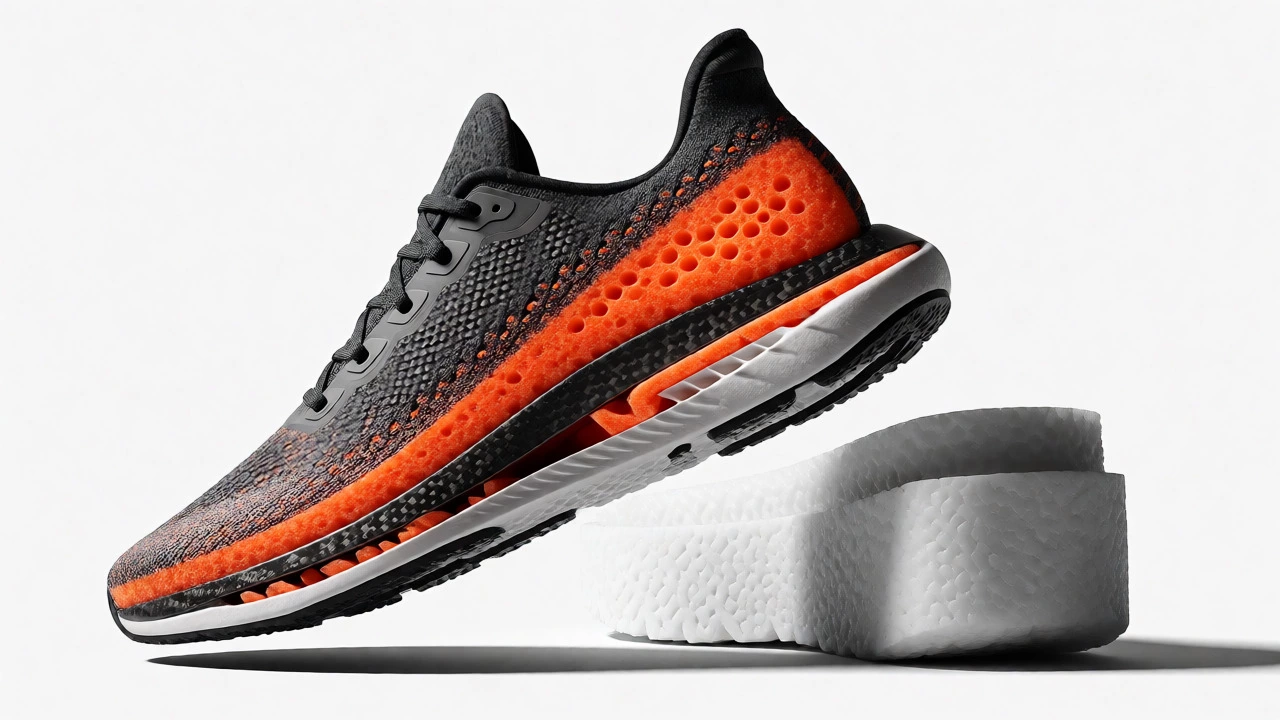
Consider the midsole. Standard ethylene-vinyl acetate (EVA) is cheap and effective. It compresses over time, losing its bounce after 300-400 miles. Premium shoes use thermoplastic polyurethane (TPU) or nitrogen-injected foams. These materials resist compression better, meaning the shoe feels "new" for longer. That extra engineering adds $30-$50 to the retail price. Is it worth it? If you run 40+ miles a week, yes. If you run twice a week, probably not.
Then there’s the upper. Basic mesh is breathable but lacks structure. Engineered knit uppers, found in pricier models, hug the foot better and reduce hot spots. Again, this matters more for marathoners dealing with swelling feet than for casual joggers.
Cost Per Mile: The Real Metric
Stop looking at the sticker price. Start calculating cost per mile. A $100 shoe that lasts 300 miles costs you $0.33 per mile. A $200 super shoe that lasts only 150 miles (because they wear out faster) costs $1.33 per mile. For daily training, cheaper shoes often offer better value.
| Shoe Category | Avg. Price | Expected Lifespan | Cost Per Mile |
|---|---|---|---|
| Budget Trainer | $95 | 350 miles | $0.27 |
| Premium Daily | $150 | 450 miles | $0.33 |
| Racing Flat | $220 | 150 miles | $1.46 |
This table highlights why buying a $200 racing shoe for everyday errands is financially painful. Save those expensive pairs for track days or races where marginal gains matter.
Hidden Costs Beyond the Shoe
Your total investment doesn’t end at checkout. Most runners underestimate ancillary costs. Insoles, anti-chafe balm, and replacement laces add up. More importantly, consider the cost of injury. Wearing worn-out shoes increases the risk of shin splints or plantar fasciitis. Physical therapy sessions in Canada can cost $100-$150 each. Replacing shoes every 300-500 miles is cheaper than treating an overuse injury.
Also, factor in sales cycles. Running shoe prices drop significantly when new models launch. Last year’s model of a popular trainer often sells for 30-40% off. Patience saves money. If you know your size and preferred brand, wait for the seasonal clearances in January or July.
Do You Need Expensive Tech?
Ask yourself: What is my goal? If you’re training for your first 5K, a $90 pair from a reputable brand like ASICS Gel-Contend or Puma Velocity Nitro will serve you perfectly. The biomechanical benefits of carbon plates are negligible for slower paces. Studies suggest carbon plates improve running economy by roughly 4%, but this benefit diminishes at speeds below 8 minutes per mile.
If you’re chasing a sub-3-hour marathon, however, the equation changes. At that pace, every gram of weight and millimeter of energy return counts. Paying $200+ becomes a logical performance investment rather than a luxury expense.

Where to Buy Without Overpaying
Avoid buying full-price shoes unless it’s a limited-edition release. Specialty running stores often charge full MSRP but provide valuable gait analysis. Use that service, then check online retailers like Running Warehouse or Amazon for discounts. Many local shops also price-match or offer loyalty programs. In Calgary, independent stores often stock previous-year models at steep discounts during spring clean-ups.
Another trick: Buy two pairs. Alternating between two identical pairs extends their combined lifespan by allowing the foam to decompress between runs. While the upfront cost doubles, the total mileage you get from both pairs often exceeds buying them sequentially. Plus, you always have a backup pair while one dries out after a rainy run.
Frequently Asked Questions
Is it worth spending $200 on running shoes?
For most casual runners, no. A $120-$150 shoe provides excellent cushioning and durability. The $200+ tier is primarily for competitive racers seeking marginal performance gains via lightweight materials and carbon plates. Unless you race regularly, the extra cost rarely translates to noticeable comfort improvements for daily jogs.
How long do expensive running shoes last compared to cheap ones?
Surprisingly, not much longer. High-end racing shoes often last fewer miles (100-150) because they prioritize weight reduction over durable rubber outsoles. Budget trainers may last 300-400 miles due to thicker, harder-wearing rubber. Premium daily trainers strike a balance, typically lasting 400-500 miles thanks to resilient foam compounds.
Can I buy used running shoes to save money?
Generally, no. The midsole foam compresses permanently with use, even if the outsole looks new. A used shoe has already lost its shock-absorbing properties, increasing injury risk. Always buy new shoes for running; save used-shoe hunting for casual lifestyle sneakers.
Do wide feet cost more?
Sometimes. Certain brands charge a small premium ($5-$10) for wide or extra-wide versions of their shoes, though many major brands now offer them at the same price point. Availability is often lower, which might limit your discount options, forcing you to pay closer to full price for the right fit.
What is the cheapest good running shoe brand?
Brands like Diadora, Altra (on sale), and Brooks (older models) often offer high-quality construction under $100. Additionally, private-label brands from large retailers sometimes source from the same factories as big names, offering similar specs at half the price. Check reviews carefully, as fit consistency varies more with lesser-known brands.
You might like